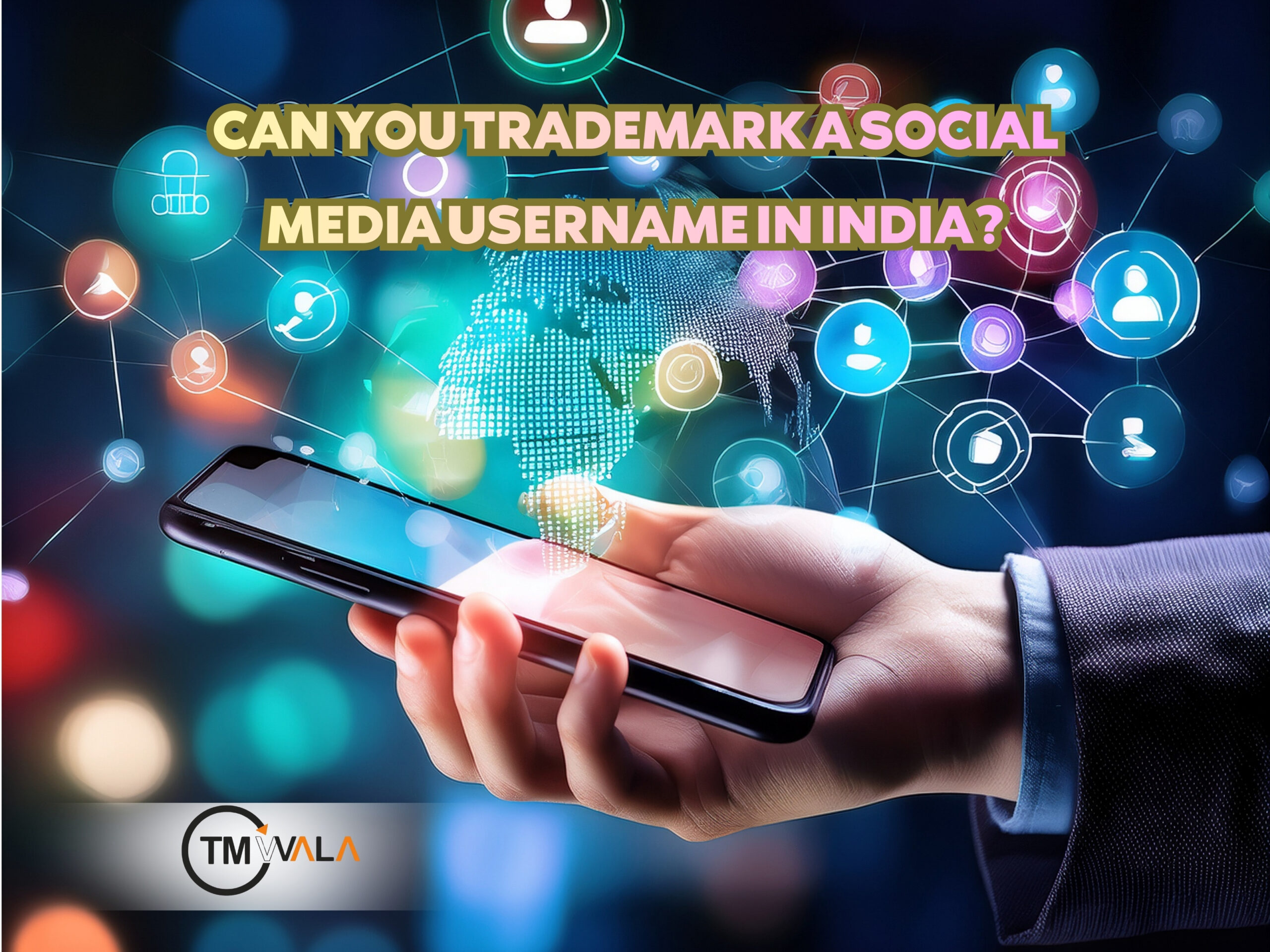
In today’s digital world, social media is no longer just a form of entertainment. It has evolved into a powerful space for business, marketing, and brand-building. For many entrepreneurs, influencers, and content creators who are providing services, a username is not merely an online tag; it is the face of their brand. It is how audiences discover their work, engage with their content, and remember their identity.
But what happens when someone else uses the same handle or a confusingly similar version of it? Can you protect your username under Indian law? The answer is yes, but only under certain conditions. Understanding how this works is essential for anyone who relies on social media as part of their commercial presence.
This article on social media username trademark breaks down the legal framework, explains when a username qualifies for protection, and outlines the steps to trademark it in India. It also highlights how professional assistance, such as from TMWala, can simplify the process and strengthen your application.
India’s Trademarks Act, 1999, safeguards signs or identifiers used by businesses to distinguish their goods or services. Traditionally, this includes elements like business names, logos, slogans, or device marks. Over the years, trademark protection has expanded to include non-conventional marks such as shapes, sounds, and colour combinations.
The primary objective of trademark law is to prevent consumer confusion. If a sign helps the public identify the source of a product or service, it may be eligible for protection. A social media username, by itself, is not automatically protected. However, if you use the username as a symbol of your brand, one that your audience associates with your business, it can be registered as a trademark.
Not every social media handle can be registered as a trademark. To qualify under Indian law, your username must meet specific criteria:
A handle that is unique and memorable stands a far better chance of registration. Distinctiveness sets your name apart from generic or commonly used identifiers. For instance, a coined term or an original phrase can become a strong trademark. On the other hand, usernames like “BestMakeupStore” or “DailyFitnessTips” are too generic and unlikely to be granted protection.
Handles that describe the function or nature of the business, such as “FreshJuiceSeller” or “TechNewsHub,” are considered weak marks. Trademark law favors identifiers that do not simply define the goods or services but help distinguish one trader from another.
If a username is used only for personal updates or private communication, it does not qualify. Trademarks are meant for commercial identity. Therefore, your handle should promote your business, products, or services in some capacity. Evidence of business use is essential.
Courts and the Trademark Registry expect proof that you use the username in commercial activities. This includes selling, marketing, or advertising through that specific handle. Essentially, the username must function as a brand.
Professional guidance can be valuable here. TMWala can help assess whether your username meets trademark requirements and advise you on how to strengthen its distinctiveness before filing.
A social media handle is much more than a digital alias; it is an asset. Trademarking it ensures that you secure long-term protection for your brand identity.
A registered trademark grants you exclusive ownership over your username in the relevant business category. No other business offering similar goods or services can legally use a confusingly similar. This builds credibility and strengthens your brand positioning.
Fake accounts and impersonators have become increasingly common. These accounts can mislead followers, damage your reputation, or even exploit your popularity for financial gain. With a trademark in hand, you can swiftly act against such misuse. Platforms are more responsive when you provide an official registration certificate.
The Trademarks Act, 1999, empowers you to take legal action against infringement. You can issue a cease-and-desist notice, file a complaint, or pursue litigation in severe cases. Courts can enforce injunctions, award damages, and even seize profits earned through unauthorized use of your username.
Platforms like Instagram, Facebook, YouTube, and X prioritize brand safety. If a dispute arises, social networks tend to favour the party with a registered trademark. It becomes easier to recover a stolen or misused username when you can prove ownership through legal documentation.
Trademark rights can last indefinitely as long as they are renewed and maintained. That makes your username a valuable business asset. You can license it, franchise it, collaborate with other brands, or even sell the trademark if you undergo a rebranding. Over time, your handle becomes a piece of intellectual property with real market value.
Working with firms like TMWala can help you identify ways to maximize this value by strategically protecting your online brand identity.
Registering a username as a trademark follows the same process as any other mark. Here is a clear, step-by-step overview:
Begin by checking the Indian Trademark Registry database to ensure that your username is not already registered or confusingly similar to an existing mark. A thorough search can prevent objections and delays later.
Trademark protection is divided into 45 different classes based on goods and services. Choose the class that aligns with your business activity. For example, fashion brands may fall under Class 25 (clothing) or Class 35 (retail and marketing services). Selecting the wrong class can lead to rejection.
Apply online with the Controller General of Patents, Designs and Trademarks (CGPDTM). The application must include your username, business details, class selection, and proof of commercial use.
Many applicants make errors at this stage, which can lead to objections. Working with an experienced professional such as TMWala can ensure your application is properly drafted and supported with strong evidence.
A trademark examiner reviews your application to determine whether it meets the legal requirements. If objections arise, you must respond with explanations and additional evidence.
If the examiner accepts your application, it is published in the Trademark Journal for public review. During this period, third parties can oppose it if they believe the registration affects their rights.
If no opposition is filed, or if you successfully overcome it, you will receive your trademark registration certificate. Your username is now officially protected under Indian law.
If your username is trademarked and someone uses it without permission, you have several remedies. You can issue a legal notice, report the infringer to the platform, demand removal of the impersonating account, and pursue legal action if necessary. Courts can order injunctions, damages, and other penalties.
Without a trademark, however, your options are more limited. Social media platforms may not intervene, and legal claims become difficult to enforce without proof of exclusive rights.
You cannot trademark a username simply because you created it. It must be distinctive, linked to your business, and used actively in trade. When your handle becomes a symbol of your online identity, protecting it becomes essential.
Many individuals make mistakes, such as choosing the wrong class, filing without proper evidence, or drafting weak applications. This is where experts like TMWala can provide reliable support, from conducting searches to handling objections and guiding you through the registration process.
By trademarking your social media username, you protect your digital identity, secure your brand, and create an asset that grows in value over time.
Get started instantly
"*" indicates required fields
TMWala
Your one stop shop for all your business registration and compliance needs.
"*" indicates required fields
Choose your Entity Type
Non-MSME/ Large Entitie
Individual/ MSME/ Sole Proprietorships
₹9,000.00 Original price was: ₹9,000.00.₹3,999.00Current price is: ₹3,999.00.
Trademark Application @ ₹3999* (Premium Discounted Plan for MSME/Individual/Sole Proprietorships) Comprehensive
Government Fees
₹4500/-
₹9,000.00 Original price was: ₹9,000.00.₹3,999.00Current price is: ₹3,999.00.
Trademark Application @ ₹3999* (Premium Discounted Plan for Non-MSMEs/Large Entities) Comprehensive
Government Fees
₹9000/-
Choose your Entity Type
Individual/ MSME/ Sole Proprietorships
Non-MSME/ Large Entities
₹3,500.00 Original price was: ₹3,500.00.₹1,999.00Current price is: ₹1,999.00.
Government Fees
₹4500/-
₹3,500.00 Original price was: ₹3,500.00.₹1,999.00Current price is: ₹1,999.00.
Government Fees
₹9000/-
Choose your Entity Type
Individual/ MSME/ Sole Proprietorships
Non-MSME/ Large Entities
₹1,500.00 Original price was: ₹1,500.00.₹999.00Current price is: ₹999.00.
Trademark Application @ ₹999* (Basic Discounted Plan for MSME/Individual/Sole Proprietorships) Best-Selling, Economical & Easy
₹1,500.00 Original price was: ₹1,500.00.₹999.00Current price is: ₹999.00.
Trademark Application @ ₹999* (Basic Discounted Plan for Non-MSMEs/Large Entities) Best-Selling, Economical, Quick and Easy