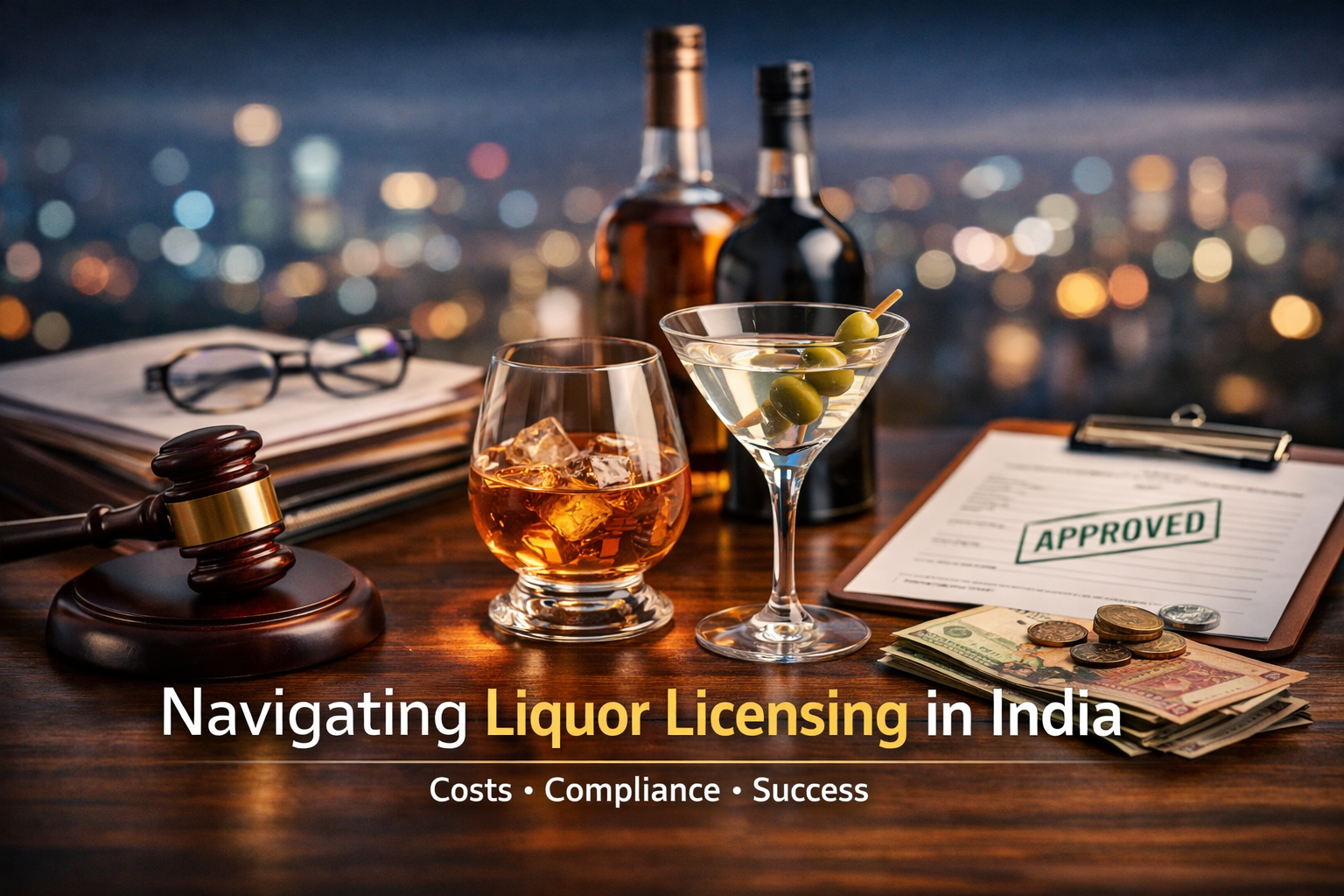
Starting a restaurant, bar, or club in India is an exciting venture. The margins are attractive, and the demand is steady. But before you can pour that first drink, there’s a massive hurdle you need to clear: obtaining a valid liquor license. If you’ve been searching for the liquor license cost in India, you likely know that the process can be complex, expensive, and filled with red tape.
At TMWala, we specialize in making compliance transparent and stress-free. Whether you are opening a chic cafe in Delhi or a heritage hotel in Kolkata, understanding the alcohol license cost in India is your first step toward a profitable business. This guide will walk you through everything you need to know, from the types of liquor licenses in India to state-specific fees and renewal protocols, so you can focus on serving customers, not chasing paperwork.
Operating without a license isn’t just risky; it’s illegal. The penalties range from heavy fines to the permanent sealing of your property. Beyond legality, a license builds trust. Customers want to dine and drink in establishments that are safe and compliant.
Knowing the accurate liquor license cost upfront helps you budget effectively. It prevents nasty surprises down the road and ensures your capital is allocated strictly for growth and operations.
The liquor license cost in India varies drastically because there isn’t just one “license.” State excise departments categorize licenses based on the nature of the business. Here are the most common types of liquor licenses in India:
Understanding these categories is crucial because the bar license cost in India is significantly different from a simple retail vend license.
Because alcohol is a state subject, the cost of a liquor license in India varies depending on the state border you cross. Let’s look at the fee structures for some key regions to give you a clear picture.
Delhi has one of the most structured excise policies. The liquor license cost in Delhi is determined by the number of seat covers in your establishment and the star rating of your hotel.
If you are planning a venue in the capital, budget for the higher end of the liquor license cost in Delhi to be safe.
The liquor license cost in West Bengal is generally lower than in Delhi, but it has its own complexities regarding location (municipal corporation vs. panchayat areas).
As you can see, the liquor license cost in West Bengal favors long-term operations with lower renewal fees compared to the high initial investment.
The liquor license cost isn’t a one-time expense. You must renew it annually. The liquor license renewal fee is typically paid before the end of the fiscal year (March 31st).
To justify the liquor license cost in India, you must prove your eligibility. The paperwork is extensive. Here is a checklist to help you prepare:
Why does one restaurant pay ₹5 lakh while another pays ₹15 lakh? The alcohol license cost in India depends on:
While the liquor license cost is a fixed government fee, the application process requires time and effort.
The liquor license cost in India is undeniably high, but the returns are equally substantial. A licensed establishment sees a 40-60% increase in footfall and higher average ticket sizes compared to dry venues.
Don’t let the complexity of the bar license cost in India scare you away. With the right guidance and a clear understanding of fees like the liquor license cost in Delhi or the liquor license cost in West Bengal, you can navigate the system confidently.
Ready to start your journey? At TMWala, we empower entrepreneurs to master compliance. Ensure your paperwork is flawless, pay the correct fees, and open your doors to success.
Get started instantly
"*" indicates required fields
TMWala
Your one stop shop for all your business registration and compliance needs.
"*" indicates required fields
Choose your Entity Type
Non-MSME/ Large Entitie
Individual/ MSME/ Sole Proprietorships
₹9,000.00 Original price was: ₹9,000.00.₹3,999.00Current price is: ₹3,999.00.
Trademark Application @ ₹3999* (Premium Discounted Plan for MSME/Individual/Sole Proprietorships) Comprehensive
Government Fees
₹4500/-
₹9,000.00 Original price was: ₹9,000.00.₹3,999.00Current price is: ₹3,999.00.
Trademark Application @ ₹3999* (Premium Discounted Plan for Non-MSMEs/Large Entities) Comprehensive
Government Fees
₹9000/-
Choose your Entity Type
Individual/ MSME/ Sole Proprietorships
Non-MSME/ Large Entities
₹3,500.00 Original price was: ₹3,500.00.₹1,999.00Current price is: ₹1,999.00.
Government Fees
₹4500/-
₹3,500.00 Original price was: ₹3,500.00.₹1,999.00Current price is: ₹1,999.00.
Government Fees
₹9000/-
Choose your Entity Type
Individual/ MSME/ Sole Proprietorships
Non-MSME/ Large Entities
₹1,500.00 Original price was: ₹1,500.00.₹999.00Current price is: ₹999.00.
Trademark Application @ ₹999* (Basic Discounted Plan for MSME/Individual/Sole Proprietorships) Best-Selling, Economical & Easy
₹1,500.00 Original price was: ₹1,500.00.₹999.00Current price is: ₹999.00.
Trademark Application @ ₹999* (Basic Discounted Plan for Non-MSMEs/Large Entities) Best-Selling, Economical, Quick and Easy