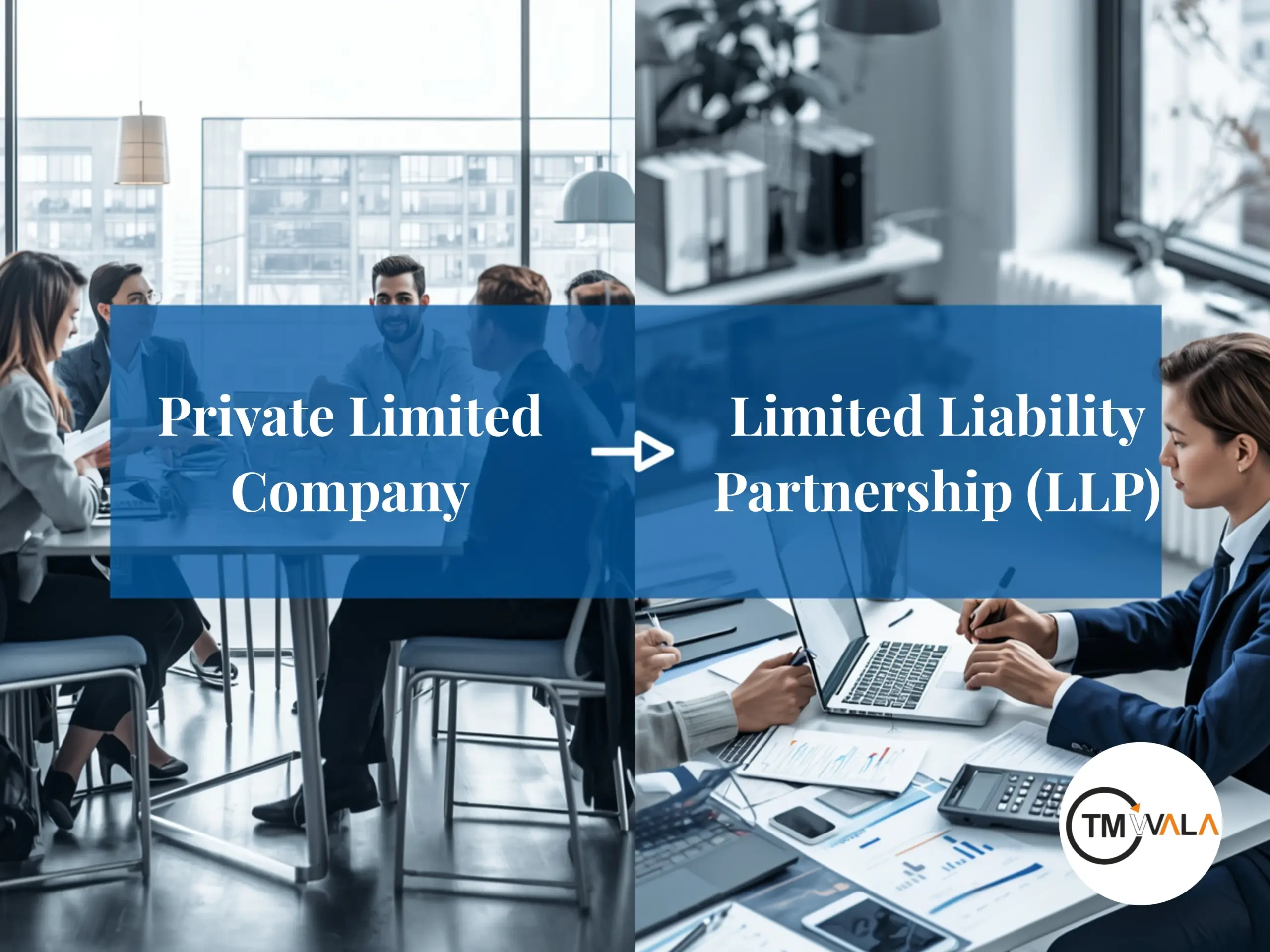
In recent years, many businesses in India have started exploring alternative business structures that offer operational flexibility, reduced compliance burden, and limited liability protection. One of the most preferred options is the conversion of a private limited company into a Limited Liability Partnership (LLP). The process of Private Limited to LLP Conversion is governed by the Limited Liability Partnership Act, 2008, and provides several advantages for small and medium-sized businesses.
Entrepreneurs often choose this route to simplify management, reduce annual compliance requirements, and gain operational freedom. However, the conversion process requires proper legal documentation, regulatory filings, and compliance with the Ministry of Corporate Affairs (MCA) rules. Professional assistance from experts like TMWala can help businesses complete the conversion smoothly while ensuring compliance with all legal formalities.
Under Section 2(68) of the Companies Act, 2013, a private limited company is a company that restricts the transfer of shares, limits the number of members to 200, and prohibits public invitation for securities subscription. It is one of the most common business structures in India because it provides limited liability and a separate legal identity.
However, private limited companies are subject to stricter compliance requirements, mandatory audits, board meetings, annual filings, and extensive record maintenance. For businesses looking for operational flexibility and lower compliance costs, converting into an LLP becomes an attractive option.
A Limited Liability Partnership is a hybrid business structure that combines the flexibility of a partnership with the legal protection of a company. Introduced in India through the Limited Liability Partnership Act, 2008, an LLP is considered a separate legal entity from its partners.
The partners of an LLP are not personally liable for business debts beyond their agreed contribution. This makes LLPs suitable for professional services firms, startups, consultants, and family-owned businesses seeking reduced compliance obligations.
Some key features of LLPs include:
Businesses often consider Private Limited to LLP Conversion for several strategic and financial reasons. LLPs provide operational flexibility and require fewer legal formalities compared to companies.
Some major benefits include:
Reduced Compliance Burden: Private limited companies must conduct board meetings, maintain statutory registers, and file multiple annual forms. LLPs have comparatively simpler compliance requirements.
Lower Operational Costs: LLPs involve lower registration and maintenance costs. Businesses can reduce administrative expenses significantly after conversion.
Flexible Management Structure: Unlike companies, LLPs are governed through an LLP Agreement, allowing partners to decide profit-sharing ratios and management responsibilities.
Limited Liability Protection: Partners enjoy limited liability, which means personal assets remain protected from business liabilities.
The LLP Registration Process Requirement involves several legal and procedural steps that must be completed through the MCA portal. The registration process generally includes the following stages:
Obtaining Digital Signature Certificate (DSC): Every designated partner must obtain a Digital Signature Certificate for filing online forms with the MCA.
Applying for DPIN: A Designated Partner Identification Number (DPIN) is mandatory for designated partners. The application is submitted through Form DIR-3.
Name Reservation: Businesses must reserve a unique LLP name using the RUN-LLP service available on the MCA portal.
Filing FiLLiP Form: The incorporation application is filed through the FiLLiP form with the Registrar of Companies.
LLP Agreement Filing: The LLP Agreement must be filed within 30 days of incorporation using Form 3.
Professional service providers like TMWala assist businesses throughout the LLP registration process by handling documentation, filings, approvals, and regulatory coordination efficiently.
LLP Incorporation is the legal process through which a Limited Liability Partnership is officially formed and recognized by the Ministry of Corporate Affairs. Once the incorporation process is completed successfully, the LLP becomes a separate legal entity capable of entering into contracts, owning assets, and conducting business operations.
For successful incorporation, businesses must ensure:
The incorporation process is entirely online and generally takes a few working days if all documents are properly submitted.
One of the most critical aspects of conversion is preparing accurate and complete Conversion of the company into an LLP. The MCA requires several documents and declarations before approving the conversion.
The major documents required include:
Documents of Directors and Partners
Company Documents
Additional Documents
Proper documentation ensures a smooth approval process and minimizes the risk of resubmission or rejection.
Upon successful approval of the incorporation application, the Registrar of Companies issues the LLP certificate of incorporation. This certificate acts as official proof of the LLP’s legal existence.
The LLP incorporation certificate contains:
This certificate is essential for opening bank accounts, signing contracts, applying for registrations, and conducting official business activities.
Businesses should carefully preserve the certificate, as it serves as a primary legal document for the LLP.
Understanding LLP conversion fees is important for businesses planning the transition from a private limited company to an LLP. The total cost may vary depending on the size of the business, professional support, and government filing charges.
Common expenses involved include:
Generally, the conversion cost may range from ₹20,000 to ₹70,000, depending on the complexity of the company structure and pending compliance matters.
Businesses should also account for state-wise stamp duty variations while estimating total conversion expenses.
Even though LLPs enjoy lower compliance requirements than companies, certain mandatory filings must still be completed every year. LLP annual compliance is essential to avoid penalties and maintain an active legal status.
The major annual compliances include:
Failure to complete compliance requirements on time can result in penalties of ₹100 per day for delayed filings. This is why many businesses rely on professional firms like TMWala for ongoing compliance management and timely filing support.
When evaluating Private limited vs LLP, businesses should carefully compare both structures based on management, taxation, compliance, and funding requirements.
The growing preference for LLPs among Indian businesses reflects the need for simpler compliance structures and greater operational flexibility. Private Limited to LLP Conversion offers businesses an opportunity to reduce administrative burdens while retaining the benefits of limited liability protection.
However, successful conversion requires proper planning, accurate documentation, and timely regulatory filings. From handling the conversion of the company into LLP documentation to managing LLP annual compliance, every stage demands legal precision and procedural accuracy.
Professional guidance from TMWala can help businesses navigate the conversion process smoothly, avoid compliance issues, and ensure a seamless transition into an LLP structure. Whether it is LLP Incorporation, obtaining the LLP incorporation certificate, or understanding LLP conversion fees, expert support can save both time and effort while ensuring complete compliance with Indian corporate laws.
Get started instantly
"*" indicates required fields
TMWala
Your one stop shop for all your business registration and compliance needs.
"*" indicates required fields
Choose your Entity Type
Non-MSME/ Large Entitie
Individual/ MSME/ Sole Proprietorships
₹9,000.00 Original price was: ₹9,000.00.₹3,999.00Current price is: ₹3,999.00.
Trademark Application @ ₹3999* (Premium Discounted Plan for MSME/Individual/Sole Proprietorships) Comprehensive
Government Fees
₹4500/-
₹9,000.00 Original price was: ₹9,000.00.₹3,999.00Current price is: ₹3,999.00.
Trademark Application @ ₹3999* (Premium Discounted Plan for Non-MSMEs/Large Entities) Comprehensive
Government Fees
₹9000/-
Choose your Entity Type
Individual/ MSME/ Sole Proprietorships
Non-MSME/ Large Entities
₹3,500.00 Original price was: ₹3,500.00.₹1,999.00Current price is: ₹1,999.00.
Government Fees
₹4500/-
₹3,500.00 Original price was: ₹3,500.00.₹1,999.00Current price is: ₹1,999.00.
Government Fees
₹9000/-
Choose your Entity Type
Individual/ MSME/ Sole Proprietorships
Non-MSME/ Large Entities
₹1,500.00 Original price was: ₹1,500.00.₹999.00Current price is: ₹999.00.
Trademark Application @ ₹999* (Basic Discounted Plan for MSME/Individual/Sole Proprietorships) Best-Selling, Economical & Easy
₹1,500.00 Original price was: ₹1,500.00.₹999.00Current price is: ₹999.00.
Trademark Application @ ₹999* (Basic Discounted Plan for Non-MSMEs/Large Entities) Best-Selling, Economical, Quick and Easy