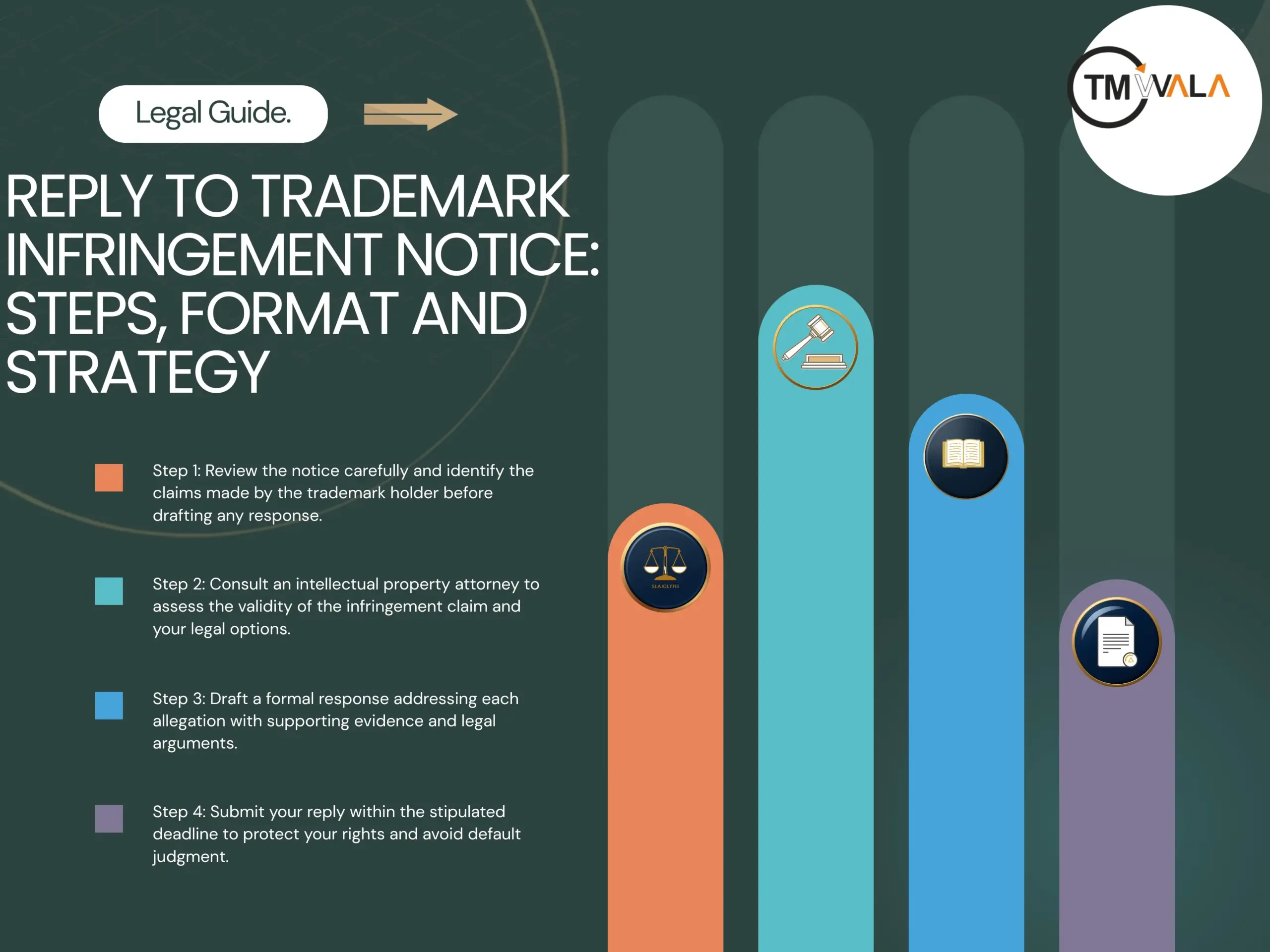
Reply To Trademark Infringement Notice is a crucial legal step that can protect your business, preserve your rights, and help you respond strategically to a cease and desist letter.A Trademark infringement notice may come from an attorney or a cease and desist letter from a competitor, your response to these notices can really affect the outcome of the dispute. If you rush into a response, ignore the notice, or admit liability without proper evaluation can expose your business to unnecessary legal and financial risks.
A trademark dispute does not always end in court. Many trademark disputes are settled with negotiation or resolved through agreements to share a trademark, licensing deals or other ways of sorting out trademark disputes. The key is to understand the allegations in notice. You must evaluate your legal position and get a plan, in place to protect your business and your trademark.
This article explains what a trademark infringement notice is, how to assess the allegations, the steps to take before replying, the ideal format of a response, and the legal strategies that businesses commonly adopt.
At TMWala we help startups and businesses with intellectual property issues. We regularly assist them in navigating complex intellectual property matters. From revieing infringement notices of trademark and drafting their replies, trademark opposition, trademark enforcement and settlement negotiations. We provide practical legal guidance tailored to each client’s circumstances.
A trademark infringement notice is a formal letter alleging that your use of a particular name, logo, slogan or any anything that is a brand identifier that infringes another party’s registered or unregistered trademark rights.
These notices are usually sent before they initiate legal proceedings and request that you:
Infringement notices are issued as cease and desist letters, to give an opportunity to recipient to resolve the dispute before litigation.
Ignoring a trademark infringement noticerarely makes the issue disappear. Instead, it may encourage the trademark owner to pursue stronger legal remedies.
Possible consequences include:
A timely response to infringement noticedemonstrates that you take the matter seriously and are willing to address the issues responsibly.
Step 1: Read the Notice Carefully
Before taking any formal action, first review the notice carefully. Pay attention to understand the exact allegations before preparing your response like check the trademark allegedly infringed, its application number, description of alleged infringement, goods or services involved, legal basis of claim, demand made by the sender.
Step 2: Verify Trademark Rights
Not every infringement allegation is legally valid. Confirm whether the sender possesses enforceable trademark rights under the Trade Marks Act, 1999.
Check:
It is equally important to determine whether you have prior rights or independent brand ownership that may support and strengthen your position.
Step 3: Assess Whether Infringement Exists
Trademark infringement is not established merely because two marks appear similar.
Consider factors such as:
Every infringement claim requires a fact-specific legal analysis.
Step 4: Gather Supporting Evidence
Collect all documents that are relevant to your use of the disputed mark.
Examples include:
Well-organized evidence can further strengthen your legal defence and assists your legal advisor in evaluating the claim.
Step 5: Consult an IP Lawyer
Trademark law involves technical legal principles that differ across jurisdictions. Consulting an experienced IP lawyer at an early stage can help you understand the strength of the allegations and the available options.
An intellectual property lawyer may assist by:
Professional legal advice often prevents costly mistakes.
Response strategy to notice depends on the facts of the dispute.
If the allegation in infringement notice appears valid
Where the claim has merit, consider practical solutions such as:
Resolving the matter early often reduces legal expenses.
If You Dispute the Allegation
Where you believe no infringement exists from your end, then you may reply by:
If you choose any of the above response, make sure that you also provide supporting documentation and evidence to further strengthen your case.
If Negotiation Is Possible
Many trademark disputes are resolved without initiating court proceedings.
Possible negotiated outcomes include:
Negotiation may preserve valuable business relationships while reducing litigation costs.
1. Reference Details
Mention:
2. Acknowledgement
Confirm receipt of the notice without admitting liability.
Example:
“We acknowledge receipt of your notice dated [date] regarding the alleged trademark infringement.”
3. Background
Briefly explain your business and the circumstances relating to your use of the disputed trademark.
4. Response to Allegations
Address each allegation individually.
Include:
5. Reservation of Rights
Clearly state that you reserve all legal rights and remedies available under applicable law.
6. Closing
Where appropriate, express willingness to discuss an amicable resolution without prejudice to your legal position.
Businesses frequently weaken their position by making avoidable errors.
Do not:
A careful well drafted response is generally more effective than a rushed one.
Depending on the circumstances, you may be able to challenge the trademark owner’s rights.
Potential options through which you can challenge includes:
These strategies may strengthen your overall legal position during a trademark dispute.
Choosing between settlement and litigation depends on the facts, commercial priorities, and legal risks.
| SETTLEMENT | TRADEMARK LITIGATION |
| Low legal cost | High cost |
| Faster resolution | Longer process |
| Confidential negotiations | Public proceedings |
| Flexible commercial terms | Court-imposed outcomes |
| Preserves business relationships | Often adversarial |
Modern trademark dispute resolution includes several options:
Selecting the appropriate method depends on the complexity of the dispute, the parties’ objectives, and the desired outcome.
A reply to trademark infringement notice should never be treated as a routine business correspondence.It is a legal document that may influence the course of a dispute and, in some cases, determine whether the matter proceeds to litigation or is resolved through negotiation.
Before responding, carefully review the allegations, verify the other party’s trademark rights, collect relevant evidence, and assess the strength of your position. A thoughtful and professionally drafted reply can help preserve your legal defences, facilitate constructive discussions, and reduce the risk of costly litigation.
Because trademark disputes often involve complex legal and commercial considerations, businesses should seek advice from a qualified intellectual property professional before responding to any trademark infringement notice. TMWala is committed to helping businesses, startups, and brand owners navigate every stage of the trademark dispute process.
Get started instantly
"*" indicates required fields

TMWala
Your one stop shop for all your business registration and compliance needs.
"*" indicates required fields
Choose your Entity Type
Non-MSME/ Large Entitie
Individual/ MSME/ Sole Proprietorships

₹9,000.00 Original price was: ₹9,000.00.₹3,999.00Current price is: ₹3,999.00.
Trademark Application @ ₹3999* (Premium Discounted Plan for MSME/Individual/Sole Proprietorships) Comprehensive
Government Fees
₹4500/-
₹9,000.00 Original price was: ₹9,000.00.₹3,999.00Current price is: ₹3,999.00.
Trademark Application @ ₹3999* (Premium Discounted Plan for Non-MSMEs/Large Entities) Comprehensive
Government Fees
₹9000/-
Choose your Entity Type
Individual/ MSME/ Sole Proprietorships
Non-MSME/ Large Entities

₹3,500.00 Original price was: ₹3,500.00.₹1,999.00Current price is: ₹1,999.00.
Government Fees
₹4500/-
₹3,500.00 Original price was: ₹3,500.00.₹1,999.00Current price is: ₹1,999.00.
Government Fees
₹9000/-
Choose your Entity Type
Individual/ MSME/ Sole Proprietorships
Non-MSME/ Large Entities
₹1,500.00 Original price was: ₹1,500.00.₹999.00Current price is: ₹999.00.
Trademark Application @ ₹999* (Basic Discounted Plan for MSME/Individual/Sole Proprietorships) Best-Selling, Economical & Easy
₹1,500.00 Original price was: ₹1,500.00.₹999.00Current price is: ₹999.00.
Trademark Application @ ₹999* (Basic Discounted Plan for Non-MSMEs/Large Entities) Best-Selling, Economical, Quick and Easy