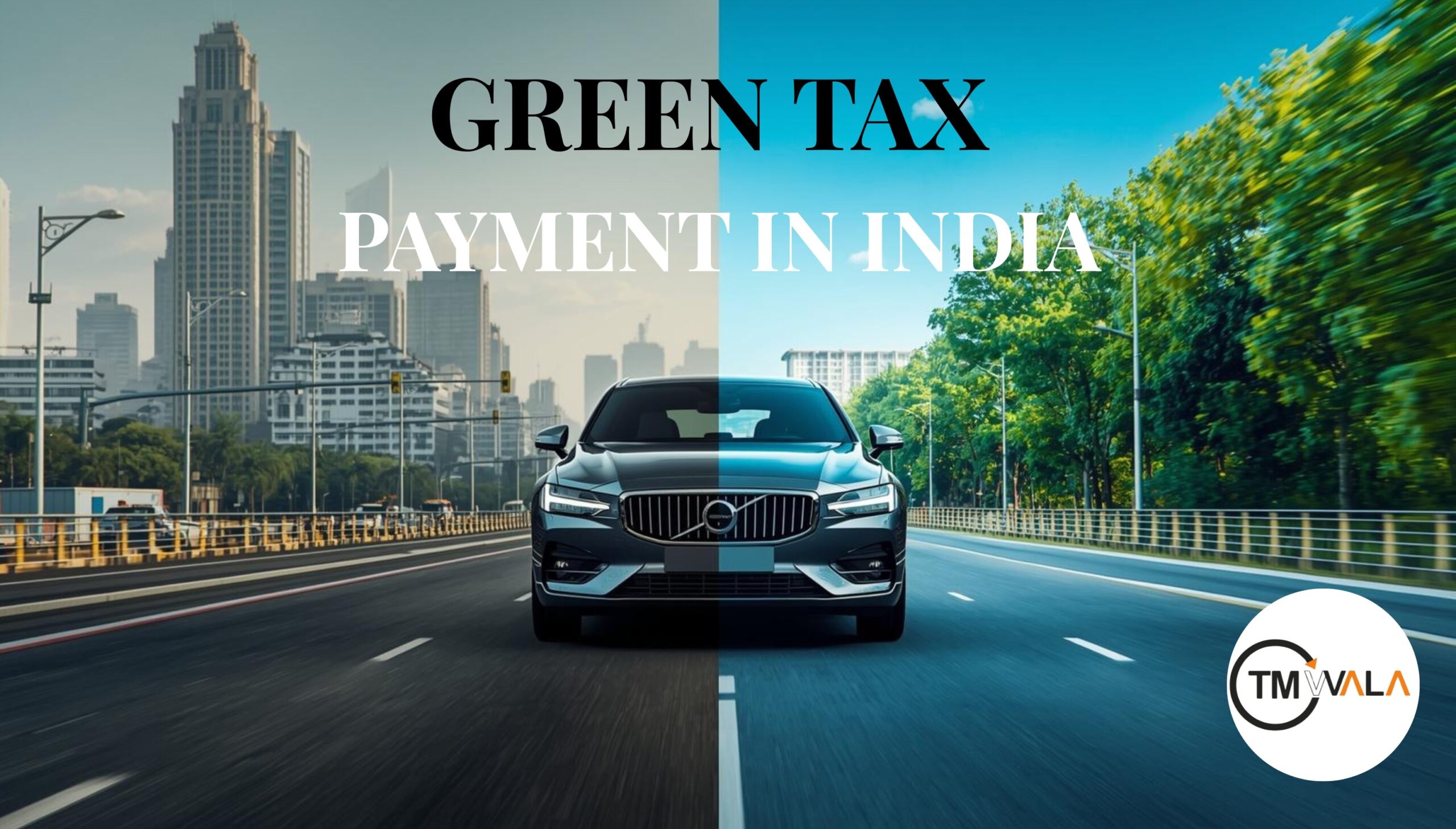
The Green Tax Payment in India has emerged as an important environmental policy aimed at reducing vehicular pollution and encouraging cleaner transportation practices. With rising air pollution levels across major cities, the Government of India has proposed a framework that individual states implement with variations. This step is taken to ensure that older, polluting vehicles are either phased out or penalized through taxation.
The concept gained momentum when the Ministry of Road Transport and Highways, under the leadership of Union Minister Nitin Gadkari, approved a proposal to impose a green tax on older vehicles. This initiative is part of a broader strategy to combat pollution and promote sustainable mobility.
In this article, we will explore the green tax in India, its rules, charges, payment process, and overall importance.
A green tax, also known as an environmental or pollution tax, is a levy imposed on vehicles that significantly contribute to environmental pollution. The primary objective is to make polluters financially responsible while motivating vehicle owners to switch to eco-friendly alternatives.
Under the proposed guidelines:
This tax acts as a deterrent against the prolonged use of outdated and highly polluting vehicles.
The green tax framework varies depending on the type and age of the vehicle. It broadly categorizes vehicles into personal and commercial segments.
1. Commercial Vehicles
2. Personal Vehicles
3. Special Conditions
The central government provides guidelines, but implementation is done by individual states. Some key rules include:
These rules ensure that the tax is both fair and environmentally targeted.
The green tax is not uniform across India and varies by state. Below are examples of charges in different states:
Tamil Nadu
Note Point: The above figures are Indicative figures; actual charges may vary based on vehicle specifications and updated state policies.
States like Karnataka, Telangana, Andhra Pradesh, and Uttar Pradesh also impose green tax, although rates differ depending on vehicle category and age.
It is important to verify the exact rates applicable in your state before making a payment.
The purpose of the green tax goes beyond revenue collection. It is designed to:
Studies show that older vehicles, especially those manufactured before 2000, contribute disproportionately to pollution despite being a small percentage of total vehicles.
Paying green tax has become easier with digital platforms. The Government of India provides an online facility available via VAHAN or the respective state transport portals.
Step-by-Step Process:
Link: https://vahan.parivahan.gov.in
This streamlined process ensures transparency and convenience for vehicle owners.
The green tax is closely linked with vehicle registration renewal. When your vehicle crosses the specified age limit:
Failure to pay may result in penalties or restrictions on vehicle usage.
The introduction of a green tax carries significant environmental and economic benefits:
Understanding green tax rules and compliance can be confusing, especially since rates and regulations differ across states.
How TMWala can help:
The green tax in India is a forward-thinking initiative aimed at tackling one of the country’s biggest challenges, vehicular pollution. By targeting older vehicles and promoting cleaner alternatives, the policy aligns with global environmental goals.
Understanding what the green tax in India is, along with its rules, charges, and payment process, is essential for every vehicle owner. While most individuals may not encounter this tax due to timely vehicle upgrades, those with older vehicles must stay informed to avoid penalties and ensure compliance.
As India moves toward sustainable mobility, green tax will continue to play a crucial role in shaping a cleaner and healthier future.
Get started instantly
"*" indicates required fields

TMWala
Your one stop shop for all your business registration and compliance needs.
"*" indicates required fields
Choose your Entity Type
Non-MSME/ Large Entitie
Individual/ MSME/ Sole Proprietorships

₹9,000.00 Original price was: ₹9,000.00.₹3,999.00Current price is: ₹3,999.00.
Trademark Application @ ₹3999* (Premium Discounted Plan for MSME/Individual/Sole Proprietorships) Comprehensive
Government Fees
₹4500/-
₹9,000.00 Original price was: ₹9,000.00.₹3,999.00Current price is: ₹3,999.00.
Trademark Application @ ₹3999* (Premium Discounted Plan for Non-MSMEs/Large Entities) Comprehensive
Government Fees
₹9000/-
Choose your Entity Type
Individual/ MSME/ Sole Proprietorships
Non-MSME/ Large Entities

₹3,500.00 Original price was: ₹3,500.00.₹1,999.00Current price is: ₹1,999.00.
Government Fees
₹4500/-
₹3,500.00 Original price was: ₹3,500.00.₹1,999.00Current price is: ₹1,999.00.
Government Fees
₹9000/-
Choose your Entity Type
Individual/ MSME/ Sole Proprietorships
Non-MSME/ Large Entities
₹1,500.00 Original price was: ₹1,500.00.₹999.00Current price is: ₹999.00.
Trademark Application @ ₹999* (Basic Discounted Plan for MSME/Individual/Sole Proprietorships) Best-Selling, Economical & Easy
₹1,500.00 Original price was: ₹1,500.00.₹999.00Current price is: ₹999.00.
Trademark Application @ ₹999* (Basic Discounted Plan for Non-MSMEs/Large Entities) Best-Selling, Economical, Quick and Easy