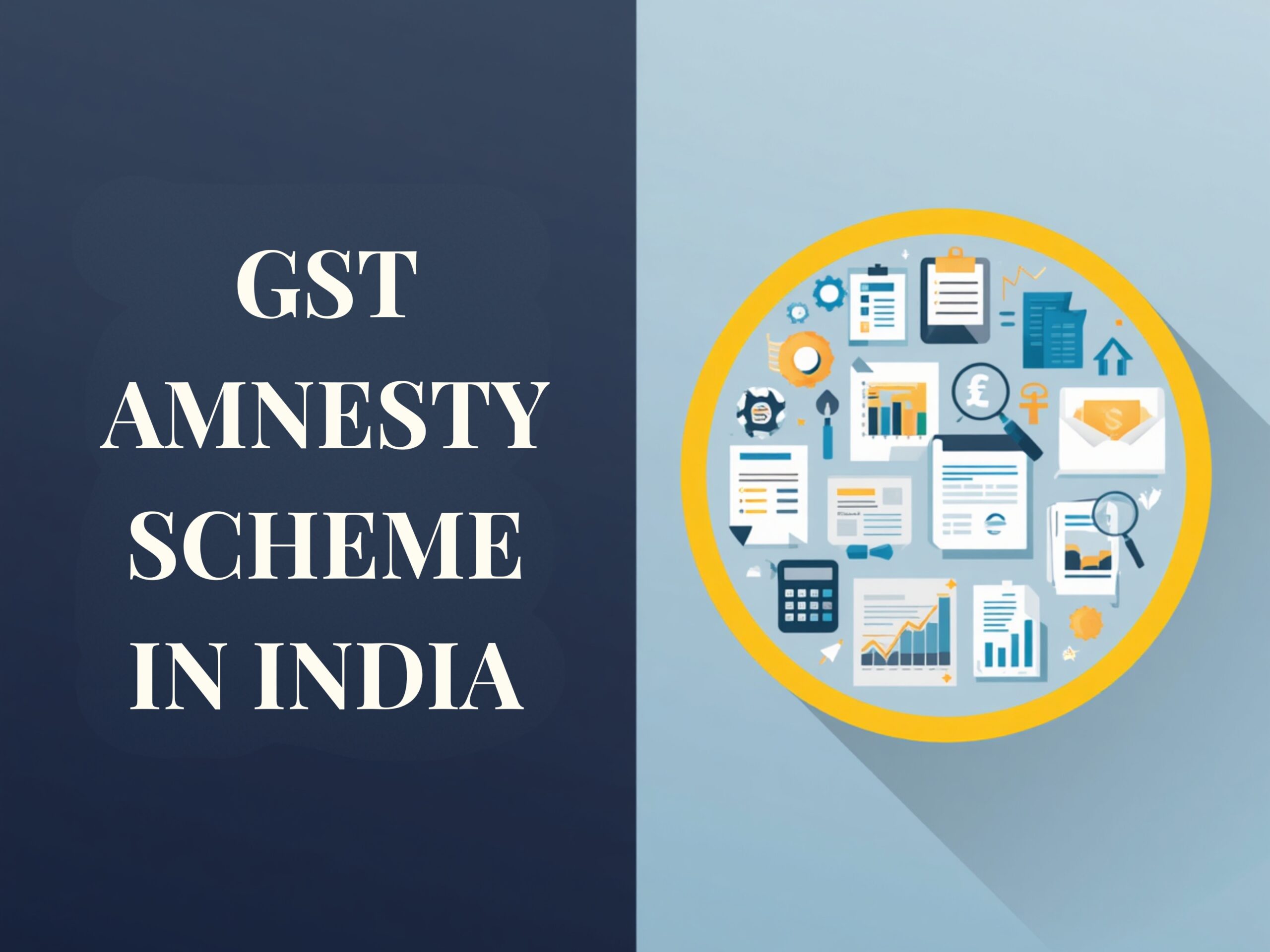
The GSTamnesty scheme has emerged as a critical relief measure for taxpayers in India who have struggled with compliance under the Goods and Services Tax (GST) regime. Since its introduction, the scheme has undergone several phases, each designed to ease the burden of late fees, penalties, and compliance gaps for businesses and individuals.
With evolving updates and provisions, especially leading into the GST amnesty scheme 2026, it is essential to understand how the scheme works, who can benefit, and how to make the most of it. This article provides a comprehensive, easy-to-understand overview while highlighting practical solutions for taxpayers.
The GST Amnesty Scheme was first introduced to address non-compliance during the initial years of GST implementation. It originally covered pending returns from July 2017 to September 2018, allowing taxpayers to file overdue returns by March 31, 2019.
As businesses continued to face challenges, particularly during the COVID-19 pandemic, the government reintroduced the scheme in 2021. This extended relief to taxpayers with pending GSTR-3B filings from July 2017 to April 2021.
Further developments came in 2023 when the government expanded relief measures to include additional forms such as GSTR-4, GSTR-9, and GSTR-10. The scheme also addressed issues related to cancelled registrations and assessment orders.
Looking ahead, the GST Amnesty Scheme 2026 builds upon these earlier initiatives, incorporating broader relief mechanisms such as waiver of penalties and interest under specific conditions.
Understanding the GST amnesty scheme details is essential for taxpayers seeking compliance relief. The scheme primarily offers:
One important aspect is that while penalties and interest may be waived, the principal tax amount must still be paid in full.
The GST late fee amnesty scheme provides significant relief for the delayed filing of GST returns. Under various notifications issued over the years:
This initiative has encouraged many taxpayers to regularize their filings without facing excessive financial burdens.
Additionally, the government has clarified that late fees already paid will not be refunded, making it important for taxpayers to act promptly when such schemes are announced.
How TMWala can help: Navigating late fee calculations and identifying eligibility can be confusing. TMWala assists taxpayers in accurately computing dues and ensuring timely filing to maximize benefits under the amnesty scheme.
A major advancement in GST relief measures is the introduction of the GST penalty waiver scheme under Section 128A of the CGST Act.
Key Highlights:
Important Conditions:
This scheme is particularly beneficial for taxpayers facing legal notices or adjudication orders.
How TMWala can help: Filing applications under Section 128A requires careful documentation and compliance with strict deadlines. TMWala provides end-to-end support from reviewing notices to preparing and submitting waiver applications, ensuring no errors or missed opportunities.
The GST late fee waiver scheme has also seen recent updates, especially with the introduction of new notifications in 2025.
Key Benefits:
Another significant change relates to compliance requirements:
This shift simplifies compliance, particularly for small and medium-sized businesses.
The 2023 version of the scheme was one of the most comprehensive, covering multiple forms and compliance issues:
Key Relief Measures:
These measures provided a much-needed compliance window for taxpayers who had defaulted in earlier years.
Understanding the GST amnesty scheme eligibility is crucial before applying for benefits.
Eligible Persons Include:
Additional Conditions:
Failure to meet these conditions may result in disqualification from the scheme.
The GST pending return penalty waiver is one of the most valuable aspects of the amnesty scheme. It allows taxpayers to:
This is particularly beneficial for businesses that fell behind due to operational or financial challenges.
However, taxpayers must ensure that:
The GST Amnesty Scheme offers several real-world advantages:
While the scheme is beneficial, there are some challenges:
This makes professional guidance highly valuable.
How TMWala can help: From eligibility assessment to final filing, TMWala simplifies the entire process. Their expertise ensures that taxpayers not only comply with regulations but also maximize available benefits under the amnesty scheme.
The GST amnesty scheme continues to play a vital role in supporting taxpayers by offering relief from penalties, late fees, and compliance burdens. With updates leading into the GST amnesty scheme 2026, the framework has become more structured and beneficial.
Whether it is the GST late fee amnesty scheme, GST penalty waiver scheme, or GST late fee waiver scheme, each initiative provides an opportunity for taxpayers to regularize their GST compliance without excessive financial strain.
Understanding the GST amnesty scheme details, checking GST amnesty scheme eligibility, and leveraging the GST pending return penalty waiver provisions can make a significant difference for businesses.
Taking timely action and seeking professional assistance where needed can help taxpayers fully benefit from these schemes and maintain long-term compliance under GST.
Get started instantly
"*" indicates required fields
TMWala
Your one stop shop for all your business registration and compliance needs.
"*" indicates required fields
Choose your Entity Type
Non-MSME/ Large Entitie
Individual/ MSME/ Sole Proprietorships
₹9,000.00 Original price was: ₹9,000.00.₹3,999.00Current price is: ₹3,999.00.
Trademark Application @ ₹3999* (Premium Discounted Plan for MSME/Individual/Sole Proprietorships) Comprehensive
Government Fees
₹4500/-
₹9,000.00 Original price was: ₹9,000.00.₹3,999.00Current price is: ₹3,999.00.
Trademark Application @ ₹3999* (Premium Discounted Plan for Non-MSMEs/Large Entities) Comprehensive
Government Fees
₹9000/-
Choose your Entity Type
Individual/ MSME/ Sole Proprietorships
Non-MSME/ Large Entities
₹3,500.00 Original price was: ₹3,500.00.₹1,999.00Current price is: ₹1,999.00.
Government Fees
₹4500/-
₹3,500.00 Original price was: ₹3,500.00.₹1,999.00Current price is: ₹1,999.00.
Government Fees
₹9000/-
Choose your Entity Type
Individual/ MSME/ Sole Proprietorships
Non-MSME/ Large Entities
₹1,500.00 Original price was: ₹1,500.00.₹999.00Current price is: ₹999.00.
Trademark Application @ ₹999* (Basic Discounted Plan for MSME/Individual/Sole Proprietorships) Best-Selling, Economical & Easy
₹1,500.00 Original price was: ₹1,500.00.₹999.00Current price is: ₹999.00.
Trademark Application @ ₹999* (Basic Discounted Plan for Non-MSMEs/Large Entities) Best-Selling, Economical, Quick and Easy