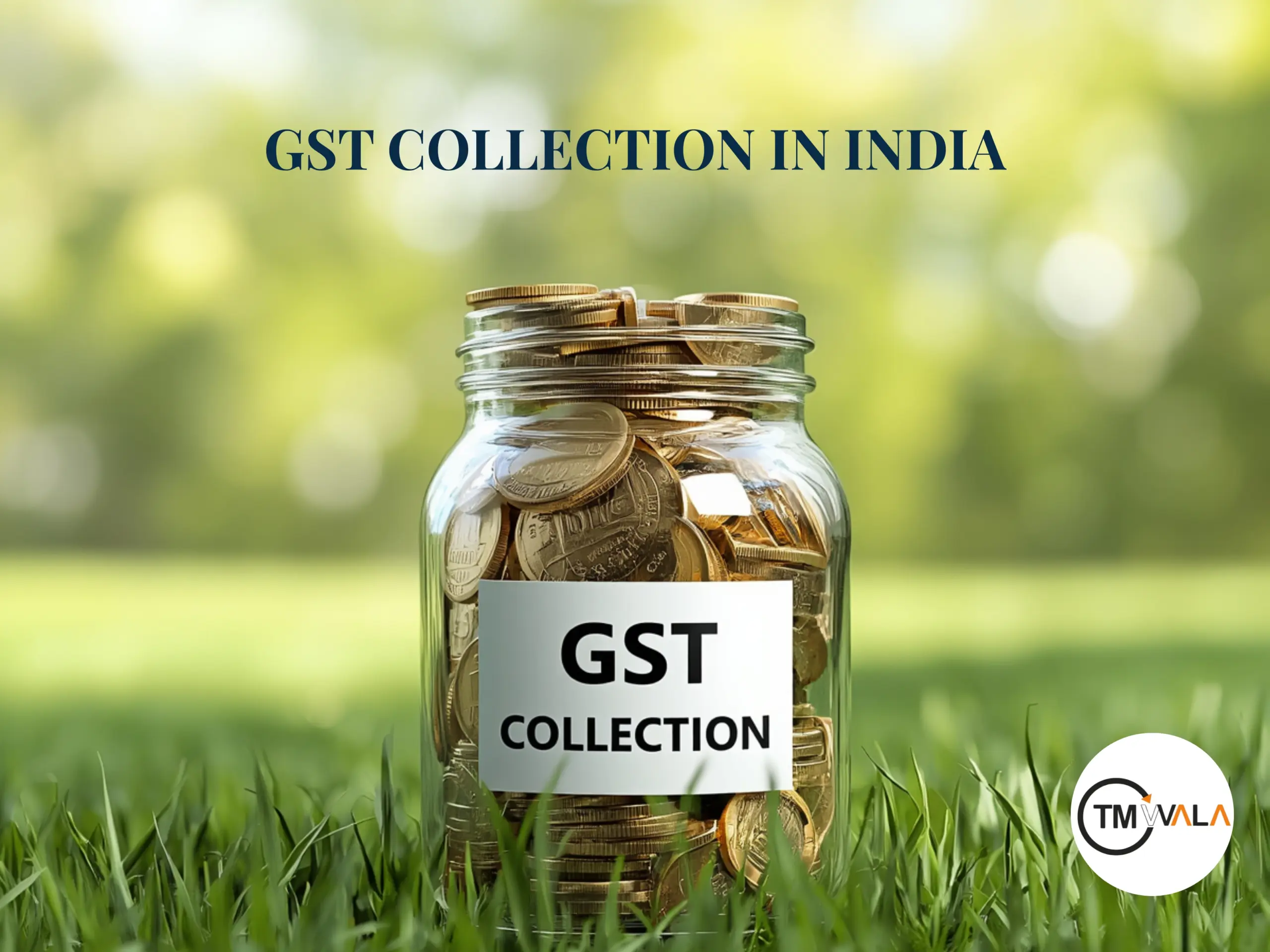
GST collection in India underwent a fundamental transformation on July 1, 2017, as notified by the GST Council of India. A unified indirect tax regime replaced the fragmented structure of excise duties, VAT, and service tax that had governed Indian commerce for decades.
The shift improved the manner in which companies and customers account for indirect taxes, bringing transparency and structure to a previously complex system. GST collection as a proportion of total revenues collected by both the State Governments and the Central Government is now one of the most important contributors to economic development in India.
Taxpayers’ questions around GST can include: Who collects GST? How is revenue divided between the State Government and the Central Government? What is the difference between SGST, CGST, and IGST? Businesses need to understand how these processes work to comply with GST requirements and avoid penalties. This article discusses how GST is collected in India, how different forms of taxation are allocated, and how businesses can strengthen their compliance through the use of technology.
The Goods and Services Tax (GST) is an indirect taxation system for the entire country, which has replaced different taxes such as excise duties, VAT, service tax, and so forth, therefore making indirect taxation less complicated across the whole of India.
Accordingly, to government sources, GST has been intended to be a destination-based tax and therefore provide for taxing a good’s or service’s consumption point rather than where it was produced.
GST is levied at every stage of the supply chain, but the burden ultimately lies on the end consumer.
The GST collection in India refers to the process by which taxes on the supply of goods and services are collected and distributed between the central government and the state government.
Under the GST regime, taxes are accrued at every stage of cost increase, but businesses can claim Input Tax Credit (ITC) to ensure that the tax is best paid on the value added.
The GST structure consists of three major components:
This system ensures a balanced distribution of revenue and makes GST collection in India more transparent and efficient.
GST in India is collected under a dual taxation model.
Central Government:
State Government:
GST Network (GSTN):
It provides the digital surroundings for registration, filing, and payment. It does not collect taxes but ensures seamless GST compliance across the country.
Thus, GST is jointly collected by both the Central and State Governments.
1. CGST (Central GST)
Levied by the Central Government on intra-state supplies.
Example:
If goods worth ₹1,00,000 are sold at 18% GST:
2. SGST (State GST)
SGST is levied by State Governments and forms a major revenue source for state development activities such as infrastructure, education, and healthcare.
It replaces earlier state taxes and ensures states receive direct revenue from consumption within their jurisdiction.
3. IGST Collection
IGST levy is applicable on interstate goods.
For example, goods transported from Delhi to Karnataka attract IGST against CGST + SGST.
The Central Government collects IGST and subsequently apportions the revenue between the Centre and the destination State where the goods or services are consumed. This ensures a clean credit score and avoids cascading taxation.
The process of GST collection in India follows a structured mechanism:
Step 1: Supply of Goods or Services
A supplier issues a GST invoice while supplying goods or services.
Step 2: Collection of GST
The supplier collects GST from the buyer.
Step 3: Input Tax Credit Adjustment
Tax paid on purchases is adjusted against output tax liability.
Step 4: Deposit of Tax
The net tax is deposited electronically on the GST portal.
Step 5: Filing of Returns
Businesses file GST returns regularly.
Step 6: Distribution of Revenue
Revenue is distributed between the Centre and the States based on transaction type.
This system ensures transparency and efficiency in GST collection in India.
It is one of the key features of GST (Goods and Services Tax). As per the GST Concept Note, revenue accrues to the state where goods or services are consumed. For ex, if a manufacturer is from Gujarat and a consumer is from Tamil Nadu, then even though the production happens in Gujarat, tax revenue goes to Tamil Nadu, this ensures balance in economic development across states.
GST compliance is essential for all registered taxpayers. It includes:
Since maintaining proper GST compliance can be challenging for businesses, especially MSMEs and startups, professional assistance becomes essential. TMWala helps businesses ensure timely GST registration, return filing, record maintenance, and Input Tax Credit (ITC) reconciliation. TMWala provides end-to-end compliance services that help businesses avoid penalties, legal notices, and issues with registration. Thus, ensuring they stay compliant with GST rules.
Businesses are utilizing GST accounting software to assist in managing taxes. The use of GST accounting software allows for:
Using GST Accounting Software also enhances accuracy and decreases compliance mistakes. Choosing the right GST accounting software is equally important for efficient tax management. TMWala assists businesses in selecting and implementing suitable GST accounting solutions based on their operational requirements.
Businesses use GST return filing software to simplify monthly and annual filings.
Benefits include:
This software ensures smooth GST compliance and avoids penalties.
Even though there have been advancements, there still are difficulties:
Authorities routinely work to enhance their systems for the purposes of improving GST collections within India.
Before GST, indirect tax in India included:
GST replaced most of these taxes and created a unified system for taxation.
The future of GST collection in India includes:
This will further improve efficiency and transparency.
A major overhaul of the Indian taxation system was brought about by the advent of GST (Goods and Services Tax), which established a single tax structure by eliminating a multitude of indirect taxes. In addition to being an essential aspect of business and taxpaying, an understanding of how GST is collected in India, SGST’s role, and IGST collection is necessary. Businesses operating across Union Territories should also review UTGST provisions that apply alongside CGST.”
GST Directive, online and automated solutions, such as GST accounting software and GST return-filing software, help businesses maintain compliance with the growing trend towards GST collection. Continuous reform and robust GST compliance systems allow for increased transparency and efficiency of the entire indirect tax framework in India.
By obtaining professional support through platforms such as TMWala, businesses are able to properly manage their GST obligations while lowering their compliance risk and thus are able to be positive contributors to the economy of the country.
Get started instantly
"*" indicates required fields
TMWala
Your one stop shop for all your business registration and compliance needs.
"*" indicates required fields
Choose your Entity Type
Non-MSME/ Large Entitie
Individual/ MSME/ Sole Proprietorships
₹9,000.00 Original price was: ₹9,000.00.₹3,999.00Current price is: ₹3,999.00.
Trademark Application @ ₹3999* (Premium Discounted Plan for MSME/Individual/Sole Proprietorships) Comprehensive
Government Fees
₹4500/-
₹9,000.00 Original price was: ₹9,000.00.₹3,999.00Current price is: ₹3,999.00.
Trademark Application @ ₹3999* (Premium Discounted Plan for Non-MSMEs/Large Entities) Comprehensive
Government Fees
₹9000/-
Choose your Entity Type
Individual/ MSME/ Sole Proprietorships
Non-MSME/ Large Entities
₹3,500.00 Original price was: ₹3,500.00.₹1,999.00Current price is: ₹1,999.00.
Government Fees
₹4500/-
₹3,500.00 Original price was: ₹3,500.00.₹1,999.00Current price is: ₹1,999.00.
Government Fees
₹9000/-
Choose your Entity Type
Individual/ MSME/ Sole Proprietorships
Non-MSME/ Large Entities
₹1,500.00 Original price was: ₹1,500.00.₹999.00Current price is: ₹999.00.
Trademark Application @ ₹999* (Basic Discounted Plan for MSME/Individual/Sole Proprietorships) Best-Selling, Economical & Easy
₹1,500.00 Original price was: ₹1,500.00.₹999.00Current price is: ₹999.00.
Trademark Application @ ₹999* (Basic Discounted Plan for Non-MSMEs/Large Entities) Best-Selling, Economical, Quick and Easy