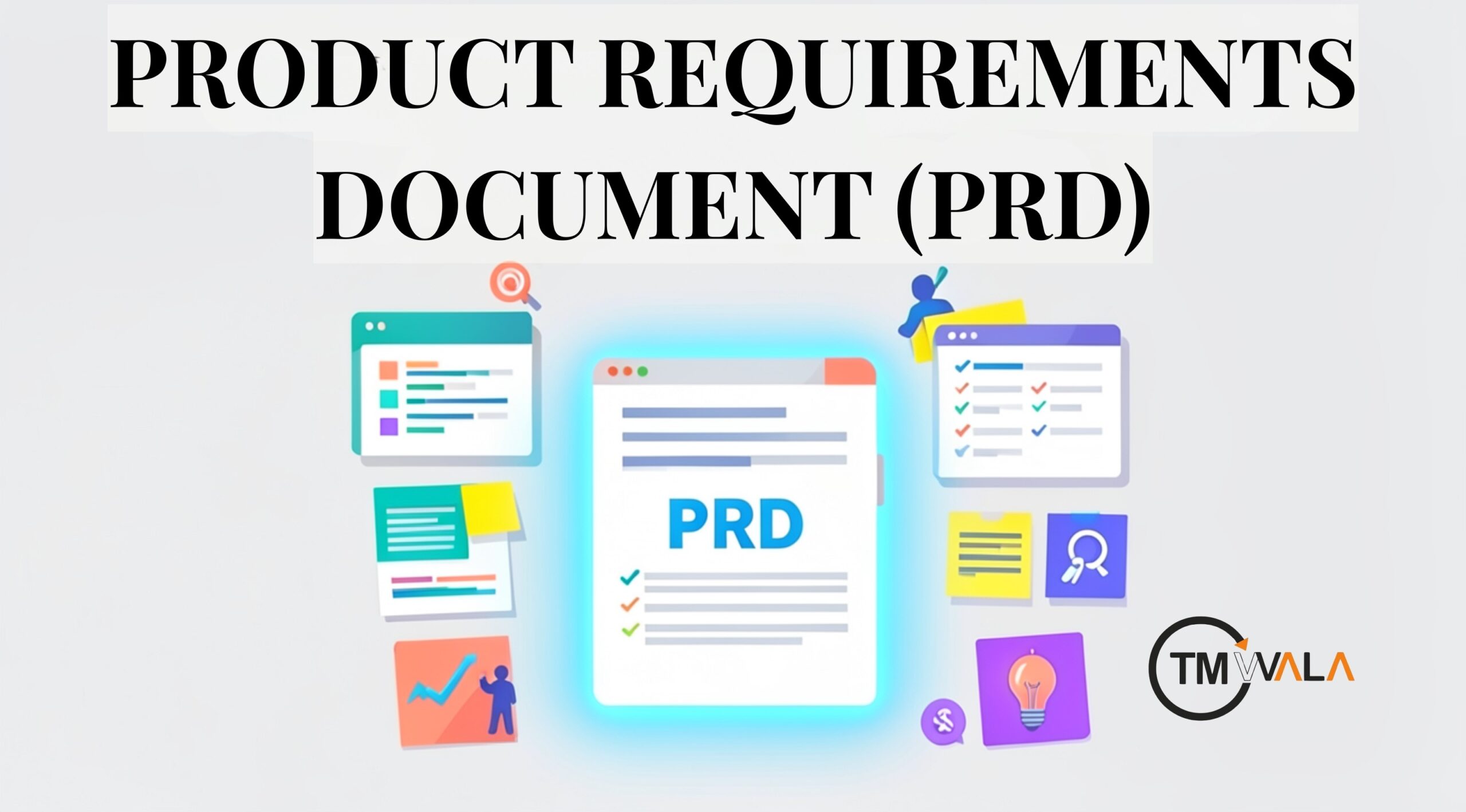
In today’s fast-moving digital product landscape, clarity is everything. Products often fail not because of poor engineering, but due to unclear expectations, misaligned teams, or shifting requirements. This is where a Product Requirements Document (PRD) becomes indispensable. Whether you are building a startup MVP or scaling an enterprise product, a well–written PRD document acts as the foundation for successful product delivery.
This article explains the PRD meaning, PRD full form, why it matters, how to write a PRD, and how it differs from an MRD. By the end, you’ll have a clear understanding of PRD structure, PRD format, and best practices, including how tools like TMWala can simplify the process.
The full form of PRD is Product Requirements Document. A product requirements document PRD is a formal document that clearly describes what a product or feature should do. It defines the product’s purpose, core functionality, user experience expectations, and technical constraints.
In simple terms, the PRD stands for “a single source of truth” for everyone involved in building the product, including product managers, designers, developers, testers, and business stakeholders. It translates product vision into actionable requirements and guides the product from concept to launch.
A PRD is typically created early in the product development lifecycle and continues to evolve as the product matures. When written well, it prevents confusion, reduces rework, and keeps teams aligned on what truly matters.
Product development involves multiple teams with different perspectives. Without a clear PRD, assumptions creep ina nd assumptions are expensive.
Here’s why a PRD document is critical:
A PRD clarifies the product’s vision, goals, and priorities, ensuring that design, engineering, and business teams all work toward the same outcome.
Clearly defined requirements help teams avoid late–stage changes, saving both time and cost.
With documented requirements, discussions become objective rather than opinion-based. Everyone refers to the same source.
Organizations using structured PRDs consistently report better product outcomes. Clear requirements lead to better decisions and smoother launches.
Platforms like TMWala help product teams centralize requirements, collaborate in real time, and keep PRDs updated as priorities evolve, especially useful for growing teams.
Traditional PRDs were often long, rigid documents. In contrast, an Agile PRD focuses on flexibility and shared understanding rather than exhaustive detail.
In Agile environments:
Agile requirements work best when the entire team has deep empathy for the customer. This shared understanding allows product owners to focus on high-level goals while trusting engineers to make implementation decisions. Tools like TMWala support Agile PRD workflows by enabling iterative updates without losing clarity or version control.
Many teams confuse PRDs with MRDs, but they serve different purposes. Understanding PRD vs MRD is essential for effective product planning.
| Aspect | Product Requirements Document (PRD) | Market Requirements Document (MRD) |
| Purpose | Defines what the product should do | Defines market needs and opportunities |
| Focus | Internal (engineering, design, product teams) | External (customers, market, business strategy) |
| Content | Features, functional requirements, UI, technical details | Market analysis, customer pain points, business goals |
| Timing | Created during development | Created during planning and ideation |
| Audience | Product managers, designers, and engineers | Executives, marketing, strategy teams |
In short, the MRD explains why a product should exist, while the PRD explains how it will be built.
While PRDs vary by organization, a strong PRD structure typically includes the following sections:
This PRD format ensures clarity without overwhelming teams with unnecessary detail.
If you’re wondering how to write a PRD, follow these practical steps:
Step 1: Gather Requirements: Collaborate with stakeholders, customers, and technical teams to understand needs and constraints.
Step 2: Define Scope: Clearly state what is included and excluded to prevent scope creep.
Step 3: Document Clearly: Write in simple, unambiguous language. Avoid assumptions and vague terms.
Step 4: Review and Validate: Share the PRD with all stakeholders and incorporate feedback.
Step 5: Get Sign-Off: Formal approval ensures commitment and accountability.
Step 6: Keep It Updated: A PRD is a living document. Update it as priorities or insights change.
Using a structured PRD template, especially within a platform like TMWala, can dramatically reduce the time and effort required to maintain consistency across products.
Below is a simplified example of a product requirements document for clarity:
Product: Weather Forecast Mobile App
This concise structure demonstrates how a PRD translates ideas into actionable instructions.
A well-crafted product requirements document PRD is more than just documentation it is a strategic asset. It aligns teams, reduces risk, and increases the likelihood of delivering products users actually want.
By understanding PRD meaning, mastering PRD structure, and adopting an Agile PRD mindset, teams can build faster, smarter, and with greater confidence. Whether you’re using a simple PRD template or an advanced product management platform like TMWala, the goal remains the same: clarity, alignment, and successful execution.
When done right, a PRD doesn’t slow teams down; it empowers them to build better products, together.
Get started instantly
"*" indicates required fields
TMWala
Your one stop shop for all your business registration and compliance needs.
"*" indicates required fields
Choose your Entity Type
Non-MSME/ Large Entitie
Individual/ MSME/ Sole Proprietorships
₹9,000.00 Original price was: ₹9,000.00.₹3,999.00Current price is: ₹3,999.00.
Trademark Application @ ₹3999* (Premium Discounted Plan for MSME/Individual/Sole Proprietorships) Comprehensive
Government Fees
₹4500/-
₹9,000.00 Original price was: ₹9,000.00.₹3,999.00Current price is: ₹3,999.00.
Trademark Application @ ₹3999* (Premium Discounted Plan for Non-MSMEs/Large Entities) Comprehensive
Government Fees
₹9000/-
Choose your Entity Type
Individual/ MSME/ Sole Proprietorships
Non-MSME/ Large Entities
₹3,500.00 Original price was: ₹3,500.00.₹1,999.00Current price is: ₹1,999.00.
Government Fees
₹4500/-
₹3,500.00 Original price was: ₹3,500.00.₹1,999.00Current price is: ₹1,999.00.
Government Fees
₹9000/-
Choose your Entity Type
Individual/ MSME/ Sole Proprietorships
Non-MSME/ Large Entities
₹1,500.00 Original price was: ₹1,500.00.₹999.00Current price is: ₹999.00.
Trademark Application @ ₹999* (Basic Discounted Plan for MSME/Individual/Sole Proprietorships) Best-Selling, Economical & Easy
₹1,500.00 Original price was: ₹1,500.00.₹999.00Current price is: ₹999.00.
Trademark Application @ ₹999* (Basic Discounted Plan for Non-MSMEs/Large Entities) Best-Selling, Economical, Quick and Easy