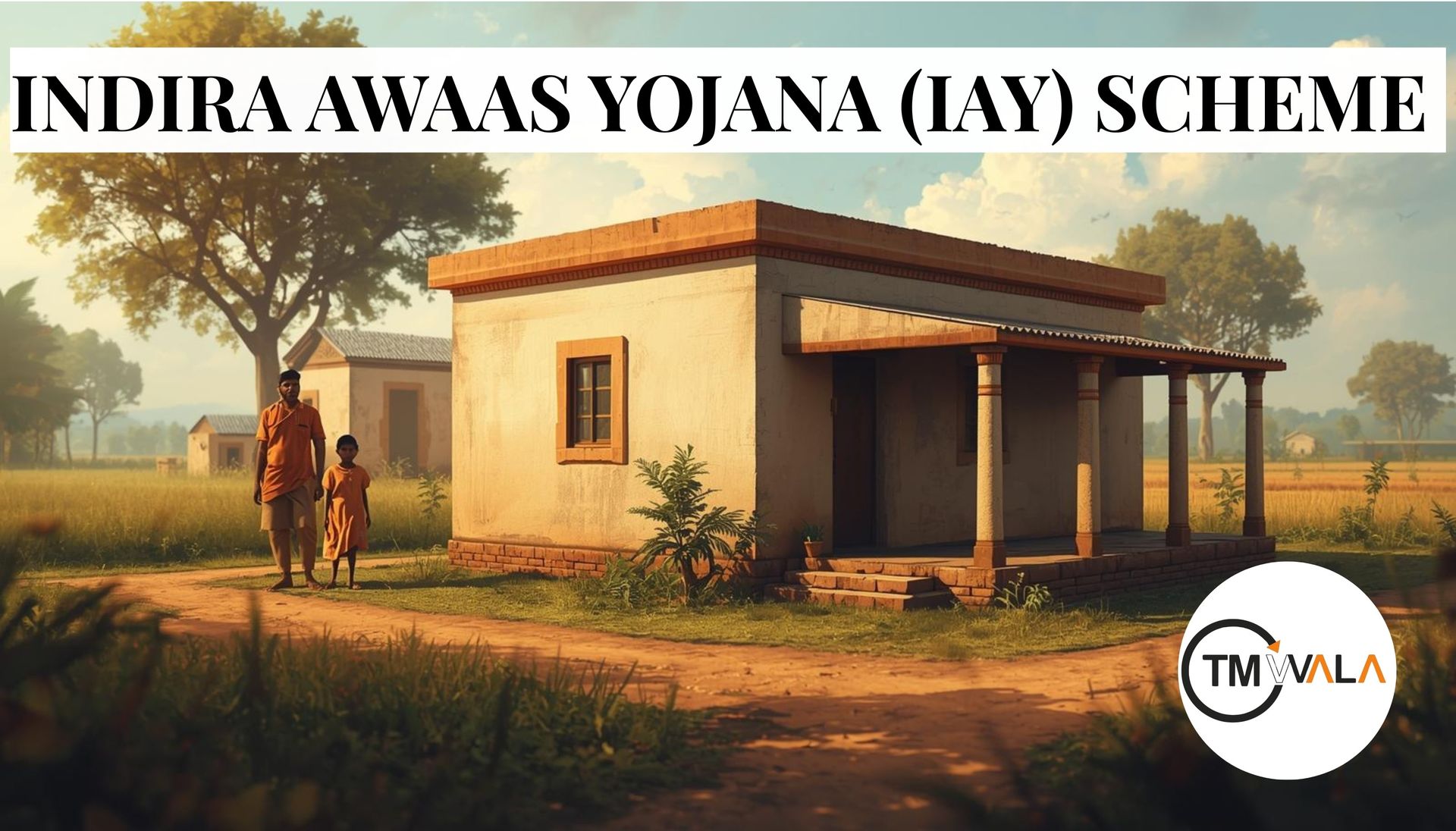
Providing safe and durable housing to rural households has been a key priority for the Government of India for decades. Over time, several rural housing schemes in India have been introduced to address the housing needs of economically weaker sections in villages. Among the most significant initiatives are Indira Awaas Yojana and its successor, the Pradhan Mantri Awas Yojana rural housing scheme.
These programs aim to ensure that families living in poverty have access to secure, permanent homes with basic amenities such as sanitation, electricity, and clean cooking facilities. The following article explains the evolution, objectives, eligibility criteria, and benefits of these schemes, while also highlighting how digital platforms like TMWala can assist beneficiaries in accessing them effectively.
Indira Awaas Yojana was one of the earliest large-scale rural housing programs introduced by the Government of India. Indira Awaas Yojana was launched in 1985–86 as part of the Rural Landless Employment Guarantee Programme (RLEGP). It was later separated and implemented as an independent scheme from the financial year 1997–98.
The Indira Awaas Yojana scheme focused on improving the living conditions of poor rural families by providing financial assistance for building houses. The scheme was designed primarily for disadvantaged communities such as the Scheduled Castes (SC), the Scheduled Tribes (ST), and freed bonded labourers living in rural areas.
The IAY housing scheme aimed to support the construction of houses for rural families living below the poverty line (BPL). The scheme’s key objectives included:
Beneficiaries under the scheme were identified from the Below Poverty Line (BPL) list and approved by the Gram Sabha to ensure transparency and fairness in selection.
The design of the Indira Awaas Yojana scheme ensured that socially disadvantaged communities received priority benefits.
Key allocation guidelines included:
The scheme was funded through a 75:25 cost-sharing arrangement between the Central Government and State Governments, ensuring adequate financial resources for implementation across the country.
A major feature of the IAY housing scheme was the emphasis on durable and sustainable housing construction.
Under the scheme:
The scheme also encouraged the use of locally suitable and environmentally sustainable building technologies. Materials and construction techniques approved by organizations such as HUDCO, engineering institutions, and government agencies were recommended.
In addition, every house constructed under the scheme was expected to include:
These features aimed to improve both housing quality and overall rural sanitation standards.
Although the scheme mainly focused on constructing individual houses, some flexibility was provided depending on local conditions.
For example:
The final choice of construction materials and technology was left to the beneficiary, ensuring community participation and local adaptability.
In April 2016, the Government of India restructured the Indira Awaas Yojana into the PMAY Gramin scheme to improve efficiency, transparency, and scale.
The Pradhan Mantri Awas Yojana Gramin initiative is now one of the most important rural housing schemes in India, aimed at achieving the goal of “Housing for All.”
The scheme targets households that:
Under the program, the government aims to provide pucca houses with basic amenities to eligible rural households across the country.
The Pradhan Mantri Awas Yojana rural housing scheme introduced several improvements compared to earlier programs.
Some of its major features include:
Each house under the scheme must have a minimum size of 25 square meters, including a hygienic cooking area.
Financial assistance provided under the scheme includes:
The funding pattern is shared between the Central and State Governments in a 60:40 ratio in plain areas and 90:10 in northeastern and Himalayan states.
The PMAY beneficiary details gramin process is based on the Socio-Economic and Caste Census (SECC) 2011 database.
Eligible families typically include:
Priority is also given to households facing severe socio-economic deprivation, such as:
Beneficiary identification is verified by the Gram Sabha, ensuring community participation and transparency.
The PMAY Gramin beneficiary list is generated using housing deprivation indicators from the SECC database and verified locally.
Families can check their inclusion in the beneficiary list through the official PMAY-G portal. The list ensures that government assistance reaches only those households that genuinely need housing support.
The government also conducts additional surveys, such as Awaas+, to identify new eligible households that may not have been covered in earlier data.
The following table summarizes the PMAY Gramin scheme details:
| Particulars | Details |
| Scheme Name | Pradhan Mantri Awas Yojana (PMAY) |
| Launch Year | 2015 in urban areas and 2016 in rural areas |
| Rural Component | PMAY-G (Gramin) |
| Objective | Provide pucca houses with basic amenities |
| Financial Assistance | ₹1.20 lakh in plains, ₹1.30 lakh in difficult areas |
| Funding Pattern | 60:40 between Centre and States in plains |
| Target | Housing for all rural households |
The scheme also provides additional support through convergence with other programs, including sanitation assistance under the Swachh Bharat Mission and employment support through MGNREGA.
One of the major improvements introduced under the PMAY Gramin scheme is the use of digital systems for monitoring and implementation.
Tools such as AwaasSoft and AwaasApp allow authorities to track construction progress, release funds digitally, and ensure transparency in project implementation.
This digital transformation has significantly improved efficiency in the delivery of rural housing benefits.
Navigating government housing schemes can sometimes be challenging due to documentation requirements, eligibility checks, and verification processes. This is where platforms like TMWala can assist.
TMWala helps rural households by:
By simplifying access to government schemes, TMWala enables families to better understand and utilize benefits available under rural housing schemes in India.
The journey from Indira Awaas Yojana to the PMAY Gramin scheme represents a significant evolution in India’s rural housing policies. While the original IAY housing scheme laid the foundation for supporting poor households, the modern Pradhan Mantri Awas Yojana rural housing scheme has expanded the scale, transparency, and efficiency of rural housing delivery.
By combining financial assistance, digital monitoring systems, and convergence with other welfare schemes, the government continues to strengthen its commitment to providing dignified housing to rural families.
With platforms like TMWala simplifying access to information and eligibility checks, beneficiaries can better navigate these programs and move closer to achieving the dream of owning a safe and permanent home.
Get started instantly
"*" indicates required fields
TMWala
Your one stop shop for all your business registration and compliance needs.
"*" indicates required fields
Choose your Entity Type
Non-MSME/ Large Entitie
Individual/ MSME/ Sole Proprietorships

₹9,000.00 Original price was: ₹9,000.00.₹3,999.00Current price is: ₹3,999.00.
Trademark Application @ ₹3999* (Premium Discounted Plan for MSME/Individual/Sole Proprietorships) Comprehensive
Government Fees
₹4500/-
₹9,000.00 Original price was: ₹9,000.00.₹3,999.00Current price is: ₹3,999.00.
Trademark Application @ ₹3999* (Premium Discounted Plan for Non-MSMEs/Large Entities) Comprehensive
Government Fees
₹9000/-
Choose your Entity Type
Individual/ MSME/ Sole Proprietorships
Non-MSME/ Large Entities

₹3,500.00 Original price was: ₹3,500.00.₹1,999.00Current price is: ₹1,999.00.
Government Fees
₹4500/-
₹3,500.00 Original price was: ₹3,500.00.₹1,999.00Current price is: ₹1,999.00.
Government Fees
₹9000/-
Choose your Entity Type
Individual/ MSME/ Sole Proprietorships
Non-MSME/ Large Entities
₹1,500.00 Original price was: ₹1,500.00.₹999.00Current price is: ₹999.00.
Trademark Application @ ₹999* (Basic Discounted Plan for MSME/Individual/Sole Proprietorships) Best-Selling, Economical & Easy
₹1,500.00 Original price was: ₹1,500.00.₹999.00Current price is: ₹999.00.
Trademark Application @ ₹999* (Basic Discounted Plan for Non-MSMEs/Large Entities) Best-Selling, Economical, Quick and Easy