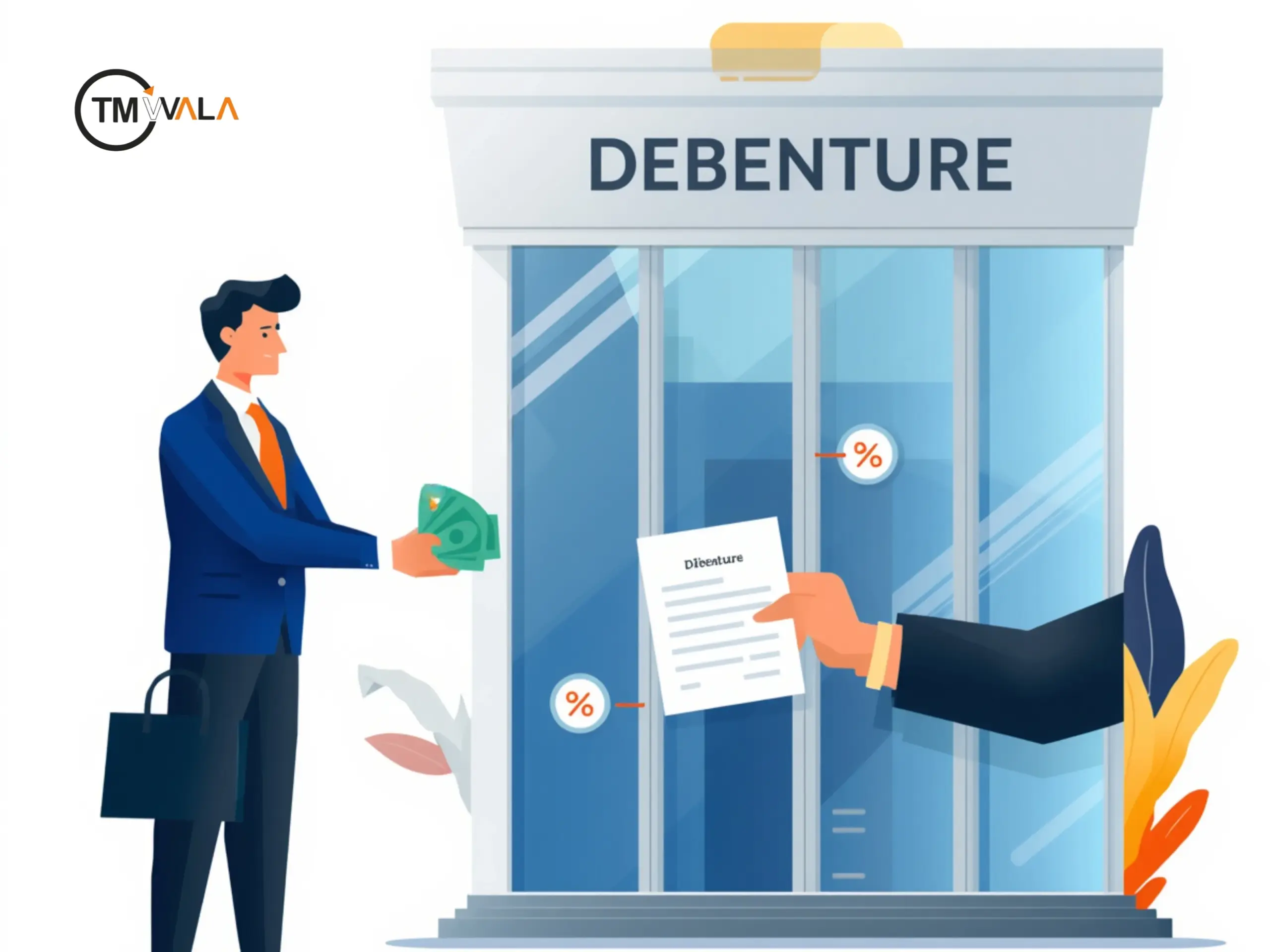
Debentures play a vital role in corporate finance, offering companies an effective way to raise long-term funds without diluting ownership. Understanding debentures in company law is essential for students, professionals, and businesses seeking to navigate modern financial structures. This article provides a comprehensive and original overview of debentures, their legal framework, classifications, and practical implications under Indian law.
To begin with, it is important to understand what debentures are. A debenture is essentially a written acknowledgment of debt issued by a company. It represents a promise by the company to repay a specified sum of money along with interest at a predetermined rate and time. Unlike shares, debentures do not confer ownership rights; instead, they establish a creditor–debtor relationship between the investor and the company.
Debentures are a key component of the capital structure of a company, forming part of its debt capital. While they contribute to the financial resources of the business, they do not constitute share capital. This distinction is crucial because debenture holders are creditors, not owners, and therefore have different rights and priorities compared to shareholders.
The legal framework governing debentures under the Companies Act 2013 is primarily laid down in Section 71 of the Companies Act 2013. This section provides detailed provisions regarding the issuance, management, and redemption of debentures.
Under this section, companies are permitted to issue debentures with an option to convert them into shares, provided such issuance is approved by a special resolution. Importantly, companies are prohibited from issuing debentures with voting rights, ensuring that debenture holders do not interfere in management decisions.
The law also mandates the creation of a Debenture Redemption Reserve (DRR), which ensures that companies maintain sufficient funds for repayment. Additionally, companies issuing debentures to a large number of investors must appoint debenture trustees to safeguard investor interests.
Another critical feature of Section 71 of the Companies Act 2013 is the protection mechanism it offers. In case of default in payment of interest or principal, debenture holders or trustees can approach the Tribunal for appropriate relief, including enforcement of repayment.
Understanding the types of debentures helps in analysing their suitability for both companies and investors. Debentures can be classified in several ways:
Registered vs Bearer Debentures
Registered debentures are issued in the name of specific individuals, and their transfer requires formal procedures. Bearer debentures, on the other hand, are transferable by mere delivery, and the holder is entitled to interest.
Convertible vs Non-Convertible Debentures
A key classification is convertible vs non-convertible debentures. Convertible debentures allow investors to convert their debt into equity shares after a certain period. Non-convertible debentures remain purely debt instruments and typically offer higher interest rates to compensate for the lack of conversion benefits.
Another important distinction is secured vs unsecured debentures.
Secured debentures are backed by the assets of the company. In case of default, debenture holders have a legal claim over these assets. This makes them relatively safer and more attractive to conservative investors.
Unsecured debentures, in contrast, are not backed by any collateral. Their repayment depends solely on the company’s creditworthiness and reputation. Due to the higher risk involved, they generally offer higher interest rates.
For companies, issuing secured debentures often aligns with the concept of a secured loan company, where borrowing is backed by tangible security to enhance investor confidence.
A crucial legal document in the issuance process is the debenture trust deed. This is an agreement between the company and a trustee who represents the interests of debenture holders.
The trust deed outlines the terms of the debenture issue, including interest payments, redemption conditions, and the rights of investors. The trustee ensures that the company complies with these terms and takes action in case of default.
The presence of a debenture trust deed enhances transparency and accountability, making it a critical safeguard for investors.
The payment of interest on debentures is one of the defining features of these instruments. Interest is usually paid at a fixed rate and at regular intervals, such as annually or half-yearly.
A significant aspect is that interest must be paid regardless of whether the company is making profits. This obligation distinguishes debentures from equity shares, where dividends are paid only out of profits.
This fixed-income nature makes debentures attractive to investors seeking stable returns.
The rights of debenture holders are well-protected under the Companies Act, 2013. Some of the key rights include:
Additionally, if a company fails to meet its obligations, legal consequences can be imposed on its officers, including fines and imprisonment. These provisions ensure accountability and protect investor interests.
The redemption of debentures refers to the repayment of the principal amount by the company. This can be carried out in several ways:
Once redeemed, the company is discharged from its liability towards those debentures. Proper planning for redemption is essential to maintain financial stability and investor trust.
A common area of confusion is debentures vs bonds. While both are debt instruments, there are notable differences:
Understanding these differences helps investors make informed decisions based on their risk appetite.
Debentures are a significant element in the capital structure of a company. By raising funds through debentures, companies can avoid diluting ownership while still accessing substantial capital.
However, excessive reliance on debt can increase financial risk due to fixed interest obligations. Therefore, companies must maintain a balanced mix of equity and debt to optimize their capital structure.
Debentures are a cornerstone of corporate financing, offering flexibility to companies and steady returns to investors. From understanding what debentures are, analysing debentures vs bonds, it is clear that these instruments serve diverse financial needs.
The provisions under section 71 of the Companies Act 2013 ensure that the interests of debenture holders are safeguarded while enabling companies to raise funds efficiently. With various types of debentures available, including distinctions like secured vs unsecured debentures and convertible vs non–convertible debentures, both issuers and investors have multiple options to choose from.
A well–structured approach, supported by professional guidance such as that offered by TMWala, can ensure compliance, reduce risk, and maximize financial benefits.
Get started instantly
"*" indicates required fields
TMWala
Your one stop shop for all your business registration and compliance needs.
"*" indicates required fields
Choose your Entity Type
Non-MSME/ Large Entitie
Individual/ MSME/ Sole Proprietorships
₹9,000.00 Original price was: ₹9,000.00.₹3,999.00Current price is: ₹3,999.00.
Trademark Application @ ₹3999* (Premium Discounted Plan for MSME/Individual/Sole Proprietorships) Comprehensive
Government Fees
₹4500/-
₹9,000.00 Original price was: ₹9,000.00.₹3,999.00Current price is: ₹3,999.00.
Trademark Application @ ₹3999* (Premium Discounted Plan for Non-MSMEs/Large Entities) Comprehensive
Government Fees
₹9000/-
Choose your Entity Type
Individual/ MSME/ Sole Proprietorships
Non-MSME/ Large Entities
₹3,500.00 Original price was: ₹3,500.00.₹1,999.00Current price is: ₹1,999.00.
Government Fees
₹4500/-
₹3,500.00 Original price was: ₹3,500.00.₹1,999.00Current price is: ₹1,999.00.
Government Fees
₹9000/-
Choose your Entity Type
Individual/ MSME/ Sole Proprietorships
Non-MSME/ Large Entities
₹1,500.00 Original price was: ₹1,500.00.₹999.00Current price is: ₹999.00.
Trademark Application @ ₹999* (Basic Discounted Plan for MSME/Individual/Sole Proprietorships) Best-Selling, Economical & Easy
₹1,500.00 Original price was: ₹1,500.00.₹999.00Current price is: ₹999.00.
Trademark Application @ ₹999* (Basic Discounted Plan for Non-MSMEs/Large Entities) Best-Selling, Economical, Quick and Easy