LLC vs Inc vs Corp: Which Structure Fits Your Business

LLC VS Inc VS Corp Explained: Structure, Benefits & Tax Differences

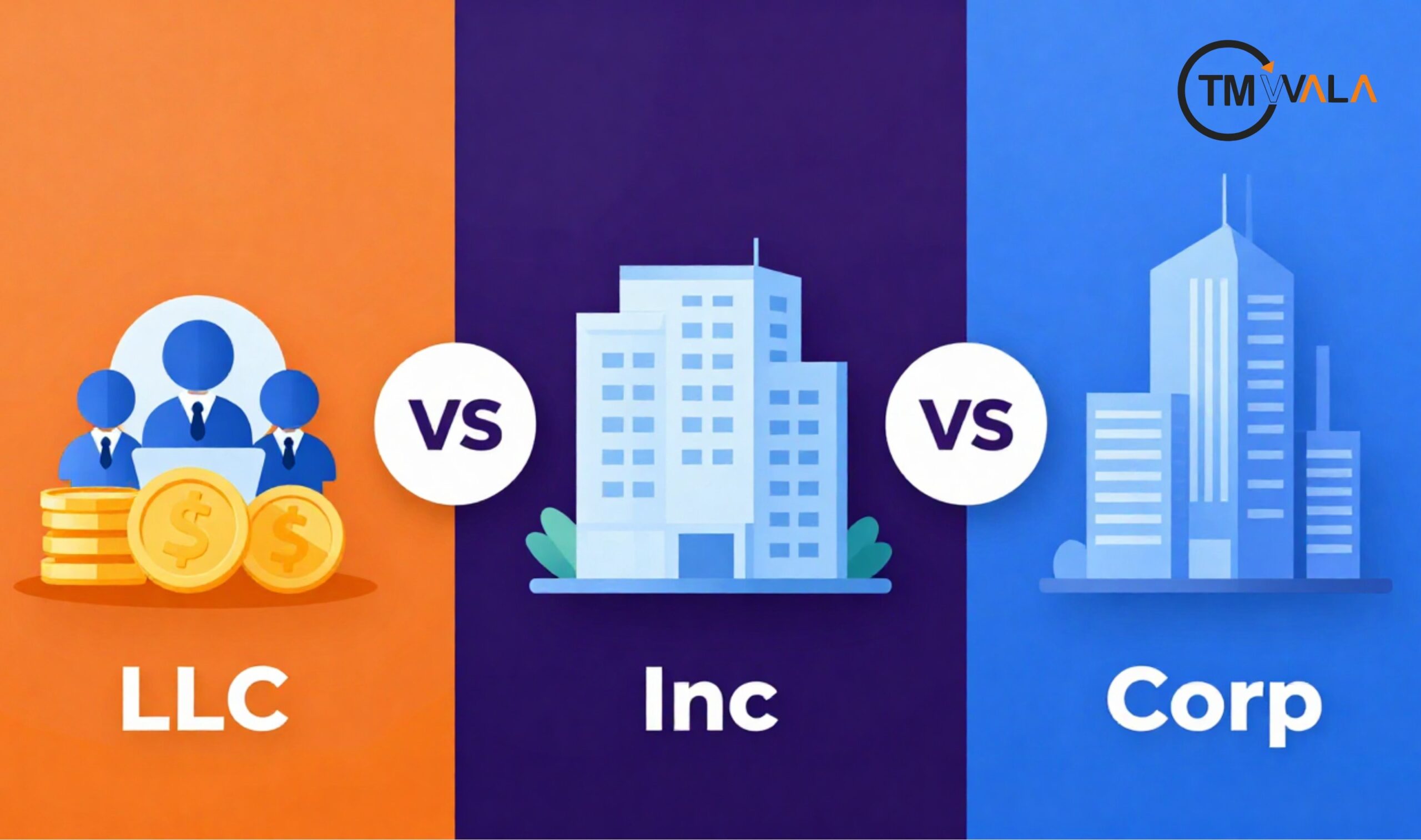
LLC vs Inc vs Corp

Choosing the right legal structure for a business is one of the most important decisions any entrepreneur can make. Whether you’re launching a startup, expanding operations, or planning long-term growth, understanding the differences between LLP, Private Limited Company, and Public Limited Company is essential.

Many business owners often come across global terms like LLC, Inc., and Corp, but these are based on foreign legal systems. In India, businesses operate under a different regulatory framework. This guide provides a clear and practical business structure comparison, helping you understand the most relevant types of company registration in India and choose the right structure for your needs. In the upcoming paragraphs, you will know more about LLC vs Inc vs Corp in depth.

Understanding LLP, Private Limited, and Public Limited Companies

At the most basic level:

  • LLP (Limited Liability Partnership) is a flexible business structure that combines the benefits of a partnership with limited liability protection.
  • A Private Limited Company is a structured corporate entity governed by the Companies Act, 2013, suitable for startups and growing businesses.
  • A public limited company is a corporate structure that allows businesses to raise capital from the public through stock exchanges.

When comparing LLP vs Private Limited Company, the key difference lies in flexibility versus scalability and structured governance.

Limited Liability Partnership Meaning

Before diving deeper, let’s understand the concept of an LLP:

A Limited Liability Partnership (LLP) is a business structure in India that protects the personal assets of its partners from business liabilities. This means partners are not personally responsible for the debts or legal obligations of the business.

At the same time, LLPs offer operational flexibility, making them a popular choice for professionals, consultants, and small businesses.

Difference Between LLP and Company

Understanding the difference between LLP and a company is crucial when selecting the right business structure. While both offer limited liability protection, they differ in ownership, compliance, and growth potential.

  1. Ownership Structure
    • LLP: Owned by partners who share profits as per the LLP agreement
    • Company: Owned by shareholders who hold shares in the business

This distinction plays a major role when comparing funding options and long-term scalability.

  1. Formation and Compliance
    • LLP:
      • Requires registration with the Ministry of Corporate Affairs (MCA)
      • Governed by an LLP Agreement
      • Fewer compliance requirements
    • Company:
      • Requires incorporation under the Companies Act, 2013
      • Needs Memorandum of Association (MOA) and Articles of Association (AOA)
      • Higher compliance and regulatory requirements

Companies follow stricter rules, making them more structured but also more complex to manage.

  1. Management Structure
    • LLP: Managed by partners directly
    • Company: Managed by directors appointed by shareholders

This makes LLPs more flexible, while companies offer a more formal governance structure.

LLP vs Company Taxation In India

Taxation plays a significant role in choosing the right business structure.

  • LLP Taxation
    • LLPs are taxed at a flat rate (approximately 30%)
    • Profits are taxed at the LLP level
    • Partners are not taxed again on profit distribution

This eliminates the issue of double taxation, making LLPs tax-efficient for smaller businesses.

  • Company Taxation
    • Companies are taxed under the Income Tax Act, 1961
    • Corporate tax rate:
      • Around 22% under the new tax regime (subject to conditions)
    • Dividends are taxed in the hands of shareholders

While companies may have lower tax rates, dividend taxation can increase the overall tax burden.

Pros and Cons Of LLP vs Private Limited Company

Choosing between LLP and Private Limited Company requires balancing flexibility with growth potential.

LLP Advantages and Disadvantages

LLP Advantages

  • Lower compliance requirements
  • No dividend tax on profit distribution
  • Flexible management structure
  • Cost-effective for small businesses

LLP Disadvantages

  • Limited ability to raise external funding
  • Not preferred by venture capitalists
  • Lower scalability compared to other companies

These points clearly highlight the advantages and disadvantages of LLPs.

Private Limited Company Advantages and Disadvantages

Private Limited Company Advantages

  • Easier to raise funding from investors
  • Strong legal recognition
  • Suitable for startups and scaling businesses
  • Ability to issue shares

Private Limited Company Disadvantages

  • Higher compliance and regulatory burden
  • More documentation and formalities
  • Dividend taxation applicable

Which is Better: LLP or Private Limited Company?

The question of which structure is better depends entirely on your business goals:

  • Choose LLP if:
    • You want a simple and flexible structure
    • You’re running a small or medium-sized business
    • You prefer lower compliance and operational ease
  • Choose Private Limited Company if:
    • You plan to raise funding or attract investors
    • You want to scale your business aggressively
    • You aim to build a structured and high-growth company

Startup Business Structure: What Should You Choose?

For entrepreneurs evaluating a startup business structure, the decision typically depends on:

  • Growth vision
  • Funding requirements
  • Compliance capacity

Startups seeking investment usually prefer Private Limited Companies, while bootstrapped businesses and professionals often choose LLPs for simplicity.

If you’re unsure, platforms like TMWala can help you choose the right structure, handle registration, and ensure compliance based on your specific business needs.

Types Of Company Registration In India

India offers several business structures depending on your requirements:

  1. Sole Proprietorship
    • Owned by a single individual
    • Easy to set up
    • No separate legal identity
  2. One Person Company (OPC)
    • Single owner with limited liability
    • Combines the benefits of a sole proprietorship and a company
  3. Partnership Firm
    • Two or more partners
    • Governed by a partnership deed
    • Shared profits and responsibilities
  4. Limited Liability Partnership (LLP)
    • Hybrid structure
    • Limited liability with flexibility
    • Ideal for professionals and small businesses
  5. Private Limited Company
    • Separate legal entity
    • Minimum 2 directors and shareholders
    • Preferred for startups and funding
  6. Public Limited Company
    • Can raise capital from the public
    • Shares can be listed on a stock exchange
  7. Section 8 Company
    • Non-profit organization
    • Focus on social, educational, or charitable objectives

Comparing Business Structures In India

Unlike foreign markets, India has its own legal and taxation framework for businesses. Instead of LLCs and corporations, Indian entrepreneurs typically choose between LLPs and Companies based on their goals.

  • LLP is ideal for flexibility and low compliance
  • A Private Limited Company is best for startups and growth
  • Public Limited Company suits large-scale businesses

Understanding these differences is essential for making the right decision.

This is where expert assistance becomes valuable. TMWala helps entrepreneurs navigate business registration, compliance, and structure selection to ensure a smooth setup process.

Conclusion

Choosing the right business structure is more than just a legal requirement; it lays the foundation for your company’s growth and success.

To summarize:

  • LLPs offer flexibility and lower compliance
  • Companies provide structure and scalability
  • Different Indian entities cater to different business needs

Whether you’re evaluating a startup business structure or exploring long-term expansion, aligning your choice with your vision is critical.

If you’re still unsure, consulting experts like TMWala can simplify everything from selecting the right entity to handling registration and compliance, so you can focus on building your business with confidence.

FAQs

  1. What is an LLP?
    A Limited Liability Partnership (LLP) is a flexible business structure that combines partnership benefits with limited liability protection.
  2. Who can start a Private Limited Company in India?
    At least two directors and two shareholders can form a Private Limited Company under the Companies Act, 2013.
  3. How is an LLP different from a Private Limited Company?
    LLPs offer flexibility and lower compliance, while Private Limited Companies provide structured governance and easier access to funding.
  4. What is the tax rate for an LLP in India?
    LLPs are taxed at a flat rate of around 30%, and partners are not taxed again on profit distribution.
  5. Can a Public Limited Company raise funds from the public?
    Yes, a Public Limited Company can raise capital by issuing shares listed on stock exchanges.
  6. Is compliance easier for an LLP or a Private Limited Company?
    Compliance is easier and less formal for an LLP compared to a Private Limited Company.
  7. Can startups opt for an LLP in India?
    Yes, startups with minimal funding needs and operational flexibility often choose LLPs.
  8. What is a Section 8 Company?
    A Section 8 Company is a non-profit entity focused on social, educational, or charitable objectives.
  9. Which business structure is better for scaling a company?
    Private Limited and Public Limited Companies are better for scaling and attracting investors.
  10. Do LLPs allow personal asset protection?
    Yes, LLPs protect partners’ personal assets from business liabilities and debts.

Get started instantly

Hero enquiry form

"*" indicates required fields

Name*
This field is for validation purposes and should be left unchanged.

Leave a Reply

Your email address will not be published. Required fields are marked *


The reCAPTCHA verification period has expired. Please reload the page.

"Protect Your Brand with Our Legal Expertise!"

Get an Instant Call Back from Our Legal Experts

Hero enquiry form

"*" indicates required fields

Name*
This field is for validation purposes and should be left unchanged.

Choose your Entity Type

Non-MSME/ Large Entitie

Individual/ MSME/ Sole Proprietorships

File a Trademark, Trademark application logo of TMWala

Original price was: ₹9,000.00.Current price is: ₹3,999.00.

Trademark Application @ ₹3999* (Premium Discounted Plan for MSME/Individual/Sole Proprietorships) Comprehensive

Government Fees

₹4500/-

Add to cart
File a Trademark, Trademark application logo of TMWala

Original price was: ₹9,000.00.Current price is: ₹3,999.00.

Trademark Application @ ₹3999* (Premium Discounted Plan for Non-MSMEs/Large Entities) Comprehensive

Government Fees

₹9000/-

Add to cart

Choose your Entity Type

Individual/ MSME/ Sole Proprietorships

Non-MSME/ Large Entities

Original price was: ₹3,500.00.Current price is: ₹1,999.00.

Government Fees

₹4500/-

Add to cart

Original price was: ₹3,500.00.Current price is: ₹1,999.00.

Government Fees

₹9000/-

Add to cart

Choose your Entity Type

Individual/ MSME/ Sole Proprietorships

Non-MSME/ Large Entities

Trademark Application by TMWala

Original price was: ₹1,500.00.Current price is: ₹999.00.

Trademark Application @ ₹999* (Basic Discounted Plan for MSME/Individual/Sole Proprietorships) Best-Selling, Economical & Easy

Government Fees

₹4500/-

Add to cart
Trademark Application by TMWala

Original price was: ₹1,500.00.Current price is: ₹999.00.

Trademark Application @ ₹999* (Basic Discounted Plan for Non-MSMEs/Large Entities) Best-Selling, Economical, Quick and Easy

Government Fees

₹9000/-

Add to cart