
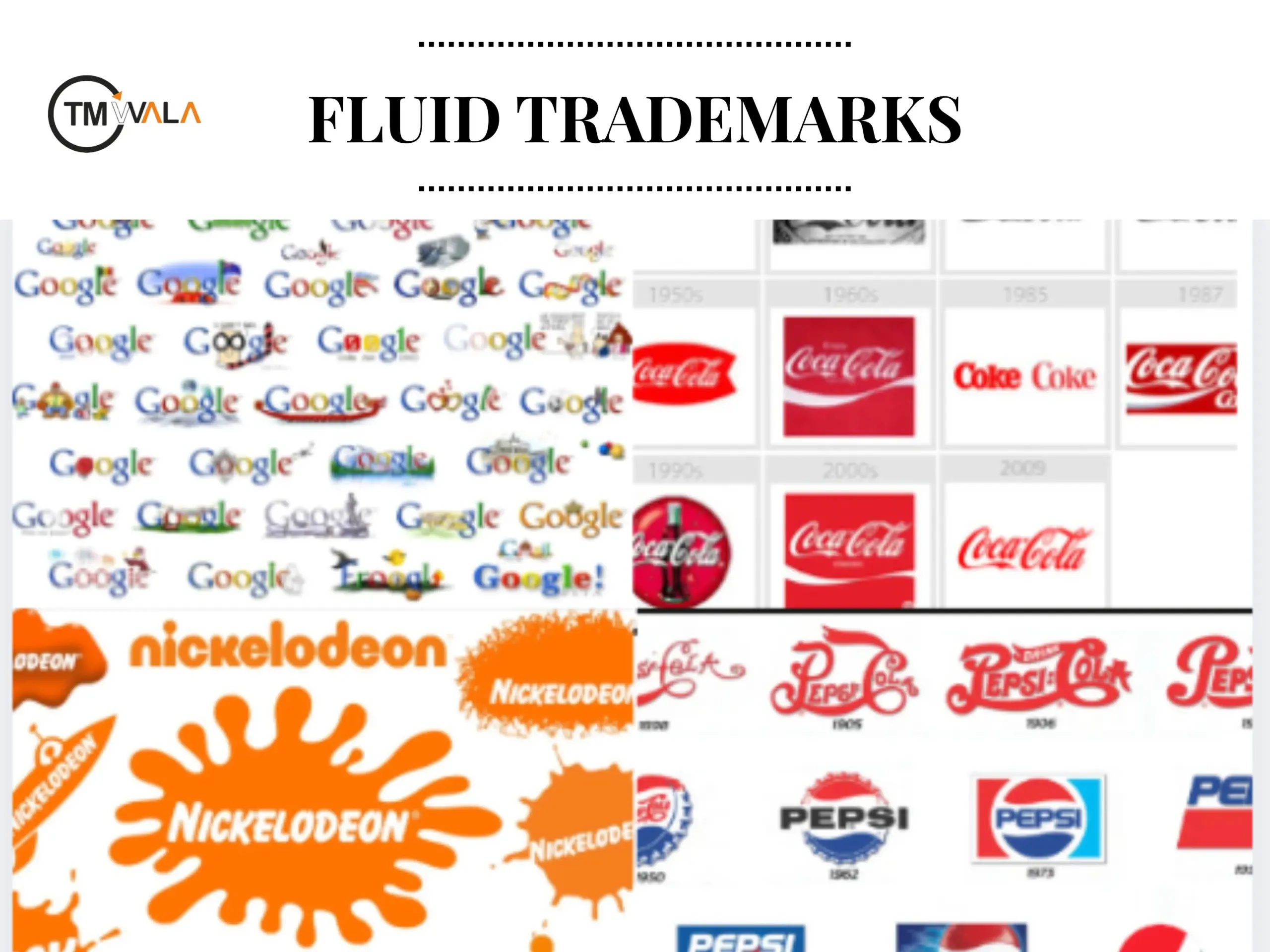
In today’s fast–paced digital marketplace, brands constantly seek innovative ways to engage with consumers while maintaining their distinctive identity. One such innovation is the concept of fluid trademarks, which has gained significant popularity among globally recognized brands. Unlike traditional trademarks that remain static over time, fluid trademarks are modified or alternative versions of an established trademark that retain sufficient elements of the original mark to remain recognizable to the public.
Well–known brands often temporarily alter their trademarks to support marketing campaigns, celebrate festivals, commemorate special occasions, pay tribute to notable personalities, promote social causes, or engage with current events. Despite these modifications, consumers can still easily identify the source of the goods or services because the essential and distinctive features of the original trademark remain intact.
Over the years, fluid trademarks have become an effective branding strategy that enables companies to stay relevant and create stronger emotional connections with consumers. These altered versions are generally used for a limited duration and are eventually replaced by the original trademark.
As branding practices continue to evolve, businesses must also understand the legal implications of modifying their trademarks. Professional guidance can play an important role in ensuring that such modifications do not dilute trademark rights. TMWala assists businesses with trademark strategy, portfolio management, legal compliance, and protection of both traditional and evolving brand identities.
This article explores the concept of fluid trademarks, their relationship with trademark law, their role in modern branding, available legal protection, registration considerations, and some of the most notable examples from around the world.
A fluid trademark may be described as a temporary variation of a registered trademark that preserves the core identity of the original mark while introducing creative changes. These changes may include alterations in colour, design, shape, layout, artistic presentation, or other visual elements.
The primary objective of fluid trademarks is to create a fresh and engaging brand experience without sacrificing brand recognition. The success of a fluid trademark depends upon consumers being able to immediately associate the modified version with the original brand.
Unlike completely new trademarks, fluid trademarks derive their value from the reputation and goodwill already attached to the original mark. The altered version acts as an extension of the brand’s identity rather than as an independent trademark.
Fluid Branding has emerged as a powerful marketing approach in the digital age. Consumers today interact with brands across multiple platforms, including websites, social media, mobile applications, streaming services, and digital advertisements. As a result, brands require greater flexibility in their visual identities.
Through Fluid Branding, companies can adapt their logos and visual elements to suit particular occasions while maintaining consistency in their overall brand image. This approach allows businesses to appear modern, responsive, and culturally relevant.
For example, a company may temporarily modify its logo to celebrate a national festival, support an environmental campaign, commemorate a historical event, or honour a public figure. Such modifications often generate public interest, increase engagement, and strengthen brand visibility.
The concept of Fluid Branding demonstrates that modern trademarks are no longer limited to rigid visual representations. Instead, they can evolve while continuing to serve their fundamental purpose of identifying the source of goods and services.
Although Indian trademark law does not specifically define or mention fluid trademarks, certain provisions of the Trade Marks Act, 1999, provide a legal foundation for understanding their protection.
Section 2(1)(zb) of the Trade Marks Act defines a trademark as:
This definition focuses on the trademark’s ability to distinguish one trader’s goods or services from those of another. Since fluid trademarks retain the essential and distinctive characteristics of the original mark, they generally continue to perform this identifying function.
The crucial factor is whether the modified trademark still allows consumers to recognize the source of the goods or services. If the essential features of the original trademark remain intact, the modified version may continue to benefit from the goodwill and recognition attached to the original mark.
However, the absence of specific statutory recognition creates certain legal uncertainties. Courts may evaluate each fluid trademark on a case-by-case basis, considering factors such as consumer recognition, distinctiveness, and the extent of modification.
While there is no direct provision dealing specifically with fluid trademarks, Section 15 of the Trade Marks Act provides partial protection through the concept of series marks.
Section 15 permits the registration of multiple trademarks as a series when they resemble each other in material particulars but differ only in certain non-distinctive elements, such as:
This provision is particularly relevant for fluid trademarks because many modified versions differ from the original trademark only in non–essential visual elements. In such situations, trademark owners may consider registering multiple variations as a series to strengthen legal protection.
Businesses planning to adopt fluid trademark strategies should carefully assess whether their trademark variations qualify for registration under Section 15. TMWala can assist businesses in evaluating registration options, managing trademark portfolios, and ensuring compliance with applicable legal requirements.
The concept of dynamic branding closely complements fluid trademarks. Traditional branding relied heavily on static logos and fixed visual guidelines. However, modern consumer interactions occur across numerous digital platforms that demand greater flexibility.
Dynamic branding represents a shift from fixed brand identities to adaptable visual systems capable of changing according to context. A brand may modify its colours, animations, typography, layouts, or graphical elements depending on the platform or audience while maintaining a consistent identity.
This flexibility is particularly valuable in today’s digital environment, where brands must communicate effectively across websites, mobile devices, social media platforms, and multimedia content.
Fluid trademarks serve as one of the most visible manifestations of dynamic branding, enabling brands to remain recognizable while continuously adapting to changing circumstances.
From a legal perspective, fluid trademarks form part of a company’s broader intellectual property portfolio. Trademarks represent valuable business assets that embody brand reputation, consumer trust, and market recognition.
The strategic use of fluid trademarks demonstrates how businesses can maximize the value of their intellectual property while remaining innovative and responsive to consumer expectations.
However, businesses must exercise caution. Excessive modifications that remove essential characteristics of the original trademark may weaken consumer recognition and potentially affect legal protection. Therefore, maintaining consistency between the original mark and its fluid variations is critical.
Proper management of trademark assets ensures that brand owners continue to enjoy the benefits of their intellectual property rights while pursuing creative marketing initiatives.
When implementing a fluid trademark strategy, businesses should also consider issues relating to IP registration.
Some important steps include:
1. Conducting Trademark Searches
Before adopting any new trademark variation, businesses should verify that the proposed design does not conflict with existing registered trademarks.
2. Evaluating Registration Options
Depending on the nature and frequency of modifications, businesses may explore registering multiple trademark variations or series marks where appropriate.
3. Maintaining Documentation
Proper records of trademark usage, marketing campaigns, and modified versions can help establish ownership and support enforcement actions if disputes arise.
4. Renewal and Portfolio Management
Registered trademarks remain valid for ten years and may be renewed indefinitely in successive ten-year periods. Businesses should ensure that all relevant registrations remain active.
5. Professional Assistance
Because fluid trademark strategies often involve complex legal considerations, professional guidance can be highly beneficial. TMWala assists businesses throughout the IP registration process, helping brands secure and manage trademark rights while minimizing legal risks.
One of the most recognized examples of fluid trademarks is the series of logo modifications used by Google. Commonly known as Google Doodles, these variations celebrate holidays, anniversaries, historical events, cultural milestones, and notable personalities.
Although the visual presentation changes frequently, consumers instantly recognize the underlying Google brand. The success of Google Doodles demonstrates how fluid trademarks can enhance engagement while preserving brand identity.
During the COVID-19 pandemic, Audi temporarily modified its iconic four-ring logo by separating the rings. The alteration was intended to promote social distancing and public awareness.
The campaign attracted significant public attention while maintaining the recognizability of the Audi trademark, making it a notable example of fluid trademark usage for social messaging.
Another well-known example is Nickelodeon. Since the 1980s, Nickelodeon has frequently experimented with different backgrounds, shapes, and artistic presentations of its logo.
Despite these modifications, the brand has successfully maintained strong consumer recognition, particularly among younger audiences. The company demonstrates how fluid trademarks can support long-term brand evolution without compromising identity.
The growing popularity of fluid trademarks reflects the changing nature of modern branding. As businesses seek innovative ways to connect with consumers, temporary modifications of established trademarks have become an effective tool for marketing, social engagement, and cultural relevance.
Although Indian trademark law does not specifically regulate fluid trademarks, existing provisions relating to trademark distinctiveness and series marks provide a framework for understanding their legal protection. Businesses must ensure that any modifications preserve the essential identity of the original mark so that consumers can continue to recognize the brand.
By combining creativity with legal strategy, companies can successfully leverage Fluid Branding, dynamic branding, and strong intellectual property management practices to strengthen their market presence. Careful planning, proper IP registration, and ongoing trademark management are essential to ensuring that fluid trademarks enhance rather than weaken brand protection.
For businesses considering the adoption of fluid trademarks, TMWala offers comprehensive assistance with trademark registration, portfolio management, legal compliance, and brand protection strategies, helping companies innovate confidently while safeguarding their valuable trademark rights.
Get started instantly
"*" indicates required fields

TMWala
Your one stop shop for all your business registration and compliance needs.
"*" indicates required fields
Choose your Entity Type
Non-MSME/ Large Entitie
Individual/ MSME/ Sole Proprietorships

₹9,000.00 Original price was: ₹9,000.00.₹3,999.00Current price is: ₹3,999.00.
Trademark Application @ ₹3999* (Premium Discounted Plan for MSME/Individual/Sole Proprietorships) Comprehensive
Government Fees
₹4500/-
₹9,000.00 Original price was: ₹9,000.00.₹3,999.00Current price is: ₹3,999.00.
Trademark Application @ ₹3999* (Premium Discounted Plan for Non-MSMEs/Large Entities) Comprehensive
Government Fees
₹9000/-
Choose your Entity Type
Individual/ MSME/ Sole Proprietorships
Non-MSME/ Large Entities

₹3,500.00 Original price was: ₹3,500.00.₹1,999.00Current price is: ₹1,999.00.
Government Fees
₹4500/-
₹3,500.00 Original price was: ₹3,500.00.₹1,999.00Current price is: ₹1,999.00.
Government Fees
₹9000/-
Choose your Entity Type
Individual/ MSME/ Sole Proprietorships
Non-MSME/ Large Entities
₹1,500.00 Original price was: ₹1,500.00.₹999.00Current price is: ₹999.00.
Trademark Application @ ₹999* (Basic Discounted Plan for MSME/Individual/Sole Proprietorships) Best-Selling, Economical & Easy
₹1,500.00 Original price was: ₹1,500.00.₹999.00Current price is: ₹999.00.
Trademark Application @ ₹999* (Basic Discounted Plan for Non-MSMEs/Large Entities) Best-Selling, Economical, Quick and Easy