Surat has rapidly evolved into one of India’s most dynamic business hubs, known for its thriving textile, diamond, and startup ecosystems. In such a competitive environment, building a unique brand identity is not just beneficial; it is essential. Whether you are launching a new venture or scaling an existing one, protecting your brand should be a top priority. Trademark registration plays a critical role in securing your brand’s identity and ensuring long-term business growth.
A registered trademark gives your business a distinct identity and protects it from misuse or imitation. However, navigating the trademark registration process can be complex without proper guidance. This is where TMWala can support you. With professional expertise and streamlined online services, TMWala assists businesses in Surat in securing their trademarks efficiently and without unnecessary complications.
A trademark is a distinctive sign that sets your products or services apart from others in the marketplace. It may include a name, logo, slogan, symbol, design, or even a combination of these elements. In India, trademarks are governed by the Trade Marks Act, 1999, which provides legal protection to registered marks.
For businesses in Surat, a trademark is more than just a visual identity. It represents your reputation, quality, and trustworthiness in the eyes of customers. Once registered, it grants you exclusive rights to use that mark in connection with your goods or services, preventing others from using similar identifiers that could confuse consumers.
Trademark registration offers several advantages that go beyond basic brand protection. It strengthens your business foundation and adds long-term value.
Trademark registration in Surat is accessible to a wide range of applicants. You do not need to be a large corporation to secure your brand identity. Eligible applicants include:
This flexibility ensures that businesses of all sizes can protect their brand assets effectively.
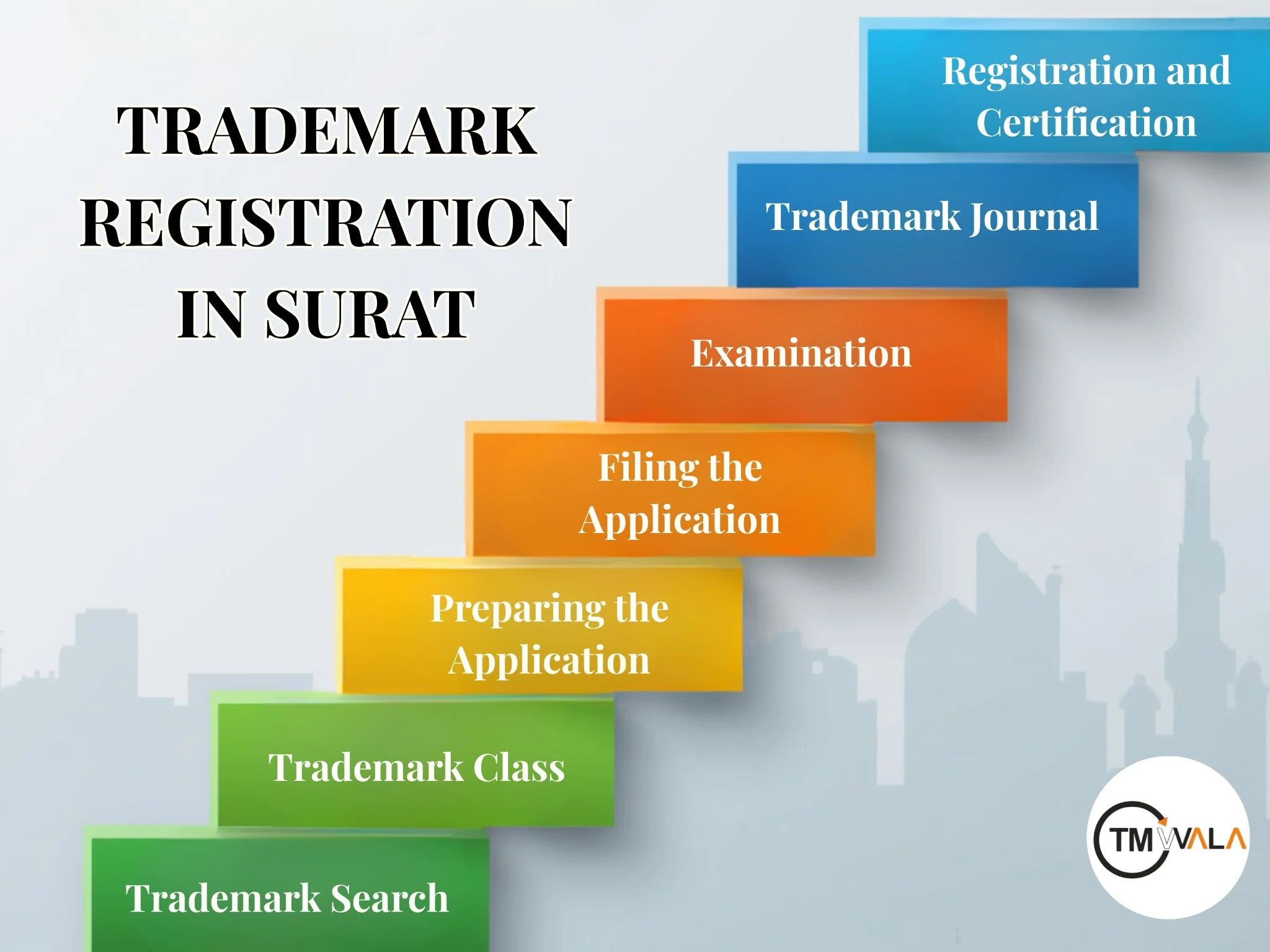
Although the trademark registration process is conducted online, it involves multiple stages that require careful attention. Understanding each step helps avoid delays and increases the chances of successful registration.
Step 1: Trademark Search: Check whether your desired trademark is already in use or registered. Conducting a comprehensive search helps identify potential conflicts and reduces the likelihood of rejection.
A proper search ensures that your brand is unique and legally viable. Professional assistance from TMWala at this stage can help you perform a thorough search and assess risks accurately.
Step 2: Choosing the Correct Trademark Class: Trademarks are categorized into 45 classes based on the goods or services they represent. Selecting the appropriate class is crucial, as it determines the scope of protection.
For example:
If your business operates in multiple areas, you may need to apply under more than one class to ensure complete protection.
Step 3: Preparing the Application: Once the search and classification are complete, the next step is preparing the application. This involves gathering and organizing essential details such as:
Accuracy at this stage is vital. Even minor errors can lead to objections or delays. TMWala helps ensure that your application is prepared correctly and complies with all requirements.
Step 4: Filing the Application: The application is filed online through the official trademark portal using the prescribed form. After submission, you receive an acknowledgment along with an application number.
This number allows you to track the status of your application. At this stage, you can also start using the “TM” symbol alongside your brand name.
Step 5: Examination by the Registrar: After filing, the application is reviewed by the Trademark Registrar. The examination focuses on:
If the Registrar finds any issues, an examination report is issued. You must respond within the given timeframe to avoid rejection. Professional handling of objections is critical, and TMWala can assist in drafting and submitting effective responses.
Step 6: Publication in the Trademark Journal: If the application passes examination, it is published in the Trademark Journal. This allows the public to review and raise objections if they believe the trademark conflicts with their existing rights.
The opposition period typically lasts four months. During this time, third parties can challenge the registration.
Step 7: Registration and Certification: If no opposition is filed, or if any opposition is resolved in your favour, the trademark is officially registered. You will receive a registration certificate, and your trademark will be valid for ten years.
The registration can be renewed indefinitely every ten years, ensuring continuous protection for your brand.
To complete the registration process smoothly, you need to provide specific documents. These generally include:
Depending on your business structure, additional documents may be required. Proper documentation ensures faster processing and minimizes the risk of rejection.
In a fast-growing business environment like Surat, protecting your brand identity is not optional it is essential. Trademark registration provides legal protection, builds credibility, and creates a strong foundation for long-term success.
While the process may seem complex, the right guidance can make it straightforward and efficient. With expert assistance from TMWala, you can navigate the registration process with confidence and secure your brand without unnecessary delays.
Investing in a trademark today is an investment in your business’s future. It ensures that your brand remains uniquely yours, giving you the confidence to grow, expand, and succeed in a competitive marketplace.
Ans. A trademark is a unique name, logo, symbol, or design that distinguishes your goods or services from others in the market.
Ans. It provides legal protection, exclusive rights, and helps build brand recognition and customer trust.
Ans. Individuals, proprietors, partnerships, LLPs, companies, foreign entities, trusts, and societies can apply.
Ans. Yes, you can use the “TM” symbol immediately after filing your application.
Ans. A registered trademark is valid for 10 years and can be renewed indefinitely.
Ans. Trademark classes categorize goods and services into 45 different groups for proper protection.
Ans. You must respond to the objection and may need to provide clarification or attend a hearing.
Ans. The application process is primarily online, but some stages, like hearings, may require additional steps.
Ans. Basic documents include identity proof, business details, trademark information, and a logo (if applicable).
Ans. TMWala assists with trademark search, application filing, documentation, and handling objections for a smooth process.
Get started instantly
"*" indicates required fields

TMWala
Your one stop shop for all your business registration and compliance needs.
"*" indicates required fields
Choose your Entity Type
Non-MSME/ Large Entitie
Individual/ MSME/ Sole Proprietorships
₹9,000.00 Original price was: ₹9,000.00.₹3,999.00Current price is: ₹3,999.00.
Trademark Application @ ₹3999* (Premium Discounted Plan for MSME/Individual/Sole Proprietorships) Comprehensive
Government Fees
₹4500/-
₹9,000.00 Original price was: ₹9,000.00.₹3,999.00Current price is: ₹3,999.00.
Trademark Application @ ₹3999* (Premium Discounted Plan for Non-MSMEs/Large Entities) Comprehensive
Government Fees
₹9000/-
Choose your Entity Type
Individual/ MSME/ Sole Proprietorships
Non-MSME/ Large Entities
₹3,500.00 Original price was: ₹3,500.00.₹1,999.00Current price is: ₹1,999.00.
Government Fees
₹4500/-
₹3,500.00 Original price was: ₹3,500.00.₹1,999.00Current price is: ₹1,999.00.
Government Fees
₹9000/-
Choose your Entity Type
Individual/ MSME/ Sole Proprietorships
Non-MSME/ Large Entities
₹1,500.00 Original price was: ₹1,500.00.₹999.00Current price is: ₹999.00.
Trademark Application @ ₹999* (Basic Discounted Plan for MSME/Individual/Sole Proprietorships) Best-Selling, Economical & Easy
₹1,500.00 Original price was: ₹1,500.00.₹999.00Current price is: ₹999.00.
Trademark Application @ ₹999* (Basic Discounted Plan for Non-MSMEs/Large Entities) Best-Selling, Economical, Quick and Easy