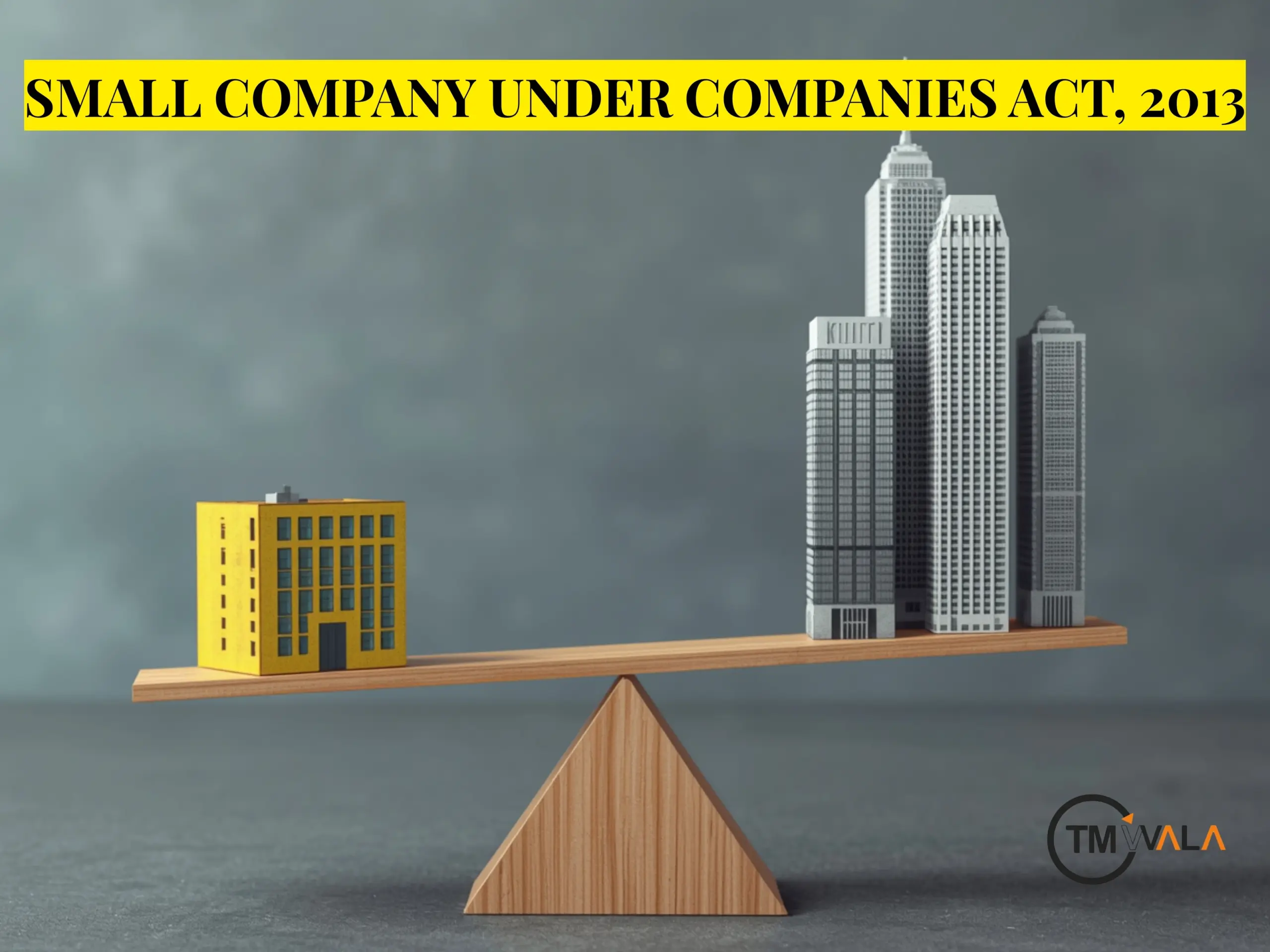
The concept of a small company under the Companies Act 2013 was introduced to support the growth of small-scale businesses operating in a corporate structure. These entities play a vital role in India’s economic development by generating employment, fostering innovation, and contributing to GDP growth.
With simplified regulatory requirements and reduced compliance burdens, small companies are better positioned to focus on expansion and operational efficiency. Professional advisory platforms like TMWala can assist businesses in determining eligibility, managing compliance, and ensuring smooth incorporation under applicable laws.
Company Definition Companies Act 2013
Before understanding small companies, it is essential to note the definition companies act 2013. Under the Act, a company is defined as an entity incorporated under the Companies Act, 2013, or any previous company law. This legal recognition provides businesses with a structured framework and limited liability protection.
Definition Of Small Company
The definition of a small company is provided under section 2(85) of the Companies Act 2013. A small company refers to a company, other than a public company, that satisfies specific financial thresholds relating to capital and turnover.
Updated Small Company Definition MCA
As per the latest small company definition, MCA(effective from 15 September 2022), a company qualifies as a small company if it meets the following conditions:
- Paid-up share capital does not exceed ₹4 crore, now revised to ₹10 crore.
- Turnover does not exceed ₹40 crore, now revised to ₹100 crore.
These revised thresholds reflect the evolving small company criteria in India, aimed at including more startups and MSMEs within the regulatory benefits framework.
Small Company Paid Up Capital Limit
Understanding the small company’s paid-up capital limit is essential for classification:
- Earlier limit: ₹4 crore
- Revised upper limit: ₹10 crore
Similarly, the turnover limit has been increased from ₹40 crore to ₹100 crore. These changes significantly broaden the scope of companies eligible for small company status.
What is a Small Company in Company Law
To answer what a small company is in company law, it is essentially a privately held company with limited capital and turnover, enjoying special compliance relaxations under the Companies Act, 2013.
However, the following entities are excluded:
- Holding and subsidiary companies
- Section 8 (non-profit) companies
- Companies governed by special Acts
Classification Of Companies In India
The classification of companies in India under the Companies Act, 2013 includes:
- One Person Company (OPC): A company with a single member and limited liability.
- Private Limited Company: Requires a minimum of two members and restricts share transferability.
- Public Limited Company: Allows public participation through shareholding with no upper limit on members.
- Section 8 Company: Formed for charitable or non-profit objectives.
Small company classification applies only to eligible private companies that meet prescribed financial criteria.
Private Limited vs Small Company
The comparison of a private limited company vs. a small company often creates confusion. It is important to understand that:
- A private limited company is a broader category.
- A small company is a specific classification within private companies based on financial thresholds.
Difference Between a Small Company and a Private Company
The difference between a small company and a private company can be summarized as:
- Scope: All small companies are private companies, but not all private companies qualify as small companies.
- Compliance: Small companies enjoy reduced compliance requirements.
- Eligibility: Based on turnover and capital limits.
TMWala can guide businesses in identifying whether their private company qualifies as a small company and help leverage the associated benefits.
Example Of A Small Company In India
An example of a small company in India could include early-stage startups or MSMEs with:
Tech Startup
A private limited IT services company based in India:
- Paid-up capital: ₹2 crore
- Annual turnover: ₹15 crore
- Business: Software development and app services
This company qualifies as a small company because it falls within both financial limits.
Such companies are often in sectors like technology services, manufacturing units, or local trading businesses.
Benefits of a Small Company under the Companies Act 2013
There are several benefits of a small company under the Companies Act 2013, including:
- Ease of Compliance: Fewer regulatory filings and simplified procedures.
- Reduced Costs: Lower legal and administrative expenses.
- Lesser Penalties: Reduced penalties for non-compliance compared to larger companies.
- Encouragement for Startups: Promotes entrepreneurship and innovation.
- Operational Flexibility: Enables faster decision-making due to fewer regulatory constraints.
Professional support from TMWala can help companies maximize these benefits while staying compliant with statutory requirements.
Requirements of the Board Meeting For A Small Company
The requirement for board meetings for small companies is relaxed compared to other companies.
- A small company is required to hold at least two board meetings in a year.
- The gap between the two meetings should not be less than 90 days.
This is a significant relaxation compared to the standard requirement of four board meetings annually for other companies.
Conclusion
The concept of a small company under the Companies Act 2013 is a progressive step towards strengthening India’s entrepreneurial ecosystem. By easing compliance burdens and expanding eligibility through revised thresholds, the government has created a supportive environment for startups and MSMEs.
Understanding the definition of a small company, eligibility criteria, and compliance requirements is essential for businesses to fully benefit from this classification. With expert assistance from TMWala, companies can ensure proper structuring, seamless compliance, and strategic growth within the legal framework.
FAQs
- What is a small company under the Companies Act 2013?
A small company is a private company that meets the prescribed limits of paid-up capital and turnover under the Companies Act, 2013.
- What is the definition of a small company?
The definition of a small company is provided under section 2(85) of the Companies Act 2013, based on capital and turnover thresholds.
- What is the small company’s paid-up capital limit?
The small company paid up capital limit is up to ₹10 crore.
- What is the turnover limit for a small company in India?
The turnover must not exceed ₹100 crore as per the latest MCA rules.
- What is the small company criteria in India?
A company must satisfy both capital and turnover limits and must not be a public, holding, or subsidiary company.
- What is a small company in company law?
It is a private company (including eligible OPCs) with reduced compliance requirements under the Companies Act, 2013.
- What is the difference between a small company and a private company?
All small companies are private companies, but not all private companies qualify as small companies.
- What are the benefits of a small company under the Companies Act 2013?
Benefits include reduced compliance, lower costs, fewer penalties, and operational flexibility.
- What is the requirement of a board meeting for a small company?
A small company must hold at least two board meetings annually with a minimum gap of 90 days.
- Can startups be classified as small companies?
Yes, most startups qualify if they meet the prescribed capital and turnover limits.