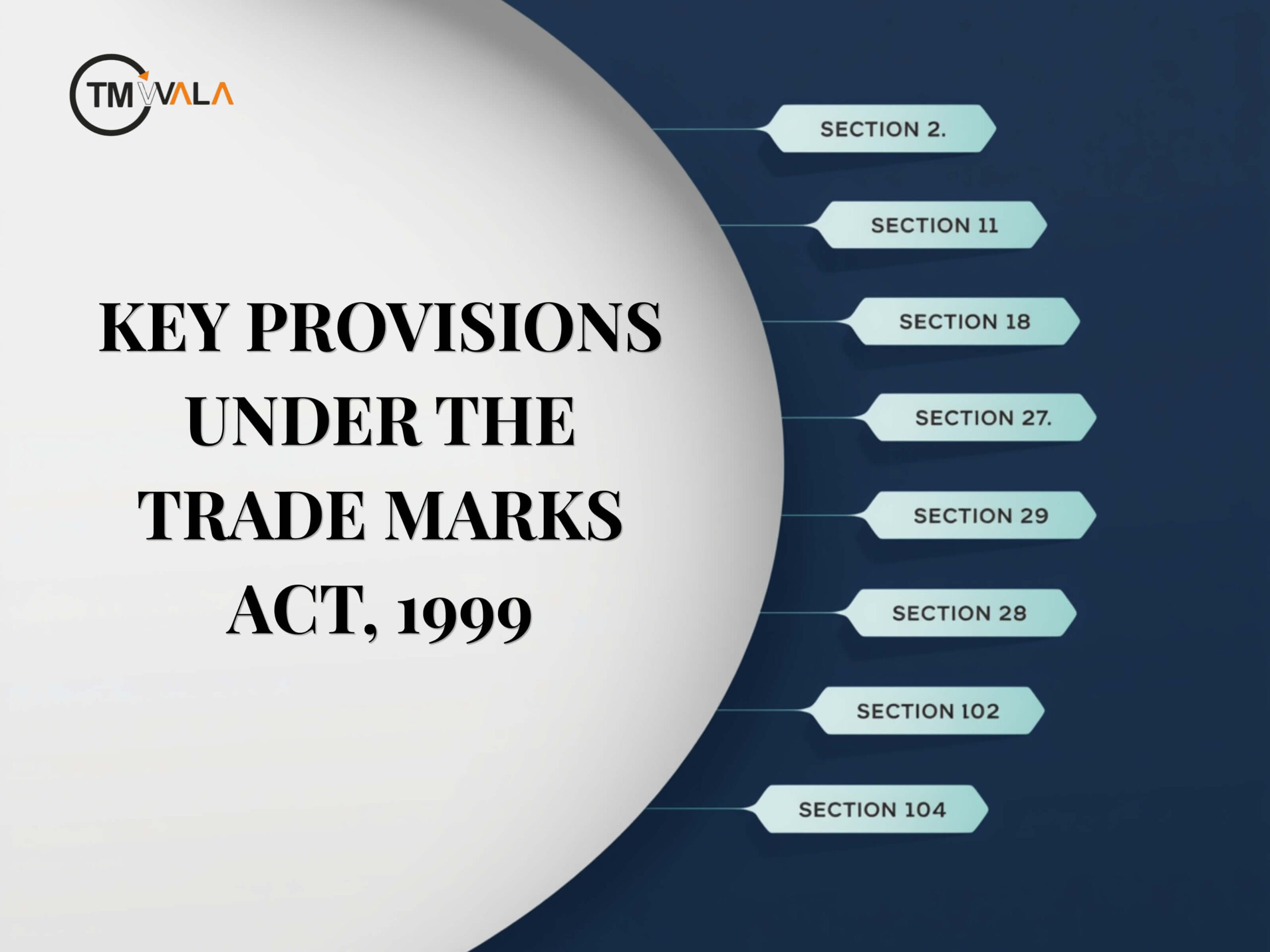
Trademark law in India is governed by the Trade Marks Act, 1999, a comprehensive statute that regulates the registration, protection, and enforcement of trademarks. The Act is systematically divided into sections, each addressing a specific legal aspect from definitions and administrative setup to refusal grounds and penal provisions.
For businesses and practitioners, understanding these sections is not merely academic, it is essential for building and protecting brand identity. This article provides a detailed and structured overview of the most important provisions of the Act, including refusal grounds and punishment related sections.
For a lay man interpreting these provisions correctly can be complex. That’s when TMWala come to the picture, it help is by offering expert guidance in navigating these statutory requirements, ensuring accurate filings and minimizing legal risks.
Section 1 establishes the name of the legislation the Trade Marks Act, 1999 and confirms its applicability across India. It also specifies when the Act came into force. While procedural, this section lays the foundation for the entire statutory framework.
Section 2 is a cornerstone provision that defines key terms used throughout the Act. Some of the key terms are:
These definitions shape the interpretation of all subsequent provisions and determine the scope of protection.
These sections establish the institutional structure of trademark administration:
This framework ensures proper examination, record keeping, and management of trademark registrations.
Section 9 deals with the absolute refusal of registration.
Section 9(1): Lack of Distinctiveness
A trademark shall not be registered if it:
However, marks that acquire distinctiveness through use may still be registered.
Section 9(2): Deceptive and Prohibited Marks
A mark is refused if it:
Section 9(3): Shape of Goods
Prohibits registration of shapes that:
Section 9 ensures that trademarks are distinctive, lawful, and non-deceptive.
Section 11 deals with the grounds, on which the registration of a mark can be refused.
Section 11(1): Likelihood of Confusion – Refuses marks that are identical or similar to earlier trademarks for similar goods or services, where confusion is likely.
Section 11(2): Protection of Well-Known Marks – Prevents registration of marks that may exploit or damage the reputation of well-known trademarks.
Section 11(6)–11(9): Determination of Well-Known Marks – Provides criteria such as recognition, duration of use, and promotional efforts to determine whether a mark qualifies as well-known.
Section 12 allows registration of identical or similar marks in cases of honest concurrent use or special circumstances. This provision introduces flexibility into the otherwise strict rules under Section 11.
Section 18 governs the filing of trademark applications.
Accuracy at this stage is crucial. How TMWala can help is by preparing strong applications, selecting appropriate classes, and addressing potential objections proactively.
Section 21 allows third parties to oppose a trademark after publication in the journal. This ensures transparency and protects existing rights holders.
Opposition proceedings involve evidence, hearings, and legal arguments, making them a critical stage in the registration process. Read Trademarks Rules, 2017 to understand the process.
Section 27 states that no infringement action lies for unregistered trademarks, but it expressly preserves the right to bring an action for passing off. This ensures that even without registration, a proprietor can protect their goodwill against misrepresentation and unfair trade practices.
Section 28 grants exclusive rights to the registered proprietor, including the right to use the trademark and take legal action against infringement.
Section 29 defines infringement and outlines circumstances under which unauthorized use constitutes a violation. It includes use of identical or deceptively similar marks and dilution of well-known trademarks.
Section 102 deals with acts such as:
This section defines what constitutes fraudulent use of trademarks and forms the basis for penal action.
Section 103 prescribes punishment for offenses under Section 102.
Courts may impose lesser penalties in special circumstances, but this section underscores the seriousness of trademark violations.
Section 104 penalizes the sale or distribution of goods bearing false trademarks.
This provision ensures that liability extends beyond manufacturers to all parties involved in the supply chain.
The Trade Marks Act, 1999 is a detailed and structured statute where each section from Section 2 (definitions) to Sections 9 and 11 (refusal grounds), and Sections 102-104 (penalties) serves a distinct and essential purpose.
A clear understanding of these provisions enables businesses to secure strong trademark protection while avoiding legal pitfalls. Trademark law is not just about registration; it is about strategic brand management and enforcement.
Given the complexity of these sections, professional assistance is often indispensable. How TMWala can help is by offering comprehensive trademark services from application and prosecution to handling objections, oppositions, and infringement matters ensuring that your brand remains protected at every stage.
In today’s competitive environment, a well-protected trademark is not merely a legal right but a valuable commercial asset that defines and strengthens your market presence.
1. What is a trademark under the Trade Marks Act, 1999?
Ans. A trademark is a mark capable of graphical representation that distinguishes the goods or services of one person from those of others.
2. What are absolute grounds for refusal under Section 9?
Ans. Absolute grounds relate to the inherent nature of the mark, such as lack of distinctiveness, descriptiveness, or being deceptive or offensive.
3. What are relative grounds for refusal under Section 11?
Ans. Relative grounds arise when a trademark conflicts with earlier trademarks, creating a likelihood of confusion or association.
4. Can a descriptive trademark be registered?
Ans. Yes, if it has acquired distinctiveness through continuous use and recognition in the market.
5. What is honest concurrent use under Section 12?
Ans. It allows registration of similar or identical trademarks if multiple parties have been using them honestly over time.
6. Who can apply for trademark registration under Section 18?
Ans. Any person claiming to be the proprietor of a trademark can apply, whether the mark is in use or proposed to be used.
7. What is the purpose of opposition proceedings under Section 21?
Ans. It allows third parties to challenge a trademark application before it is registered.
8. Can an unregistered trademark be protected?
Ans. Yes, through a passing off action under Section 27, even though infringement action is not available.
9. What rights does a registered trademark provide under Section 28?
Ans. It grants exclusive rights to use the trademark and to take legal action against infringement.
10. What are the penalties for trademark infringement and falsification?
Ans. Under Sections 103 and 104, penalties include imprisonment from six months to three years and fines ranging from ₹50,000 to ₹2,00,000.
Get started instantly
"*" indicates required fields
TMWala
Your one stop shop for all your business registration and compliance needs.
"*" indicates required fields
Choose your Entity Type
Non-MSME/ Large Entitie
Individual/ MSME/ Sole Proprietorships
₹9,000.00 Original price was: ₹9,000.00.₹3,999.00Current price is: ₹3,999.00.
Trademark Application @ ₹3999* (Premium Discounted Plan for MSME/Individual/Sole Proprietorships) Comprehensive
Government Fees
₹4500/-
₹9,000.00 Original price was: ₹9,000.00.₹3,999.00Current price is: ₹3,999.00.
Trademark Application @ ₹3999* (Premium Discounted Plan for Non-MSMEs/Large Entities) Comprehensive
Government Fees
₹9000/-
Choose your Entity Type
Individual/ MSME/ Sole Proprietorships
Non-MSME/ Large Entities
₹3,500.00 Original price was: ₹3,500.00.₹1,999.00Current price is: ₹1,999.00.
Government Fees
₹4500/-
₹3,500.00 Original price was: ₹3,500.00.₹1,999.00Current price is: ₹1,999.00.
Government Fees
₹9000/-
Choose your Entity Type
Individual/ MSME/ Sole Proprietorships
Non-MSME/ Large Entities
₹1,500.00 Original price was: ₹1,500.00.₹999.00Current price is: ₹999.00.
Trademark Application @ ₹999* (Basic Discounted Plan for MSME/Individual/Sole Proprietorships) Best-Selling, Economical & Easy
₹1,500.00 Original price was: ₹1,500.00.₹999.00Current price is: ₹999.00.
Trademark Application @ ₹999* (Basic Discounted Plan for Non-MSMEs/Large Entities) Best-Selling, Economical, Quick and Easy