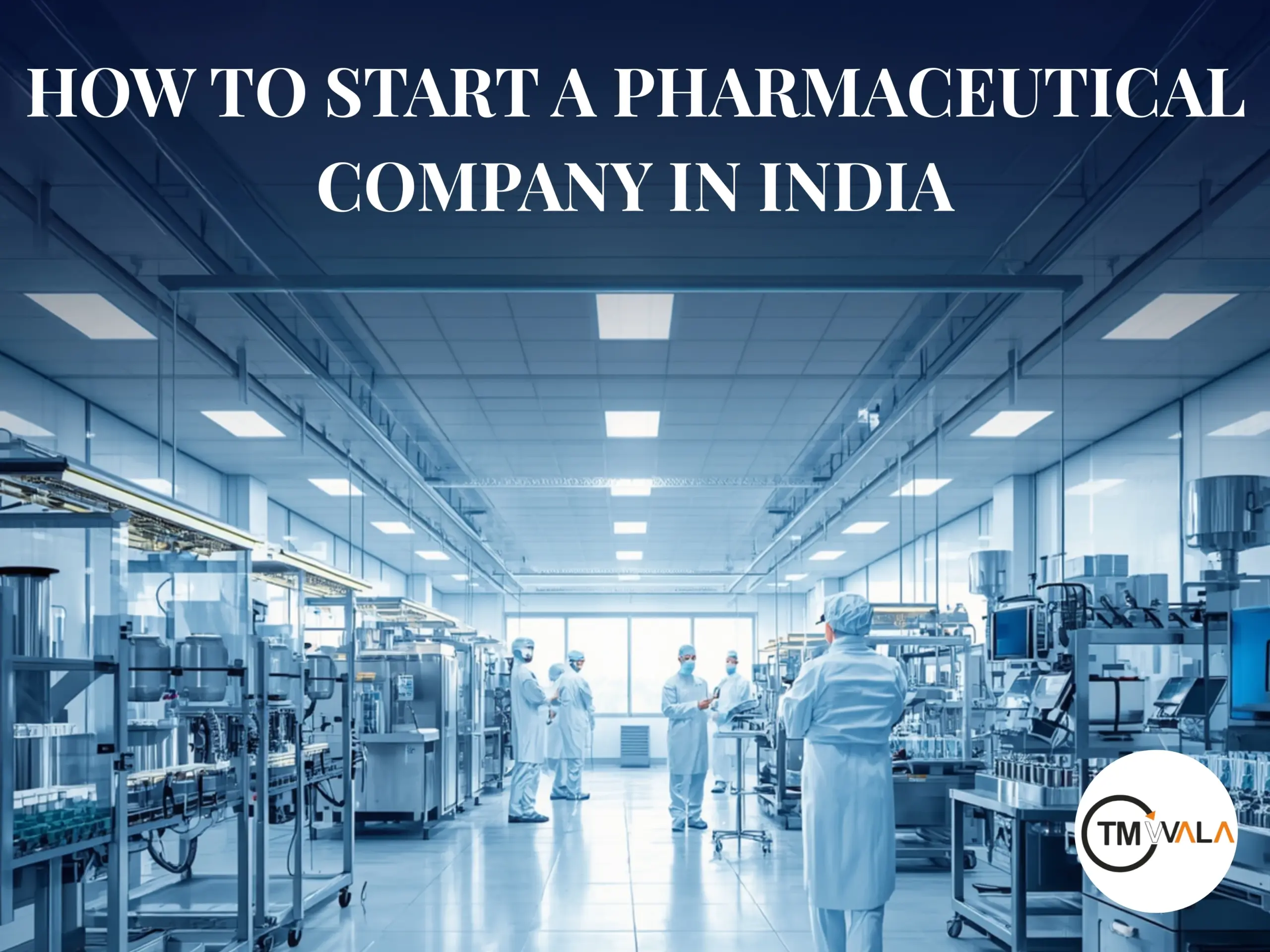
India has emerged as one of the world’s leading pharmaceutical hubs, supplying affordable and high-quality medicines across domestic and international markets. With increasing healthcare demand, government support, and a strong manufacturing ecosystem, entrepreneurs are finding significant opportunities in the pharmaceutical sector.
However, launching a pharma business requires more than just an investment. It involves legal registrations, regulatory approvals, infrastructure planning, licensing, and compliance with industry standards. Understanding these requirements is essential for building a successful and sustainable business.
At TMWala, we assist aspiring pharmaceutical entrepreneurs by simplifying registrations, licensing procedures, regulatory compliance, and documentation requirements, helping businesses establish a strong foundation from day one.
The first step in building a pharmaceutical business is selecting the right business model. Entrepreneurs can choose from several options based on their investment capacity and long-term goals:
A manufacturing setup offers greater control over production but requires substantial investment and regulatory approvals. On the other hand, marketing and PCD models can be launched with comparatively lower capital and operational requirements.
Before investing, conduct detailed market research to identify target customers, therapeutic segments, competitor strategies, and market demand. A well-defined business plan can significantly improve the chances of long-term success.
Every pharmaceutical business must first establish a legal entity before applying for industry-specific licenses.
Businesses can be registered under one of the following structures:
The company registration process generally includes:
Proper documentation plays a crucial role in obtaining approvals and licenses. Some commonly required documents include:
Maintaining accurate documentation helps avoid delays during registration and licensing procedures.
The investment required to establish a pharmaceutical company varies significantly depending on the chosen business model.
Pharma Marketing or PCD Business
Approximate investment:₹2 lakh to ₹5 lakh
This model focuses on product promotion and distribution while outsourcing manufacturing to third-party manufacturers.
Small Manufacturing Unit
Approximate investment:₹50 lakh to ₹2 crore
Costs include machinery, factory setup, licensing, staffing, and quality control systems.
Formulation Manufacturing Company
Approximate investment:₹1.2 crore to ₹1.5 crore
This setup involves manufacturing tablets, capsules, syrups, and other formulations.
Medium-Scale Manufacturing Facility
Approximate investment:₹5 crore to ₹15 crore
Suitable for businesses planning large-scale domestic production.
Export-Oriented or Specialized Manufacturing Facility
Approximate investment:₹50 crore to ₹200 crore or more
Facilities producing injectables, APIs, and export-grade products require advanced infrastructure and certifications.
Strategic planning, contract manufacturing partnerships, and government incentives can help reduce initial capital requirements.
A manufacturing license is mandatory for companies producing pharmaceutical products in India.
The licensing authority evaluates the manufacturing facility, technical staff, equipment, quality control systems, and documentation before approving.
The basic requirements include:
After inspection and verification, the relevant authority issues the manufacturing license, allowing the company to produce pharmaceutical products legally.
Businesses involved in bulk purchase, storage, distribution, and supply of medicines must obtain a wholesale drug license.
Depending on the nature of business activities, different Pharma licenses may be required:
A wholesale license is mandatory for companies that:
The license is generally issued by the State Drug Control Department and must be obtained before commencing wholesale operations.
The pharmaceutical industry in India operates under the provisions of the Drugs and Cosmetics Act, 1940.
Manufacturing License: Required for manufacturing pharmaceutical products.
Wholesale License: Required for the distribution and bulk sale of medicines.
Retail License: Required for pharmacies and medicine stores selling directly to consumers.
Loan License: Applicable when manufacturing is conducted using another manufacturer’s facilities.
Import License: Required for importing pharmaceutical products into India.
Multi-Drug License: Required when operating multiple pharmacy locations under the same brand name.
Obtaining the appropriate license is essential to ensure legal operations and avoid regulatory penalties.
Good Manufacturing Practices (GMP) represent globally recognized quality standards designed to ensure pharmaceutical products are consistently manufactured and controlled.
GMP guidelines focus on:
Obtaining GMP certification demonstrates a company’s commitment to product quality, patient safety, and regulatory compliance.
For pharmaceutical businesses aiming to build credibility and enter competitive markets, GMP certification is considered a valuable asset.
The Central Drugs Standard Control Organization (CDSCO) serves as India’s primary regulatory authority for pharmaceutical products.
The registration process generally involves:
Step 1: Select Registration Purpose
The authorized representative must choose the appropriate registration category on the CDSCO portal.
Step 2: Document Submission
Applicants submit supporting documents such as:
Step 3: Verification and Evaluation
The submitted application undergoes a detailed review by CDSCO officials.
Step 4: Approval
After successful verification, approval is granted, enabling the company to proceed with relevant pharmaceutical activities.
Timely and accurate documentation significantly improves the approval process.
Regulatory compliance is one of the most important aspects of running a pharmaceutical business.
Regulatory authorities monitor the industry through:
Good Manufacturing Practices (GMP): Ensuring medicines are manufactured under controlled and standardized conditions.
Facility Inspections: Regular inspections verify adherence to quality and safety standards.
Product Quality Monitoring: Authorities assess manufacturing records, testing procedures, and quality assurance systems.
Licensing and Approvals: Manufacturers, distributors, and sellers must maintain valid licenses and approvals throughout their operations.
Continuous compliance helps businesses avoid legal risks, maintain product quality, and build trust with healthcare professionals and consumers.
The WHO GMP certification process is particularly important for pharmaceutical companies planning to enter international markets.
The process generally includes:
Online Application Submission: Applicants submit an online application along with the Site Master File and supporting documents.
Facility Inspection: A detailed inspection is conducted by regulatory authorities to evaluate:
Compliance Assessment: Inspectors assess whether the facility complies with WHO GMP standards.
Upon successful evaluation, the company receives WHO GMP certification, enhancing its global credibility and export opportunities.
Many international markets require WHO GMP certification as a prerequisite for pharmaceutical imports.
The pharmaceutical sector in India offers tremendous growth opportunities for entrepreneurs willing to invest in quality, compliance, and innovation. From company registration and licensing to GMP certification and regulatory approvals, every stage requires careful planning and execution.
Whether you plan to launch a pharma marketing company, wholesale distribution business, or full-scale manufacturing facility, understanding the legal and operational framework is critical for success.
TMWala provides end-to-end assistance for pharmaceutical company registration, drug licenses, CDSCO approvals, GMP certifications, wholesale licenses, and compliance management. Our expert support helps entrepreneurs navigate complex regulatory procedures efficiently, allowing them to focus on growing their pharmaceutical business with confidence.
Get started instantly
"*" indicates required fields
TMWala
Your one stop shop for all your business registration and compliance needs.
"*" indicates required fields
Choose your Entity Type
Non-MSME/ Large Entitie
Individual/ MSME/ Sole Proprietorships
₹9,000.00 Original price was: ₹9,000.00.₹3,999.00Current price is: ₹3,999.00.
Trademark Application @ ₹3999* (Premium Discounted Plan for MSME/Individual/Sole Proprietorships) Comprehensive
Government Fees
₹4500/-
₹9,000.00 Original price was: ₹9,000.00.₹3,999.00Current price is: ₹3,999.00.
Trademark Application @ ₹3999* (Premium Discounted Plan for Non-MSMEs/Large Entities) Comprehensive
Government Fees
₹9000/-
Choose your Entity Type
Individual/ MSME/ Sole Proprietorships
Non-MSME/ Large Entities
₹3,500.00 Original price was: ₹3,500.00.₹1,999.00Current price is: ₹1,999.00.
Government Fees
₹4500/-
₹3,500.00 Original price was: ₹3,500.00.₹1,999.00Current price is: ₹1,999.00.
Government Fees
₹9000/-
Choose your Entity Type
Individual/ MSME/ Sole Proprietorships
Non-MSME/ Large Entities
₹1,500.00 Original price was: ₹1,500.00.₹999.00Current price is: ₹999.00.
Trademark Application @ ₹999* (Basic Discounted Plan for MSME/Individual/Sole Proprietorships) Best-Selling, Economical & Easy
₹1,500.00 Original price was: ₹1,500.00.₹999.00Current price is: ₹999.00.
Trademark Application @ ₹999* (Basic Discounted Plan for Non-MSMEs/Large Entities) Best-Selling, Economical, Quick and Easy