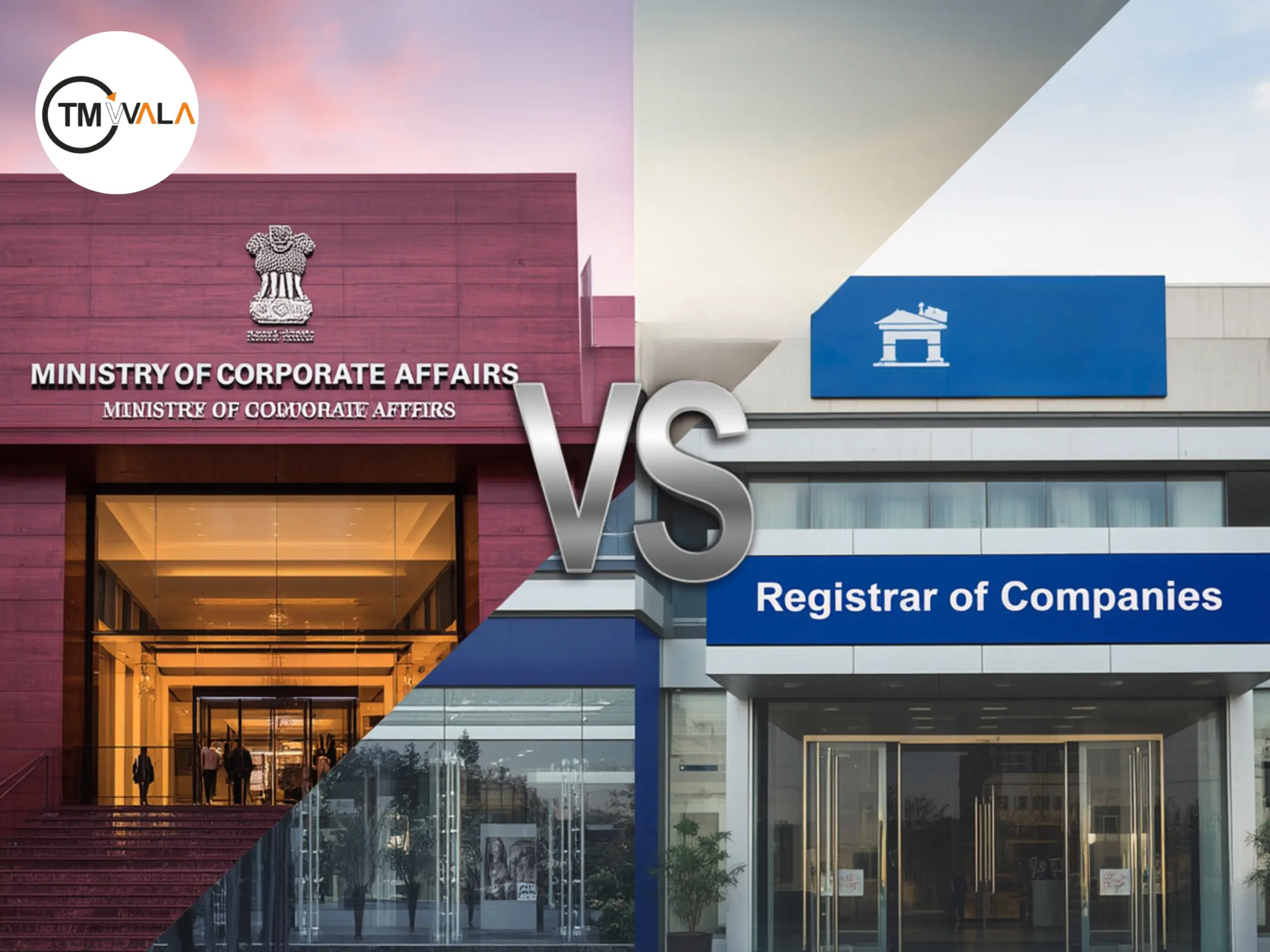
When starting or managing a business in India, understanding the roles of different government authorities is essential for ensuring legal compliance and smooth operations. Two of the most important entities involved in company administration and corporate regulation are the Ministry of Corporate Affairs (MCA) and the Registrar of Companies (ROC). Although these terms are often used interchangeably, they serve distinct functions within India’s corporate framework.
Understanding the difference between MCA and ROC is crucial for entrepreneurs, directors, investors, and business owners who want to navigate the legal requirements of company incorporation and ongoing compliance effectively. Whether you are planning a new business registration, handling corporate filings, or managing annual compliance obligations, knowing the responsibilities of both authorities can help you avoid penalties and maintain good standing with regulators. MCA and ROC in India help businesses streamline registration processes, stay compliant with statutory requirements, and avoid unnecessary legal complications.
Professional service providers like TMWala assist businesses at every stage of the corporate lifecycle, from company incorporation and legal entity registration to ongoing statutory compliance and regulatory filings. This guide explains the roles, responsibilities, and differences between MCA and ROC while providing practical insights into company registration and compliance in India.
The Ministry of Corporate Affairs in India is a central government ministry responsible for regulating and administering corporate affairs across the country. It oversees the implementation of corporate laws, including the Companies Act, 2013, and the Limited Liability Partnership Act, 2008.
The MCA serves as the primary company registration authority in India and is responsible for developing policies that govern corporate entities. It works to strengthen transparency, accountability, and corporate governance standards while ensuring that companies operate within the legal framework established by the government.
The Ministry performs several critical functions, including:
Through these responsibilities, the MCA acts as the apex regulatory authority for corporate entities operating in India.
The Registrar of Companies in India functions under the Ministry of Corporate Affairs and operates at the state or regional level. The ROC is responsible for implementing the provisions of the Companies Act within its assigned jurisdiction.
While the MCA formulates policies and regulations, the ROC executes them by registering companies, maintaining records, and monitoring compliance.
The ROC performs the following important duties:
Currently, there are multiple ROC offices in India, each responsible for specific states and union territories. These offices play a crucial role in enforcing corporate compliance at the regional level.
Although both authorities are closely connected, their roles differ significantly.
| Basis | MCA | ROC |
| Authority Level | Central Government Ministry | Regional Office under MCA |
| Scope | National | State or Regional |
| Main Function | Policy formulation and corporate regulation | Company registration and compliance monitoring |
| Legal Oversight | Administers corporate laws | Implements corporate laws |
| Responsibilities | Corporate governance, law reforms, policy decisions | Company incorporation, filings, and record maintenance |
| Coverage | Entire country | Specific jurisdiction assigned to each ROC |
In simple terms, the MCA creates and supervises the regulatory framework, while the ROC carries out the practical implementation of those regulations.
The MCA company registration process has become significantly streamlined through the MCA21 portal. Entrepreneurs can now complete most registration procedures online.
Step 1: DSC Registration
A Digital Signature Certificate is mandatory for directors and subscribers who need to sign electronic incorporation documents.
The DSC registration process involves obtaining a Class 3 Digital Signature Certificate from a licensed certifying authority. This enables secure electronic filing of forms on the MCA portal.
Step 2: DIN Registration
Every proposed director must obtain a Director Identification Number.
DIN registration can be completed through the SPICe+ incorporation form itself. In certain situations, Form DIR-3 may be used for separate applications.
Step 3: Name Reservation
Applicants must select a unique company name that complies with applicable naming guidelines.
The MCA allows name reservation through the RUN service or Part A of the SPICe+ form.
Step 4: Filing Incorporation Documents
The next stage involves submitting:
These documents are submitted through the SPICe+ form.
Step 5: Certificate of Incorporation
After verification and approval, the MCA issues the Certificate of Incorporation, confirming the legal existence of the company.
This marks the successful completion of the incorporation of the company in India. For more information, visit: Register Digital Signature Certificate User Manual | Income Tax Department
The ROC registration process forms an important part of company incorporation. The ROC examines all incorporation documents and verifies compliance before granting approval.
The typical ROC filing process includes:
Once approved, the company becomes a recognized legal entity under Indian law.
The MCA21 portal is India’s flagship e-governance platform for corporate services. Introduced to simplify business registration and compliance procedures, it provides a centralized online interface for companies and LLPs.
Through the MCA21 portal, businesses can:
The latest MCA V3 system offers enhanced user experience, real-time validation, and improved security features for businesses.
Every company registered in India must comply with various MCA filing requirements to maintain legal standing.
Some important filing obligations include:
Companies must submit Form AOC-4 within 30 days of conducting their Annual General Meeting (AGM).
The filing includes:
Financial statement filing is one of the most important compliance obligations under corporate law.
Annual Returns
Companies must file Form MGT-7 or MGT-7A within 60 days of the AGM.
Annual returns contain information regarding:
Director KYC Compliance
Directors holding a DIN must complete annual KYC requirements through Form DIR-3 KYC.
Failure to comply may result in penalties and deactivation of the DIN.
Compliances Under Companies Act 2013
Businesses must fulfil several compliances under the Companies Act 2013 throughout their operational lifecycle.
Post-Incorporation Compliance
After company incorporation, businesses must:
Annual Compliance Requirements
Key annual obligations include:
Board Meetings
Companies are generally required to hold a minimum of four board meetings every financial year while maintaining prescribed intervals between meetings.
Annual General Meeting
An AGM must be conducted to approve financial statements, appoint auditors, and discuss important corporate matters.
ROC Annual Filing
ROC annual filing includes submission of:
Statutory Audit
Every company must undergo a statutory audit to ensure accuracy and transparency in financial reporting.
These requirements support effective corporate governance in India and promote accountability among businesses.
Maintaining corporate compliance in India is essential for avoiding penalties, legal disputes, and reputational risks.
Benefits of compliance include:
Businesses that prioritize statutory compliance are often better positioned for long-term growth and sustainability.
TMWala helps organizations manage complex compliance obligations by providing expert support for corporate filings, annual returns, financial statement filing, DIN registration, DSC registration, and other regulatory requirements.
The difference between MCA and ROC lies primarily in their roles within India’s corporate ecosystem. The MCA serves as the central authority responsible for policy making, corporate regulation, and administration of company laws, while the ROC acts as the operational body that implements these regulations through registration, monitoring, and enforcement activities. Understanding MCA and ROC is essential for navigating India’s corporate framework.
Whether you are undertaking company incorporation, handling business registration, managing corporate filings, or fulfilling annual compliance obligations, understanding the responsibilities of both MCA and ROC authorities is critical for maintaining legal and regulatory compliance. Businesses must understand MCA and ROC to avoid penalties and ensure smooth operations.
With increasing regulatory requirements and digital filing systems, businesses must stay proactive in managing their obligations under Indian corporate law. Professional assistance from TMWala can simplify the entire process, from legal entity registration and incorporation of a company in India to ongoing company administration, corporate affairs management, and compliance reporting.
By staying compliant with MCA filing requirements and ROC filing process obligations, businesses can build a strong foundation for sustainable growth while meeting all legal expectations under India’s evolving corporate framework.
Get started instantly
"*" indicates required fields
TMWala
Your one stop shop for all your business registration and compliance needs.
"*" indicates required fields
Choose your Entity Type
Non-MSME/ Large Entitie
Individual/ MSME/ Sole Proprietorships
₹9,000.00 Original price was: ₹9,000.00.₹3,999.00Current price is: ₹3,999.00.
Trademark Application @ ₹3999* (Premium Discounted Plan for MSME/Individual/Sole Proprietorships) Comprehensive
Government Fees
₹4500/-
₹9,000.00 Original price was: ₹9,000.00.₹3,999.00Current price is: ₹3,999.00.
Trademark Application @ ₹3999* (Premium Discounted Plan for Non-MSMEs/Large Entities) Comprehensive
Government Fees
₹9000/-
Choose your Entity Type
Individual/ MSME/ Sole Proprietorships
Non-MSME/ Large Entities
₹3,500.00 Original price was: ₹3,500.00.₹1,999.00Current price is: ₹1,999.00.
Government Fees
₹4500/-
₹3,500.00 Original price was: ₹3,500.00.₹1,999.00Current price is: ₹1,999.00.
Government Fees
₹9000/-
Choose your Entity Type
Individual/ MSME/ Sole Proprietorships
Non-MSME/ Large Entities
₹1,500.00 Original price was: ₹1,500.00.₹999.00Current price is: ₹999.00.
Trademark Application @ ₹999* (Basic Discounted Plan for MSME/Individual/Sole Proprietorships) Best-Selling, Economical & Easy
₹1,500.00 Original price was: ₹1,500.00.₹999.00Current price is: ₹999.00.
Trademark Application @ ₹999* (Basic Discounted Plan for Non-MSMEs/Large Entities) Best-Selling, Economical, Quick and Easy