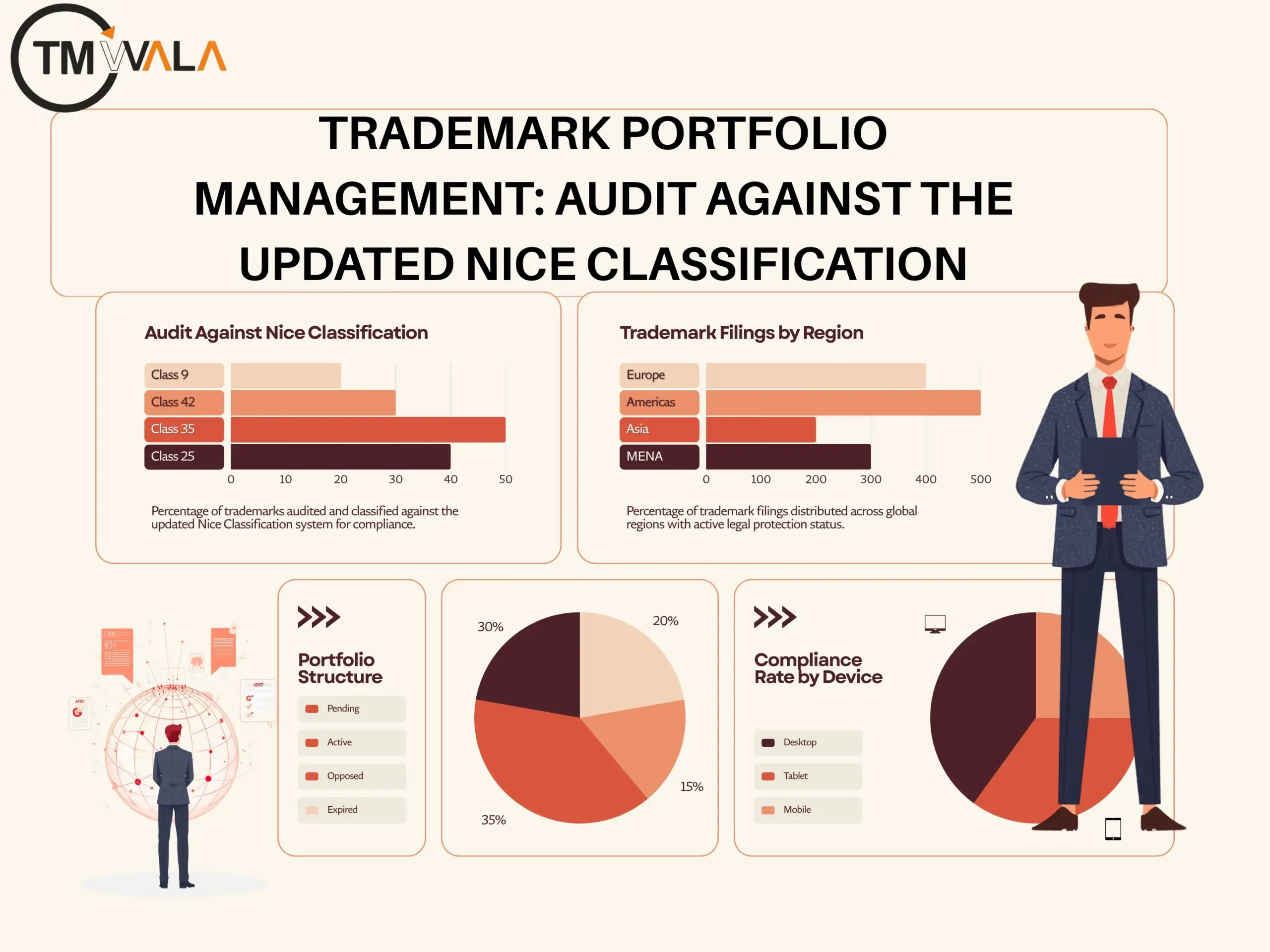
A trademark is more than just a logo or brand name; it represents a company’s reputation, customer trust, and long-term value. Effective trademark portfolio management helps businesses keep their trademarks organized, protected, and aligned with their growth.
Using the latest Nice Classification system helps companies to make sure their trademarks cover the right goods and services. Regular reviews can identify gaps, strengthen protection, and support future expansion while reducing legal risks.
TMWala helps businesses manage their trademark portfolios through classification reviews, regular trademark audits, timely renewals, and strategic guidance.
The Nice Classification is a system that puts goods and services into 45 groups. These groups are called classes. Classes 1 to 34 are for goods. Classes 35 to 45 are, for services. When people want to trademark a name or logo, they must figure out which class or classes it belongs to. This is very important because trademark protection only works for the goods or services that are listed.
The Nice Classification gets updated by WIPO as new things come out. This means it now includes technologies, digital services and ways to help the environment. These updates make it clearer and easier for businesses to describe what they do and what they sell.
When the Nice Classification changes it does not automatically change what is already registered.Businesses should still look at what they have and think about if they need to make any changes. The Nice Classification is important for businesses to understand so they can make sure they are doing everything correctly.
For more information visit: https://nclpub.wipo.int/enfr/pdf-download.pdf?lang=en&tab=class_headings&dateInForce=20260101
Many organizations register trademarks once and rarely revisit them. However, trademarks should be regularly managed as valuable brand assets that evolve alongside the business.
An effective trademark portfolio management strategy enables businesses to:
Without regular reviews, companies may discover that new business activities are not adequately protected or that valuable trademarks have become vulnerable due to administrative oversights.
A company needs to check its property regularly. This is called an intellectual property audit. It looks at things like trademarks, patents and copyrights. The audit also checks domain names and other related assets.
For trademarks the audit checks if the current registrations are still good for the company’s needs.
To start a trademark audit, we need to make a list of all the registered trademarks. This list includes things, like registration numbers,date of filing, appropriate office of registry, and their renewal ate. The audit checks who own the trademarks and what goods or services they cover.
The next step is comparing each registration with the latest Nice Classification. Businesses should evaluate whether existing descriptions remain accurate and whether newer classifications better reflect their commercial activities.
The audit should also identify:
This review allows organizations to prioritize filings and maintain an efficient trademark portfolio.
To select an appropriate trademark class is one of the most critical decisions during the registration of trademark. Filing in the wrong class may delay registration or leave important goods and services without adequate protection.
Businesses should regularly compare and check their commercial activities with the descriptions provided in the current Nice Classification.
Conducting a careful trademark class search before filing new applications helps determine which classes best correspond to the intended goods or services. Many trademark offices also provide online classification tools, and a trademark class finder can assist applicants in identifying suitable categories based on product descriptions.
As organizations diversify, existing trademark registrations may no longer provide sufficient coverage. Launching complementary or additional products, often requires registration in new class.
Adding correct classes before major business expansion initiatives helps prevent competitors from registering similar marks for related products or services. It also strengthens the company’s position when entering licensing agreements, attracting investors, or expanding into foreign markets. A well-planned filing strategy for trademark ensures that the protection grows alongside the business.
Conducting a comprehensive trademark search is an important primary step before filing any new application. Beyond identifying the correct class, businesses should also search existing trademark databases to evaluate potential conflicts with earlier registrations.
Most national and regional trademark offices provide searchable databases, allowing applicants to review existing registrations, compare specifications, and assess whether similar marks already exist within relevant classes. So using a reliable trademark class finder improves filing accuracy, and supports better long-term brand portfolio management.
Trademark registration is just the start of brand protection. To detect all possible conflicting trademark applications and improper use of similar marks, businesses should adopt an effective trademark monitoring strategy. Monitoring allows businesses to see if someone is using a trademark that is too similar to their own.
Trademark monitoring generally consists of checking or looking at new trademark applications and online platforms where counterfeit or infringing products may appear. Many companies subscribe to professional watch services that provide information and alerts when similar trademarks are applied.
The timely renewal of trademarks is critical to maintaining registrations and protecting valuable brand assets. Because renewal requirements differ from one jurisdiction to another, businesses should monitor renewal deadlines and provide evidence of ongoing use when required. Renewal also presents a chance to review the portfolio and ensure new filings are in line with the most current Nice Classification. Regular portfolio reviews help ensure trademark protection is consistent in all markets.
Businesses expanding into new products, services, or international markets should review their trademark protection regularly. Since trademark rights are territorial, registration in one country does not protect a brand in others. Aligning trademark filings with business growth helps protect brand value and supports confident market expansion.
Effective brand portfolio management involvesmaintaining a proper list of trademarks. It requires strategic planning to ensure that every trademark contributes to the organization’s business objectives.
A well-managed portfolio typically includes:
Businesses should regularly evaluate whether older registrations remain commercially valuable and whether newly developed brands require protection. Removing unnecessary registrations while investing in strategically important trademarks can make portfolio management more efficient and cost-effective.
One of the greatest advantages of doing periodic audits is improved legal protection. Regular trademark audits help businesses strengthen their legal protections by identifying gaps in coverage and lowering risks of infringement. They also make transactions like mergers, licensing, and investments easier to conduct by showing proper management of trademark rights. Accurate records help protect and enforce valuable brand assets.
Intellectual property rights play an important role in competitive advantage. Trademarks differentiate companies from one another and assist in identifying the origin of the goods and services provided by the company.
Trademark protection needs to be developed along with the development of a business. Periodic reviews of the trademark portfolio guarantee that the trademark is consistent with the ongoing business and there are no problems with trademark protection in the future.
Businesses can strengthen their trademark portfolio management strategy by following these best practices:
The updated Nice Classification gives organizations a chance to evaluate and enhance their trademark portfolios. Audits, correct classification, timely renewals, and surveillance will allow companies to make sure that their trademarks remain protected in line with the company’s requirements.
TMWala helps organizations manage their trademark portfolios through providing trademark class reviews, portfolio audits. Organizations can mitigate risks, grow their business, and preserve the value of their brands through adopting a proactive approach.
Get started instantly
"*" indicates required fields

TMWala
Your one stop shop for all your business registration and compliance needs.
"*" indicates required fields
Choose your Entity Type
Non-MSME/ Large Entitie
Individual/ MSME/ Sole Proprietorships
₹9,000.00 Original price was: ₹9,000.00.₹3,999.00Current price is: ₹3,999.00.
Trademark Application @ ₹3999* (Premium Discounted Plan for MSME/Individual/Sole Proprietorships) Comprehensive
Government Fees
₹4500/-
₹9,000.00 Original price was: ₹9,000.00.₹3,999.00Current price is: ₹3,999.00.
Trademark Application @ ₹3999* (Premium Discounted Plan for Non-MSMEs/Large Entities) Comprehensive
Government Fees
₹9000/-
Choose your Entity Type
Individual/ MSME/ Sole Proprietorships
Non-MSME/ Large Entities
₹3,500.00 Original price was: ₹3,500.00.₹1,999.00Current price is: ₹1,999.00.
Government Fees
₹4500/-
₹3,500.00 Original price was: ₹3,500.00.₹1,999.00Current price is: ₹1,999.00.
Government Fees
₹9000/-
Choose your Entity Type
Individual/ MSME/ Sole Proprietorships
Non-MSME/ Large Entities
₹1,500.00 Original price was: ₹1,500.00.₹999.00Current price is: ₹999.00.
Trademark Application @ ₹999* (Basic Discounted Plan for MSME/Individual/Sole Proprietorships) Best-Selling, Economical & Easy
₹1,500.00 Original price was: ₹1,500.00.₹999.00Current price is: ₹999.00.
Trademark Application @ ₹999* (Basic Discounted Plan for Non-MSMEs/Large Entities) Best-Selling, Economical, Quick and Easy