
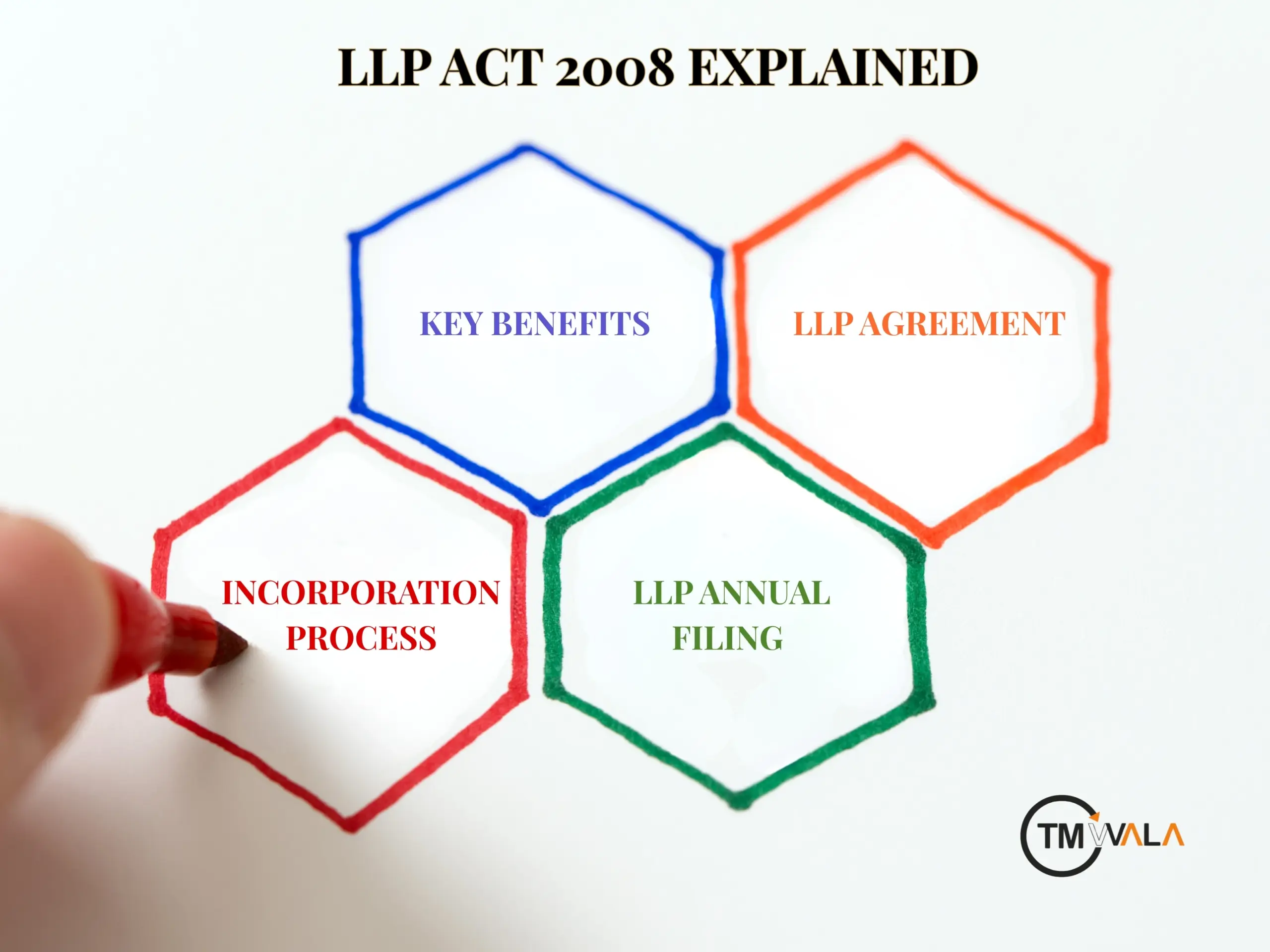
The introduction of the LLP Act 2008 marked a turning point in India’s business landscape. By blending the advantages of a traditional partnership with the protection of limited liability, this structure has become a preferred choice for professionals, startups, and small businesses. The Limited Liability Partnership Act 2008 created a modern framework that emphasizes flexibility, transparency, and reduced regulatory burden while safeguarding partners’ personal assets.
For entrepreneurs looking to start or restructure a business, understanding the work of an LLP in India is essential. With expert assistance from platforms like TMWala, navigating legal procedures, registrations, and compliance becomes far more efficient and error-free.
The LLP Act of India governs the formation, operation, and closure of Limited Liability Partnerships. Enforced in 2009, this law introduced LLPs as separate legal entities distinct from their partners. This means the LLP can own property, enter into contracts, and sue or be sued in its own name.
Unlike traditional partnerships under older laws, LLPs ensure that one partner is not held responsible for another partner’s misconduct or negligence. This legal distinction significantly reduces personal risk and encourages collaborative ventures.
The rising popularity of LLPs is driven by several practical advantages that cater to modern business needs.
Limited Liability Protection: Partners are only liable to the extent of their agreed contribution. Personal assets remain protected, even if the business incurs losses or debts.
Credibility and Transparency: LLPs are registered with government authorities, and their records are accessible through official platforms. This transparency builds trust among investors, lenders, and stakeholders.
Ease of Incorporation: The registration process is largely digital, making it faster and more cost-effective compared to traditional business structures.
Operational Flexibility: Partners can define their own rules through agreements without being tightly bound by rigid corporate laws.
Lower Compliance Burden: Compared to companies, LLPs require fewer filings and less regulatory oversight, reducing operational costs.
These benefits of LLP in India make it particularly attractive for service-based businesses, consultants, and small enterprises.
When choosing a business structure, comparing LLP vs. a company in India is crucial.
An LLP is managed directly by its partners, who define roles and responsibilities through mutual agreement. In contrast, a private limited company separates ownership (shareholders) from management (directors).
From a taxation perspective, LLP profits are taxed once at the entity level, and partners are not taxed again on withdrawals. Companies, however, may face double taxation, first on profits and then on dividends.
Compliance requirements also differ significantly. LLPs follow simpler filing procedures, whereas companies must adhere to stricter regulations, including mandatory audits and detailed reporting.
Cost is another factor. LLPs are generally cheaper to set up and maintain, making them ideal for smaller ventures.
The LLP incorporation process is straightforward but must be followed carefully to ensure legal validity.
Professional service providers like TMWala can assist at every stage of the LLP incorporation process, ensuring compliance and minimizing delays.
The LLP agreement in India plays a central role in defining how the business operates. It outlines profit-sharing ratios, decision-making processes, rights and duties of partners, and dispute resolution mechanisms.
While not mandatory, the absence of an agreement means default provisions under the law will apply, which may not suit every business. Therefore, drafting a customized agreement is highly advisable.
The agreement must be filed with the Registrar of Companies and can be amended as needed, offering flexibility in adapting to changing business conditions.
Every LLP must appoint at least two designated partners who are responsible for regulatory and legal compliance.
The role of a designated partner in LLP includes ensuring the timely filing of documents, maintaining financial records, and acting as the primary point of contact with government authorities. They also oversee daily operations and ensure adherence to statutory obligations.
Designated partners carry additional responsibility compared to regular partners, particularly in ensuring that the LLP does not default on compliance requirements.
Despite having fewer obligations than companies, LLPs must still meet certain compliance standards. The LLP annual filing requirements include:
These filings ensure transparency and help maintain the LLP’s legal standing.
Under the LLP compliance MCA, several forms must be filed regularly. Non-compliance can lead to penalties that accumulate daily until the default is corrected.
Key filings include:
Timely compliance is essential to avoid financial penalties and legal complications. This is another area where TMWala can provide valuable support by managing filings and deadlines efficiently.
A common question among business owners is how much capital an LLP requires for auditing. Unlike companies, LLPs are not always required to undergo audits.
Audit becomes mandatory only when:
This threshold reduces compliance costs for smaller businesses while ensuring financial scrutiny for larger operations.
LLP ROC filing refers to submitting the required documents to the Registrar of Companies. These filings are crucial for maintaining the LLP’s active status and legal recognition.
Filings may be annual or event-based, such as changes in partnership structure, address, or agreement terms. Regular and accurate LLP ROC filing ensures that the business remains compliant and avoids penalties.
Understanding LLP dissolution rules is important for businesses planning to exit or restructure.
There are two primary methods:
The choice between these methods depends on the financial and operational status of the LLP. Proper planning ensures a smooth closure without legal complications.
| Know about LLP Audit with TMWala
The LLP Act 2008 has redefined how partnerships operate in India by introducing a structure that balances flexibility with accountability. The Limited Liability Partnership Act 2008 offers a practical solution for businesses seeking limited liability without the complexity of corporate regulations.
From simplified compliance and cost efficiency to operational freedom, LLPs provide a strong foundation for modern enterprises. However, understanding legal provisions, managing filings, and ensuring compliance can still be challenging without professional guidance.
This is where TMWala plays a crucial role. From assisting with registration to handling ongoing compliance and advisory services, TMWala helps businesses focus on growth while staying legally secure.
For entrepreneurs evaluating business structures, the LLP Act of India offers a compelling option that aligns with both innovation and regulatory requirements.
Get started instantly
"*" indicates required fields

TMWala
Your one stop shop for all your business registration and compliance needs.
"*" indicates required fields
Choose your Entity Type
Non-MSME/ Large Entitie
Individual/ MSME/ Sole Proprietorships

₹9,000.00 Original price was: ₹9,000.00.₹3,999.00Current price is: ₹3,999.00.
Trademark Application @ ₹3999* (Premium Discounted Plan for MSME/Individual/Sole Proprietorships) Comprehensive
Government Fees
₹4500/-
₹9,000.00 Original price was: ₹9,000.00.₹3,999.00Current price is: ₹3,999.00.
Trademark Application @ ₹3999* (Premium Discounted Plan for Non-MSMEs/Large Entities) Comprehensive
Government Fees
₹9000/-
Choose your Entity Type
Individual/ MSME/ Sole Proprietorships
Non-MSME/ Large Entities

₹3,500.00 Original price was: ₹3,500.00.₹1,999.00Current price is: ₹1,999.00.
Government Fees
₹4500/-
₹3,500.00 Original price was: ₹3,500.00.₹1,999.00Current price is: ₹1,999.00.
Government Fees
₹9000/-
Choose your Entity Type
Individual/ MSME/ Sole Proprietorships
Non-MSME/ Large Entities
₹1,500.00 Original price was: ₹1,500.00.₹999.00Current price is: ₹999.00.
Trademark Application @ ₹999* (Basic Discounted Plan for MSME/Individual/Sole Proprietorships) Best-Selling, Economical & Easy
₹1,500.00 Original price was: ₹1,500.00.₹999.00Current price is: ₹999.00.
Trademark Application @ ₹999* (Basic Discounted Plan for Non-MSMEs/Large Entities) Best-Selling, Economical, Quick and Easy