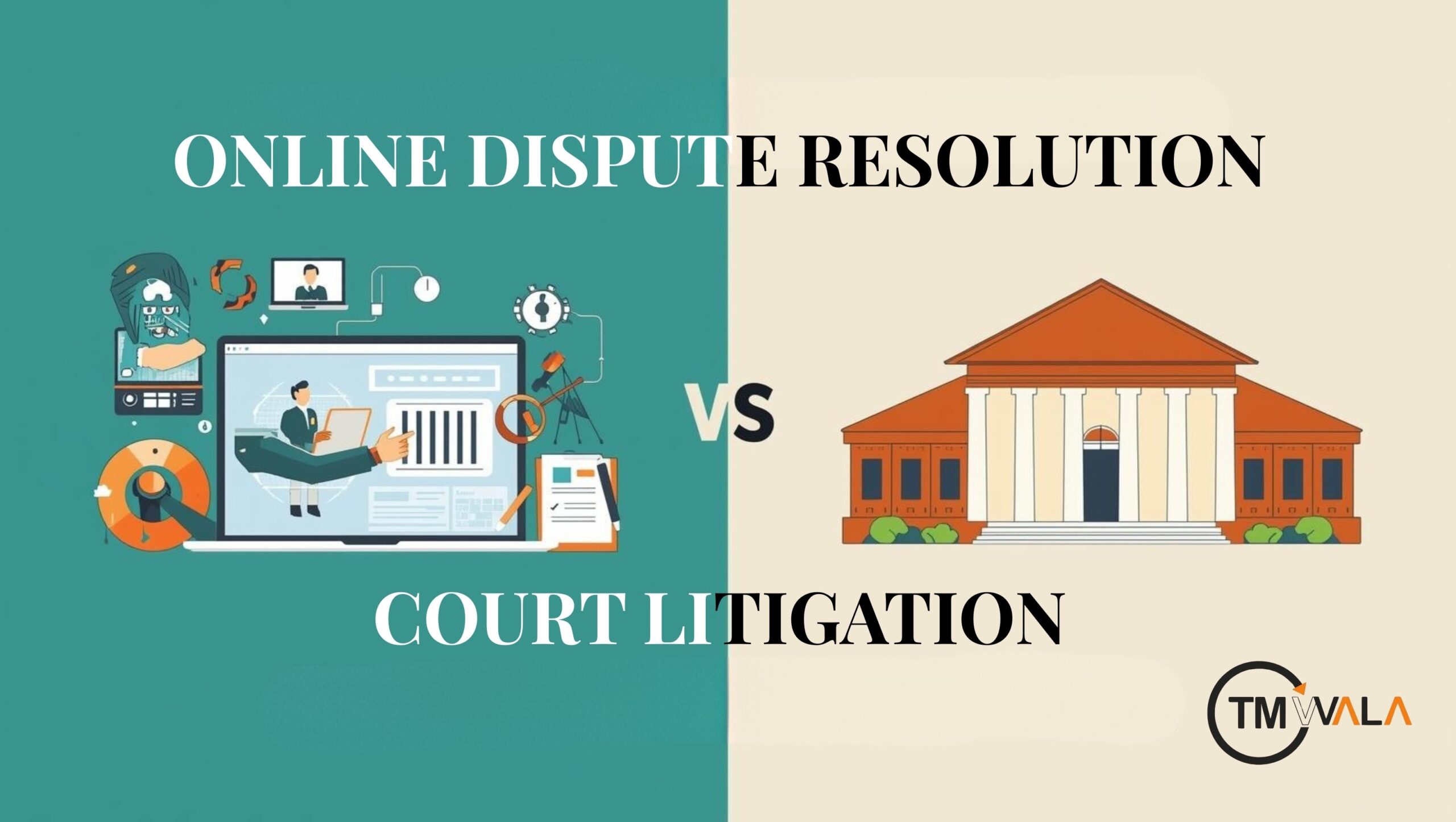
Access to justice is a cornerstone of democratic societies, yet for millions in India, it remains a distant ideal. With over 50 million cases pending across Indian courts and the legal process often being complex, time-consuming, and expensive, there has been a growing shift toward alternative means of dispute resolution. Among these, Online Dispute Resolution (ODR) has emerged as a transformative approach, integrating technology with traditional methods such as mediation, arbitration, and negotiation to resolve disputes outside the courtroom. This guide will give you proper knowledge regarding Online Dispute Resolution and Court Litigation.
The COVID-19 pandemic marked a turning point in India’s justice delivery system. Courts have rapidly adopted digital tools, including video conferencing, e-filing, and virtual hearings. What began as an emergency response demonstrated the long-term feasibility of technology-driven justice. This transition revived discussions around mainstreaming ODR as a permanent, scalable, and efficient dispute resolution mechanism.
ADR, which stands for Alternative Dispute Resolution, refers to a range of methods used to resolve conflicts outside of traditional court litigation. Its scope encompasses many techniques, such as negotiation, mediation, and arbitration, that aim to facilitate the resolution of disputes more efficiently and cost-effectively. ADR comprises a range of methods that enable the resolution of disputes without resorting to the formal court process. Such as:
Online Dispute Resolution builds upon ADR by integrating digital platforms and communication technologies. However, ODR is often simplistically understood to mean e-ADR or ADR that is enabled through technology. However, its potential benefits extend far beyond its parent system, namely ADR. ODR can help in not just dispute resolution but also in dispute containment, dispute avoidance, and promotion of the general legal health of the country.
ADR stands as the complete opposite of court litigation when solving disputes. ADR operates based on flexibility and rapid dispute resolution, but court litigation is a formal, structured mechanism with enforceable legal decisions. The major distinctions between ADR and Court Litigation exist in their process and desired outcomes.
Government litigation contributes to about 46 per cent of all litigation in the country. Litigation by public enterprises and Government Departments contributes not only to the court’s burden but also imposes high costs on the public exchequer. In 2017-18, the expenditure incurred by the Central Government in contesting cases in the Supreme Court alone was Rs. 47.99 Crore. According to the Legal Information Management and Briefing System (LIMBS) portal, as on 23 September 2020, the Government has 5,80,132 cases pending in different courts across the country.
Past initiatives, such as the High Powered Committee (1991) and the Permanent Machinery of Arbitrators, attempted to reduce inter-departmental disputes but faced structural inefficiencies. The Administrative Mechanism for Resolution of CPSEs Disputes (AMRCD) replaced earlier mechanisms, yet procedural delays continue. For more information, visit Niti Ayog: Draft-ODR-Report-NITI-Aayog-Committee.pdf
The Draft ODR Policy Plan by NITI Aayog recognizes that mainstreaming ODR as the preferred mode of dispute resolution for the Government will help unclog the courts for citizens’ grievances while also unlocking a large number of Government projects stuck due to litigation. Sectorspecific customization and institutional readiness are essential for success.
How TMWala can help in this context is by advising government contractors, public sector entities, and private businesses on incorporating ODR clauses in agreements, streamlining documentation, and ensuring procedural compliance to reduce future litigation risks.
ODR has already been integrated in several jurisdictions, such as the US, Canada, Brazil, and the UAE, wherein the government, the judiciary, and private institutions are working together to exploit the benefits of ODR towards enabling greater access to justice. The reason for ODR’s success can be attributed to its cost-effective and convenient nature, which also broadens the possibilities of remote resolution.
In India, platforms such as Presolv360, Sama, and Agami are building digital ecosystems for consumer, banking, and MSME disputes. Their work demonstrates that structured ODR systems can handle high case volumes efficiently.
How TMWala can help businesses leverage these platforms is by providing end-to-end advisory support from pre-dispute strategy and negotiation to online mediation representation and arbitration enforcement, ensuring that clients benefit fully from digital resolution mechanisms.
Despite its promise, ODR faces several challenges in India: digital divide, limited awareness, data privacy concerns, cybersecurity risks, and the absence of a comprehensive ODR statute. Resistance from traditional stakeholders also slows adoption.
To scale ODR effectively, India needs coordinated reforms, including judicial backing, clear regulatory standards, investment in digital infrastructure, and professional training. Awareness campaigns and sector-focused implementation strategies are equally important.
How TMWala can help organizations navigate these reforms is by conducting legal risk assessments, drafting enforceable dispute resolution clauses, and offering strategic representation in both ADR and ODR proceedings. This integrated approach ensures smoother transitions from conventional litigation to digital dispute management.
India stands at a pivotal moment in its justice reform journey. While litigation remains indispensable, it cannot alone address the scale and complexity of modern disputes. ODR offers a practical, efficient, and inclusive complement to traditional courts.
By reducing costs, accelerating timelines, protecting confidentiality, and enhancing flexibility, ODR strengthens access to justice. With sustained policy support, institutional adoption, and professional facilitation, it has the potential to transform India’s dispute resolution ecosystem.
The shift toward ODR is not merely technological it represents a fundamental rethinking of how conflicts are managed in a digital society. Embracing it today can create a more responsive, accessible, and future-ready justice system for India.
Get started instantly
"*" indicates required fields
TMWala
Your one stop shop for all your business registration and compliance needs.
"*" indicates required fields
Choose your Entity Type
Non-MSME/ Large Entitie
Individual/ MSME/ Sole Proprietorships
₹9,000.00 Original price was: ₹9,000.00.₹3,999.00Current price is: ₹3,999.00.
Trademark Application @ ₹3999* (Premium Discounted Plan for MSME/Individual/Sole Proprietorships) Comprehensive
Government Fees
₹4500/-
₹9,000.00 Original price was: ₹9,000.00.₹3,999.00Current price is: ₹3,999.00.
Trademark Application @ ₹3999* (Premium Discounted Plan for Non-MSMEs/Large Entities) Comprehensive
Government Fees
₹9000/-
Choose your Entity Type
Individual/ MSME/ Sole Proprietorships
Non-MSME/ Large Entities
₹3,500.00 Original price was: ₹3,500.00.₹1,999.00Current price is: ₹1,999.00.
Government Fees
₹4500/-
₹3,500.00 Original price was: ₹3,500.00.₹1,999.00Current price is: ₹1,999.00.
Government Fees
₹9000/-
Choose your Entity Type
Individual/ MSME/ Sole Proprietorships
Non-MSME/ Large Entities
₹1,500.00 Original price was: ₹1,500.00.₹999.00Current price is: ₹999.00.
Trademark Application @ ₹999* (Basic Discounted Plan for MSME/Individual/Sole Proprietorships) Best-Selling, Economical & Easy
₹1,500.00 Original price was: ₹1,500.00.₹999.00Current price is: ₹999.00.
Trademark Application @ ₹999* (Basic Discounted Plan for Non-MSMEs/Large Entities) Best-Selling, Economical, Quick and Easy