Due to rapid technological advancement, there has been a significant rise in digital marketing worldwide. Many social media networks, algorithms, and platforms like Google Ads are used by companies to attract and connect with their prospective buyers. As companies advertise their products or services on digital platforms, they use meta tags to make it easier to attract consumers searching for similar products or services.
Metatags are an inherent part of any website, search engines use metatags for deriving results as it increases the website traffic, resulting in displaying the website over others. This article will examine the misuse of meta tags that may result in trademark infringement of the trademark due to confusion and deception to consumers, as well as the complexities surrounding meta tags in relation to trademark law with the help of important case laws.
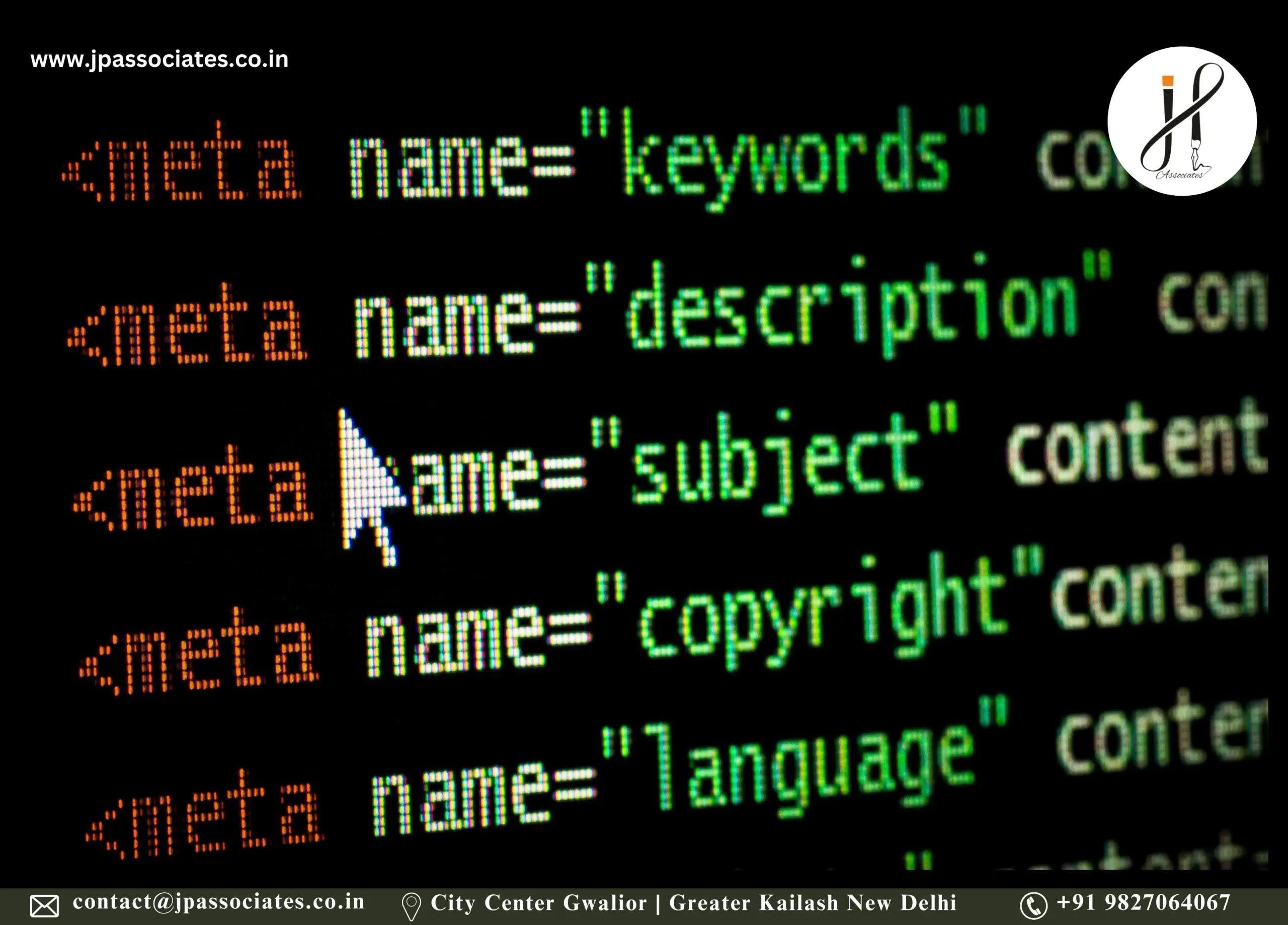
Meta tags are HTML codes which are found in the header section of a web page. These meta tags improve the efficiency of search engines as per the user’s instructions given to the search engines. Most meta tags are not directly visible to website visitors on the webpage itself, though certain elements such as title tags may appear in browser tabs and search engine results.
Keyword meta tags, title tags, and description meta tags are the three most common types of meta tags, Meta title tags may consist of single words or phrases, phrases, constituting the subject and the main purpose of the website and keyword meta tags include important keywords.
In contrast, Meta description tags consist of a brief description of the website if that website functions as an e-commerce platform, therefore, keywords are included with details of the website.
Usually, meta tags are invisible to the consumer, and once the keywords and description is provided as input, help search engines identify various websites relevant as per their search. Metatags ultimately help the end users to get the best results for their search by enhancing the ability of the search engines to function effectively.
Search Engine Results Page (SERP) refers to the page displayed by search engines such as Google, Yahoo, or Bing in response to a user’s query. These are ranked on the basis of the feedback they received based on factors like traffic, paid searches, etc. Websites with higher relevance, optimized content, backlinks, and user engagement are generally ranked higher on search engine results pages.
With the help of metatags and search engine optimisation process, the visibility of the websites can be increased significantly, but if the search engine optimisation process is not correctly optimized then the website’s visibility will be adversely affected by getting a lower rank, whereas if these metatags are used correctly, then it can help the websites in generating consistent user traffic.
Metatags play a crucial role as they connect themselves with the search engine tools in order to enable the consumers to easily locate their sites for the content, in simple terms, meta tags function as key identifiers of web pages on the internet.
Infringement of a trademark means that a person uses a mark identical or deceptively similar to a registered trademark of a registered owner or proprietor is liable for trademark infringement. Section 29 of the Trademark Act, 1999, deals with trademark infringement.
Infringement of trademark is punishable by both monetary fines ranging from Rs. 50,000 to Rs. 2 Lakhs as well as imprisonment for 6 months to 3 years. Civil penalties can also be imposed, such as damages, an injunction for causing destruction.
Traditionally, trademark infringement involved visible and direct misuse of marks as compared to the metatags, which reflects a broad evolution in intellectual property rights in the digital era. Now, with time, trademark holders have expanded the scope of protection by seeking to extend their exclusive rights to prevent any third parties from misappropriating the brand goodwill. With the evolution of intellectual property law, traditional trademark practices must adapt by adapting to digital realities aligning with the global trends for trademark protection.
Websites’ metatags also have trademarks embedded in them, but if they are misused, they may create legal complications for the trademark users. If meta tags are properly used then it can attract consistent website traffic and increasing the consumer base. But a lot of persons or companies have been abusing the use of metatags for their benefit. Since, metatags themselves are not visible to the consumers but they come as keywords in search engines and the same can be perceived by the website visitors, who can easily get confused if the metatags have been misused.
The main concern for metatags is that if a third-party trademark is used in one’s metatags, Trademark infringement through meta tags occurs when a website owner incorporates a third party’s registered trademark within the website’s meta tags in order to divert internet traffic or attract consumers searching for the trademark owner’s products or services.
The doctrine of initial interest confusion applies where a consumer’s initial attention is improperly diverted through the unauthorized use of another’s trademark, even if the confusion is corrected before the actual purchase takes place.
For instance, if a purchaser wants to buy a product from market, they are required to conduct research about the market to find the best available product at an affordable price under the budget of the consumer, during this market survey, there are high chances that this decision taken by the consumer is adversely affected due to the confusion in product or services sold in similar trademarks, creates doubt in the mind of the customer about the genuineness of the product.
Basically, whenever there is a likelihood of confusion on the part of consumers in relation to the origin of goods. Courts consider several factors, such as similarities of marks, marketing channels used, relatedness of two companies, evidence of actual confusion caused to consumers, intent of the infringer for using the mark, and purchaser’s degree of care required in selecting the goods.
In Brookfield Communications Inc. v. West Coast Entertainment Corp. The case provides an application of the doctrine of initial interest confusion to metatags. Brookfield was an entertainment information provider that sought an injunction against a video store chain, West Coast for using its trademark ‘MovieBuff’ within the website metatag.
The District Court in initial proceedings, refused to grant injunction on the ground that there was no likelihood of confusion. Later, the decision was overturned by the Court of Appeals by instructing the lower court to grant the preliminary injunction and the court reasoned that using another company’s trademark in meta tags is comparable to introducing a sign with another company’s trademark in the business to attract consumers.
The court emphasized that even if the consumers are not confused at the time of purchase, but as per the doctrine of initial interest confusion, in which initial consumer confusion caused by misuse of a trademark is sufficient to establish trademark infringement.
Adidas Am., Inc. v. Skechers USA, Inc., 890 F.3d 747 (9th Cir. 2018)
Skechers (defendant) designed a shoe allegedly similar to the plaintiff’s shoe design. Defendant also included the name of plaintiff’s sneaker line in the metatags on their website.
The Court of Appeal concurred their reasoning with the lower court that defendant used the name in metatags to attract consumers and associate the products with the plaintiff’s brand and are likely to search for it.
The court determined that the presence of meta tags with plaintiff’s name and the similar designs of shoes show a clear intent to mislead consumers and divert them to defendant’s website rather than Plaintiff’s. The court upheld the finding of trademark infringement.
People Interactive (I) Pvt. Ltd. v. Gaurav Jerry
The Bombay High Court examined the unauthorized use of the plaintiff’s registered mark “shaadi.com” was used as a meta tag by the defendant and held that such use amounted to trademark infringement.
The court observed that this practice of the defendant was used to divert traffic from the plaintiff’s website and caused harm to the plaintiff’s registered mark. The court further granted damages to the plaintiff for the losses caused because of the unauthorized use of the trademark.
Conclusion:
Trademark law has undergone a significant evolution from traditionally focusing on visible uses capable of confusing consumers about the origin of the product to examining the use of metatags as invisible trademark infringement as a response to advancement in technologies and e-commerce.
From the above-mentioned cases, courts have observed that the abuse of metatags or unauthorized use of trademarks in metatags constitute trademark infringement with courts applying the doctrine of initial interest confusion. The use of meta tags on websites has made trademark infringement much easier and created complexities in the enforcement of the laws.
Therefore, when trademark infringement through metatags is suspected, all documentary evidence, such as screenshots of the infringing website and its HTML code with use of trademark in metatags, should be recorded and filed properly, followed by remedies such as injunctions, damages, or delivery up of infringing materials, including sending a cease and desist letter to immediately stop the use of trademark in metatags or to file a suit.
Moving forward, effective trademark protection in this digital era will require continued adaptation of legal principles and striking a balance between the advantages of meta tags and the risks arising from their misuse.
REFERENCES:
Get started instantly
"*" indicates required fields
TMWala
Your one stop shop for all your business registration and compliance needs.
"*" indicates required fields
Choose your Entity Type
Non-MSME/ Large Entitie
Individual/ MSME/ Sole Proprietorships
₹9,000.00 Original price was: ₹9,000.00.₹3,999.00Current price is: ₹3,999.00.
Trademark Application @ ₹3999* (Premium Discounted Plan for MSME/Individual/Sole Proprietorships) Comprehensive
Government Fees
₹4500/-
₹9,000.00 Original price was: ₹9,000.00.₹3,999.00Current price is: ₹3,999.00.
Trademark Application @ ₹3999* (Premium Discounted Plan for Non-MSMEs/Large Entities) Comprehensive
Government Fees
₹9000/-
Choose your Entity Type
Individual/ MSME/ Sole Proprietorships
Non-MSME/ Large Entities
₹3,500.00 Original price was: ₹3,500.00.₹1,999.00Current price is: ₹1,999.00.
Government Fees
₹4500/-
₹3,500.00 Original price was: ₹3,500.00.₹1,999.00Current price is: ₹1,999.00.
Government Fees
₹9000/-
Choose your Entity Type
Individual/ MSME/ Sole Proprietorships
Non-MSME/ Large Entities
₹1,500.00 Original price was: ₹1,500.00.₹999.00Current price is: ₹999.00.
Trademark Application @ ₹999* (Basic Discounted Plan for MSME/Individual/Sole Proprietorships) Best-Selling, Economical & Easy
₹1,500.00 Original price was: ₹1,500.00.₹999.00Current price is: ₹999.00.
Trademark Application @ ₹999* (Basic Discounted Plan for Non-MSMEs/Large Entities) Best-Selling, Economical, Quick and Easy