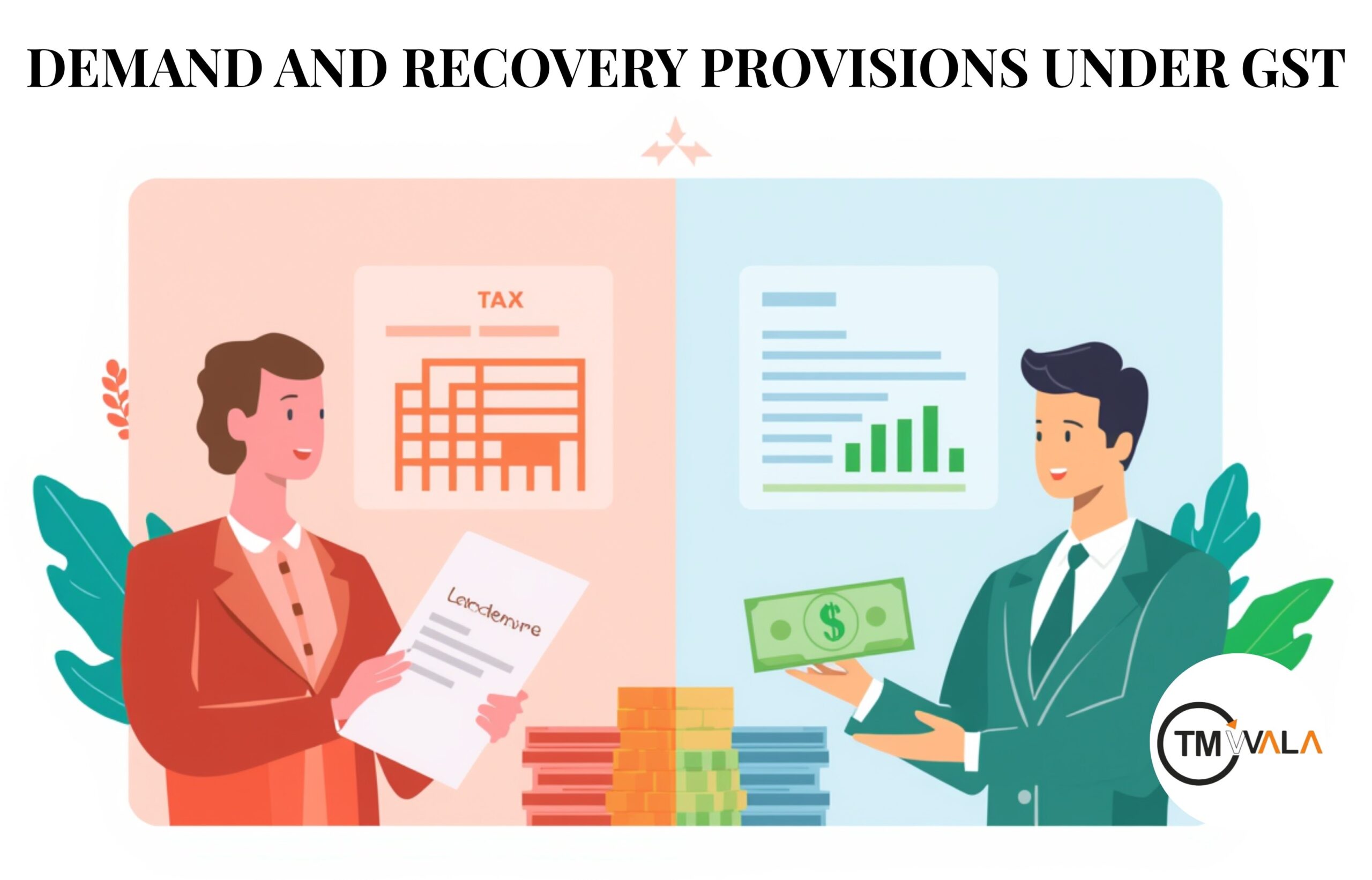
In the GST framework, compliance is not limited to the timely filing of returns; it extends to accuracy, transparency, and proper reporting of transactions. A notice from the tax department often indicates discrepancies that require immediate attention. Among the most significant legal provisions governing such situations are Section 73 and Section 74 of the Central Goods and Services Tax (CGST) Act, 2017. These provisions form the legal backbone of demand and recovery GST proceedings.
While both sections deal with tax shortfalls and incorrect claims, the distinguishing factor lies in intent. Section 73 applies where discrepancies arise without fraud or deliberate misstatement, whereas Section 74 is invoked in cases involving intent to evade tax. Understanding this distinction is critical because it directly impacts penalties, timelines, and compliance strategies.
For businesses navigating such complexities, professional guidance becomes essential. This is where How TMWala can help by offering structured support in handling notices, preparing responses, and ensuring compliance with GST laws.
Section 73 of the CGST Act deals with situations where tax has not been paid, has been short paid, erroneously refunded, or where input tax credit (ITC) has been wrongly availed or utilized, provided there is no element of fraud, willful misstatement, or suppression of facts.
This provision is particularly relevant for genuine errors such as:
Under this section, the tax authorities initiate proceedings by issuing a show cause notice (SCN), asking the taxpayer to explain why the specified tax amount, along with interest and penalty, should not be recovered.
The process under Section 73 follows a structured timeline and sequence:
A GST demand arises when discrepancies are identified during return scrutiny, audits, or investigations. The demand and recovery GST framework ensures that such dues are properly assessed and recovered.
The process includes:
If the taxpayer fails to pay the determined amount, authorities can initiate recovery measures such as:
The penalty provisions under GST vary depending on the nature of the default and the timing of compliance. Section 73 offers a relatively lenient penalty regime compared to fraud-related provisions.
Key highlights include:
This framework encourages voluntary compliance and minimizes litigation.
Also read: How to correct gst filing errors without paying a penalty
The adjudication process in GST is the stage where the tax officer evaluates the taxpayer’s response and determines the final liability. Although the legal framework is detailed, the practical process is straightforward:
The adjudication is conducted by the designated adjudicating authority under GST, typically based on the monetary limits prescribed for different officer ranks.
This process ensures fairness and provides taxpayers with an opportunity to present their case before any final liability is imposed.
The adjudicating authority under GST refers to the officer empowered to issue notices and pass orders under Sections 73 and 74. These officers are assigned based on the quantum of tax involved.
For example:
This structured allocation ensures efficiency and proper handling of cases depending on complexity and financial impact.
Read more: circularno-31-cgst.pdf
The provisions relating to the collection and recovery of tax are designed to ensure that government dues are recovered efficiently while maintaining procedural fairness.
These provisions include:
These mechanisms act as enforcement tools when voluntary compliance fails.
One of the most critical aspects of GST compliance is the ability to determine tax liability accurately. Tax liability includes all taxes payable after considering output tax, input tax credit, and applicable adjustments.
Errors in determining liability can lead to:
Maintaining accurate records, reconciling returns, and conducting periodic reviews can significantly reduce the risk of disputes.
GST proceedings under Section 73 involve several standardized forms:
These forms ensure uniformity and transparency in communication between taxpayers and authorities.
Section 73 is not just a legal provision; it has real-world implications for businesses of all sizes. Even minor errors can trigger notices, requiring time, resources, and expertise to resolve.
Businesses should:
Proactive compliance can prevent escalation into litigation or recovery actions.
Section 73 of the CGST Act plays a vital role in maintaining the integrity of the GST system by addressing non-fraudulent discrepancies in tax payments. Its structured approach, combined with opportunities for voluntary compliance, makes it a balanced provision that encourages correction rather than punishment.
Understanding the demand and recovery GST framework, penalty structures, and procedural requirements is essential for every taxpayer. Equally important is the ability to respond effectively to notices and manage compliance risks.
Navigating these complexities can be challenging without expert support. How TMWala can help businesses handle GST notices, streamline compliance processes, and represent them during proceedings. With the right approach and timely action, taxpayers can resolve disputes efficiently and maintain a strong compliance record.
Ultimately, awareness and preparedness remain the best tools for avoiding complications under GST and ensuring smooth business operations.
Get started instantly
"*" indicates required fields
TMWala
Your one stop shop for all your business registration and compliance needs.
"*" indicates required fields
Choose your Entity Type
Non-MSME/ Large Entitie
Individual/ MSME/ Sole Proprietorships
₹9,000.00 Original price was: ₹9,000.00.₹3,999.00Current price is: ₹3,999.00.
Trademark Application @ ₹3999* (Premium Discounted Plan for MSME/Individual/Sole Proprietorships) Comprehensive
Government Fees
₹4500/-
₹9,000.00 Original price was: ₹9,000.00.₹3,999.00Current price is: ₹3,999.00.
Trademark Application @ ₹3999* (Premium Discounted Plan for Non-MSMEs/Large Entities) Comprehensive
Government Fees
₹9000/-
Choose your Entity Type
Individual/ MSME/ Sole Proprietorships
Non-MSME/ Large Entities
₹3,500.00 Original price was: ₹3,500.00.₹1,999.00Current price is: ₹1,999.00.
Government Fees
₹4500/-
₹3,500.00 Original price was: ₹3,500.00.₹1,999.00Current price is: ₹1,999.00.
Government Fees
₹9000/-
Choose your Entity Type
Individual/ MSME/ Sole Proprietorships
Non-MSME/ Large Entities
₹1,500.00 Original price was: ₹1,500.00.₹999.00Current price is: ₹999.00.
Trademark Application @ ₹999* (Basic Discounted Plan for MSME/Individual/Sole Proprietorships) Best-Selling, Economical & Easy
₹1,500.00 Original price was: ₹1,500.00.₹999.00Current price is: ₹999.00.
Trademark Application @ ₹999* (Basic Discounted Plan for Non-MSMEs/Large Entities) Best-Selling, Economical, Quick and Easy