
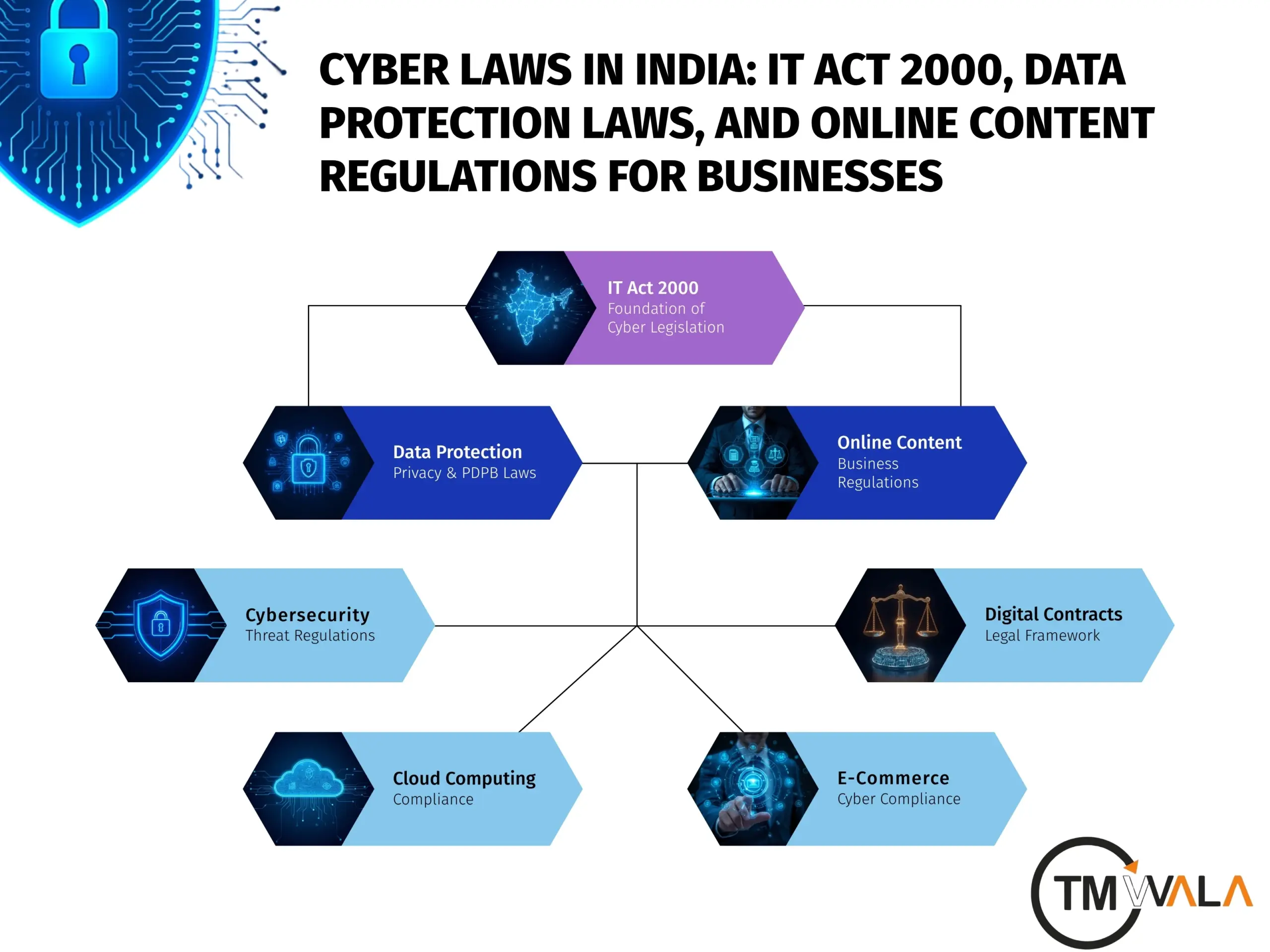
Cyber Laws In India are essential for every business operating online, especially when handling customer data, digital transactions, and website compliance.The digital economy is growing fast in India, and this has changed the way companies do business. Companies like those that sell things online and software companies use the internet to deal with customers and manage their work. Even financial companies that use technology and companies that help with marketing need the internet to work. With this change comes new rules that companies must follow. Every company that operates through an online platform must know about cyber law in India so they can follow the rules and keep customers’ information safe and avoid getting in trouble with the government.
The basis of cyber law in India is the Information Technology Act 2000, which is also called the IT Act 2000. Over time, the government has made rules like the Digital Personal Data Protection Act, new guidelines for companies that operate online, and stronger rules for keeping the internet safe. These rules were made by the Ministry of Electronics and Information Technology and the Indian Computer Emergency Response Team.
This article will explain the Information Technology Act, the rules for protecting data in India, what companies need to do to follow the law when they make a website, how to control what people post online, and other important things that every company operating online should know about cyber laws in India and the data protection laws that support them.
Cyber laws in India are the rules that usually govern the use of computers, phones, and the internet. These rules are in place to regulate things like buying and selling things online, keeping people safe from cybercrime using digital signatures, and making sure the internet is used safely.
The main goals of cyber law in India are to:
Nowadays, cyber law is important for every organization that has a website, a mobile application, a list of customers or a way for people to pay online. Every one of these organizations has to follow the cyber law rules that apply to them. Cyber laws in India are no longer relevant only to technology companies. Every organisation must comply with cyber laws in India to avoid regulatory action, as these laws are essential for any business that uses the internet and digital devices.
The Information Technology Act 2000 is the primary law in India for governing electronic records and digital transactions. This law was made to make electronic records official and to make sure digital business is safe and prevent cybercrimes.
The Information Technology Act 2000 deals with electronic governance and doing business online. These things include contracts, digital signatures, cyber offences, data security, electronic records, government electronic services, and liability of intermediaries
The Information Technology Act 2000 has been amended multiple times, especially in 2008. These changes were made to deal with cyber threats and new technology.
For companies, the Information Technology Act 2000 sets the rules for doing business online. It also says what companies are responsible for if something goes wrong, like if someone is careless, if there is unauthorized access or if someone steals an identity or if there is hacking or if there is cyber fraud. The Information Technology Act 2000 is very important for businesses that do things online.
Several provisions of the Information Technology Act directly affect businesses operating online.
Another important cyber law in India is the Digital Personal Data Protection Act, 2023. This law is also known as the DPDP Act. It was made in the year 2023. It makes sure that people’s personal information is safe when it is used online.
The Digital Personal Data Protection Act makes sure that companies use people’s information in a responsible way. It also makes sure that people’s privacy is protected.
The Digital Personal Data Protection Act is a set of rules for protecting people’s personal information in India. It makes sure that companies use information in a way that is fair and safe.
Scope of the Digital Personal Data Protection Act
The Digital Personal Data Protection Act applies to:
Rights of Individuals
The Digital Personal Data Protection Act says that people have the right to:
Business Responsibilities
Companies that use personal information have to:
If companies follow the rules and keep information safe, they will be seen as trustworthy and responsible. This is good for business. It helps people feel safe when they give out their personal information. The Digital Personal Data Protection Act is a law that helps protect people’s personal information in India. It is a thing for people and, for companies that use personal information.
Every organization operating a website or digital platform should prioritise website legal compliance by ensuring that its online presence aligns with cyber laws in India.
Essential compliance measures include:
Website compliance is important for every organization as it reduces legal risk while demonstrating transparency and accountability.TMWala helps businesses prepare essential legal documents such as Privacy Policies, Terms & Conditions, Cookie Policies, Refund and Cancellation Policies, Disclaimer pages, and other website compliance documents tailored to their business model.
Under cyber laws in India, businesses that run social media platforms, marketplaces, forums, hosting services, or other digital platforms may qualify as intermediaries.
The Intermediary Guidelines says that all eligible intermediaries must exercise due diligence while benefiting from the safe harbour protections provided under Section 79 of the Information Technology Act 2000.
Key compliance requirements include:
Intermediaries play an important role in effective online content moderation, as it helps reduce the spread of illegal content while supporting a safer digital environment.
Internet Governance in India
The legal framework for internet governance in India involves multiple government agencies responsible for digital policy, cybersecurity, telecommunications, and data governance.
The Ministry of Electronics and Information Technology (MeitY) plays a central role by:
Both CERT-In and other regulatory bodies, MeitY, together help in shaping India’s evolving digital ecosystem by creating a safe and strong digital environment.
Businesses and organisations should also understand how cyber laws in India address online defamation. Cyber defamation occurs when false or harmful statements are published through websites, blogs, social media platforms, and other digital channels.
Civil and Criminal Legal action may be taken against an organization or individual that publishes defamatory content on an online platform based on the specific facts of each case, as well as the applicable Defamation Law. Organizations should establish internal content review procedures and respond appropriately to legitimate legal notices while respecting freedom of expression and applicable legal protections.
Civil remedies include filing suit for defamation, seeking monetary damages, and injunctions for removing the defamatory content present online.
Criminal remedies available under Section 356 of Bharatiya Nyaya Sanhita[1] define defamation and prescribes penalties including imprisonment up to two years, fines, or community service for first time offenders.
Sections 66 and 67 of the Information Technology Act, 2000[2] talk about electronic communication and content that is obscene and harmful material. It also outlines intermediary liability, which means holding platforms accountable under specific conditions, such as if they fail to remove defamatory content even after notice.
Organizations can strengthen compliance by adopting the following practices:
Every business operating online must comply with cyber laws in India, including the Information Technology Act 2000, the Digital Personal Data Protection Act, 2023, and other applicable cyber security regulations, as the country’s digital ecosystem continues to grow. Strong data protection practices, legal compliance of websites, and cybersecurity help organisations to minimise legal risks, protect customer information, and build confidence among users. TMWalahelps businesses by preparing and providing essential legal documents like Privacy Policies, Terms & Conditions, Cookie Policies, Refund and Cancellation Policies, trademark registration, business registration, contract drafting, and other legal compliance services, allowing businesses to focus on growth while keeping their online presence legally compliant as per the cyber laws.
[1]Bharatiya Nyaya Sanhita, No. 45 of 2023, Section 356
[2]Information Technology Act, No. 21 of 2000, India
Get started instantly
"*" indicates required fields

TMWala
Your one stop shop for all your business registration and compliance needs.
"*" indicates required fields
Choose your Entity Type
Non-MSME/ Large Entitie
Individual/ MSME/ Sole Proprietorships

₹9,000.00 Original price was: ₹9,000.00.₹3,999.00Current price is: ₹3,999.00.
Trademark Application @ ₹3999* (Premium Discounted Plan for MSME/Individual/Sole Proprietorships) Comprehensive
Government Fees
₹4500/-
₹9,000.00 Original price was: ₹9,000.00.₹3,999.00Current price is: ₹3,999.00.
Trademark Application @ ₹3999* (Premium Discounted Plan for Non-MSMEs/Large Entities) Comprehensive
Government Fees
₹9000/-
Choose your Entity Type
Individual/ MSME/ Sole Proprietorships
Non-MSME/ Large Entities

₹3,500.00 Original price was: ₹3,500.00.₹1,999.00Current price is: ₹1,999.00.
Government Fees
₹4500/-
₹3,500.00 Original price was: ₹3,500.00.₹1,999.00Current price is: ₹1,999.00.
Government Fees
₹9000/-
Choose your Entity Type
Individual/ MSME/ Sole Proprietorships
Non-MSME/ Large Entities
₹1,500.00 Original price was: ₹1,500.00.₹999.00Current price is: ₹999.00.
Trademark Application @ ₹999* (Basic Discounted Plan for MSME/Individual/Sole Proprietorships) Best-Selling, Economical & Easy
₹1,500.00 Original price was: ₹1,500.00.₹999.00Current price is: ₹999.00.
Trademark Application @ ₹999* (Basic Discounted Plan for Non-MSMEs/Large Entities) Best-Selling, Economical, Quick and Easy