The Dearness Allowance (DA) remains a crucial component of compensation for government employees and pensioners in India. Designed as a safeguard against inflation, DA ensures that income keeps pace with rising living costs. Over the years, this allowance has become an essential part of financial planning for millions of households.
In the DA hike news today, the Government of India has approved a fresh increase in DA, reinforcing its commitment to maintaining the purchasing power of employees and retirees. For those navigating salary structures, arrears, and calculations, platforms like TMWala can simplify understanding and help individuals make informed financial decisions.
The most recent central government employees’ DA hike brings encouraging news. The Union Cabinet has approved a 2% rise in Dearness Allowance and Dearness Relief. With this revision, the total DA has increased from 58% to 60% of basic pay.
This dearness allowance increase is effective from January 1, 2026, and applies to both serving employees and pensioners. Additionally, eligible individuals will receive arrears for the period prior to implementation, providing a welcome financial boost.
This decision impacts over 50 lakh employees and more than 68 lakh pensioners, making it one of the most significant salary-related updates of the year.
With the latest revision, the DA rate of central government employees now stands at 60%. Since DA is calculated as a percentage of basic salary, the actual monetary benefit varies depending on an employee’s pay level.
For example, an employee with a higher basic pay will receive a proportionately larger DA amount compared to someone at an entry-level position. This ensures fairness while maintaining uniformity in the percentage applied.
The increase is aligned with inflation trends and aims to reduce the financial strain caused by rising prices of essential goods and services.
The DA percentage in India is not arbitrary; it reflects broader economic conditions, particularly inflation. DA is revised twice a year, typically in January and July, ensuring regular adjustments.
A higher DA percentage directly improves take-home salary and pension payouts. However, it’s important to note that DA is fully taxable under current income tax rules and must be declared as part of salary income.
Understanding how this percentage evolves over time can help employees better plan savings, investments, and expenses. This is where tools and insights from TMWala can provide clarity, especially when tracking historical trends and projections.
A common question employees ask is how to calculate DA in salary. The formula is based on the All India Consumer Price Index (AICPI), which measures inflation.
For Central Government employees, the formula is:
DA% = [(Average of AICPI for the last 12 months – 115.76) / 115.76] × 100
For Public Sector employees, a slightly different formula is used:
DA% = [(Average of AICPI for the last 3 months – 126.33) / 126.33] × 100
Once the percentage is determined, it is applied to the basic salary to calculate the DA amount. While the formula may appear technical, platforms like TMWala can simplify these calculations and provide quick estimates tailored to individual salary structures.
One of the most anticipated aspects of any DA revision is the DA arrears for central government employees. Since the hike is effective from January 2026 but announced later, employees are entitled to arrears for the intervening months.
These arrears are usually credited as a lump sum and can significantly enhance short-term liquidity. Many employees use this additional income to clear debts, invest, or meet major expenses.
Keeping track of arrears calculations and payment timelines can be complex, but digital platforms like TMWala can help users stay updated and manage expectations effectively.
Looking forward, discussions around the expected DA hike continue to generate interest. Since DA revisions are linked to inflation data, future increases will depend on movements in the Consumer Price Index.
If inflation trends upward, another DA hike may be announced in the next review cycle. Conversely, stable or declining inflation could result in smaller increments.
Experts often analyse AICPI trends to predict upcoming changes. Staying informed about these indicators can help employees anticipate salary adjustments and plan accordingly.
The 7th Pay Commission DA framework governs the current structure of DA calculations. Introduced to standardize pay and allowances, the 7th Pay Commission brought greater transparency and consistency.
Under this system, DA is periodically revised based on inflation data, ensuring that salaries remain relevant in changing economic conditions. The recent increase to 60% falls within this framework, reinforcing its effectiveness.
This also connects with the upcoming 8th pay commission changes, which are expected to further impact salary structures and DA revisions.
DA functions as a cost-of-living adjustment in India, protecting employees from the erosion of purchasing power. Inflation affects everyday expenses such as food, housing, transportation, and healthcare.
Recent data indicate that retail inflation has moderated, with rates falling to around 4.6% in the fiscal year 2024–25. Despite this improvement, periodic adjustments like DA hikes remain essential to maintain financial stability.
By aligning salaries with inflation trends, the government ensures that employees can sustain their standard of living even during economic fluctuations.
The CPI index for DA is the backbone of DA calculations. The Consumer Price Index tracks changes in the price of a fixed basket of goods and services, providing a reliable measure of inflation.
In India, the CPI is compiled by the National Statistical Office and uses 2012 as the base year. It includes various sub-indices such as:
These indices help policymakers assess inflation across different segments and make informed decisions regarding wage adjustments.
For more information, read: Press Release Page | Press Information Bureau
The central government’s salary structure has evolved significantly over time. It consists of multiple components, including basic pay, Dearness Allowance, House Rent Allowance (HRA), and other benefits.
Among these, DA plays a dynamic role as it changes periodically, unlike fixed components such as basic pay. This makes it a key factor in determining overall compensation.
Understanding this structure is essential for employees to evaluate their earnings and benefits comprehensively.
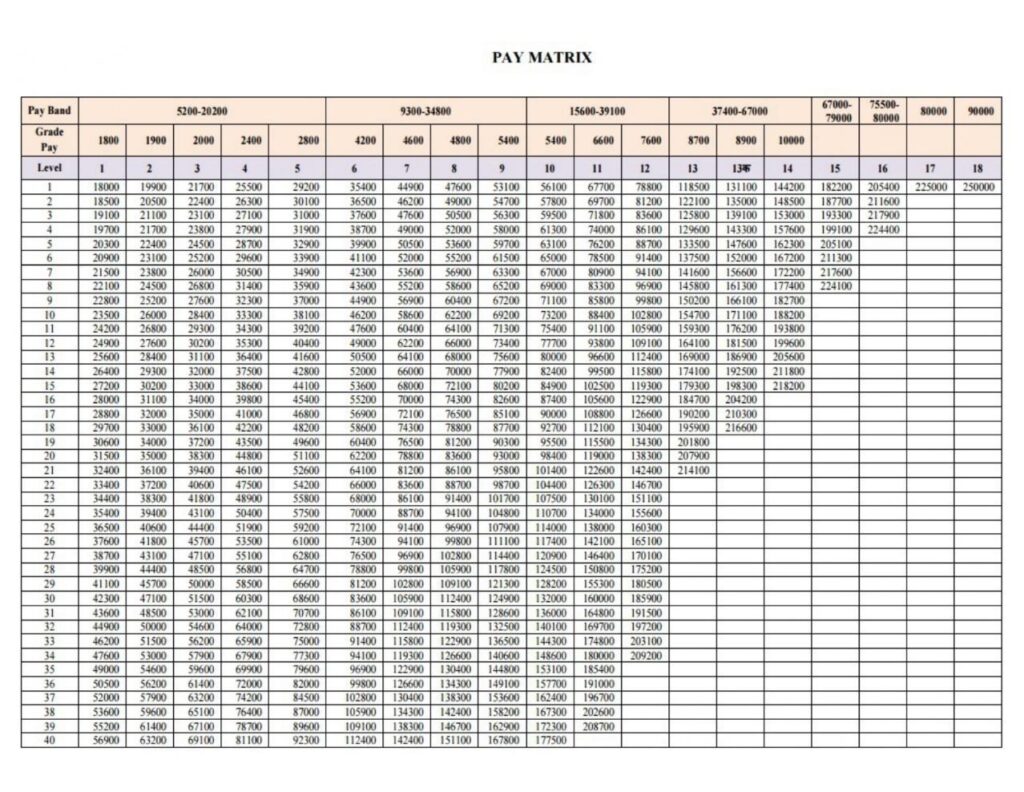
Source: Annexure IV (Pay matrix).png
The introduction of the 7th pay matrix in India marked a major reform in salary structuring. It replaced earlier systems with a simplified grid that includes 19 pay levels and multiple increments within each level.
Each level corresponds to a specific range of salaries, with annual increments typically set at 3%. This matrix ensures uniform progression and transparency across departments.
The DA percentage is applied to the basic pay derived from this matrix, making it an integral part of salary computation.
The latest central government employees’ DA hike reflects the government’s ongoing efforts to support its workforce amid changing economic conditions. With the DA now at 60%, employees and pensioners can expect improved financial stability.
From understanding the DA rate of central government employees to exploring the 7th pay commission DA framework, staying informed is essential. As inflation and economic conditions evolve, DA will continue to play a vital role in maintaining purchasing power.
For those seeking clarity and convenience, platforms like TMWala can bridge the gap between complex policies and practical understanding, empowering individuals to make smarter financial decisions.
Ans. Dearness Allowance (DA) is a cost-of-living adjustment paid to government employees and pensioners to offset inflation.
Ans. The government has approved a 2% increase, raising DA from 58% to 60% of basic pay.
Ans. The DA rate of central government employees currently stands at 60%.
Ans. The revised DA is effective from January 1, 2026.
Ans. Yes, employees will receive arrears for the period from January 2026 until the official implementation.
Ans. DA is revised twice a year, usually in January and July.
Ans. DA is calculated using the AICPI-based formula and applied as a percentage of basic salary.
Ans. Yes, DA is fully taxable and must be included as part of salary income.
Ans. The CPI index for DA measures inflation and is used to determine the percentage increase in DA.
Ans. The 7th pay commission DA system standardizes salary and allowance revisions, including periodic DA increases based on inflation.